David Lammy Wants to Scrap Jury Trials for Thousands of Cases. The Evidence Says It Won’t Work
The UK court backlog stands at 80,000 cases. Justice Secretary David Lammy announced in early December that removing jury trials for most offences carrying sentences under three years would clear it within a decade. An Institute for Government report published this week says the plan will save less than two percent of Crown Court time. Lammy told Parliament it would deliver twenty percent faster justice. The gap between those two numbers is the story.

BetPortal
- Lucky Friday: 50% Friday Reload Bonus
- Wild Wednesday: 250 Free Spins
- Riskfree Weekend: 10% Cashback

Amunbet
- Lucky Amun Monday: 50% up to £450
- First Deposit Highroller Bonus: 250% up to £4,500 + 250 FS
- Pharaoh’s Wins Weekend: Up to £450

Fortunica
- 5,000+ games from 40+ providers
- Fast payouts available via Visa and Mastercard, e-wallets (PayPal, Skrill, Neteller), bank transfers, and cryptocurrencies

VegasNova
- Promo Code - WELCOME200
- Sports Welcome Bonus - 150% up to €200–$200

Highspin
- Tuesday Reload Bonus 50% Up To £250
- Secial Bonus - HIGHSPIN LOTTERY
- Weekly Cashback - Every Monday Up To £500

West Ace
- Crypto Casino Bonus - 200% up to 3,000 USDT
- Crypto Sports Bonus - 100% up to 200 USDT






The reform targets what lawyers call “either-way” offences, crimes serious enough for Crown Court but not mandatory there, where the defendant currently chooses their venue. Lammy’s proposal removes that choice for offences where the likely sentence is under three years, pushing them down to Magistrates’ Courts without juries. The stated reason is pragmatic: juries take time, the backlog is real, and something has to change.
David Lammy jury reform has historical precedents, and they all involved exceptional circumstances. Diplock courts in Northern Ireland, which removed juries to prevent paramilitary intimidation of jurors, operated in wartime conditions. The Criminal Justice Act 2003 allowed juryless trials where there was a specific risk of jury tampering. The Victims, Witnesses, and Justice Reform (Scotland) Act 2025 altered Scottish jury rules. Every prior weakening of the jury system in Britain happened under narrowly defined emergency conditions. Lammy’s proposal is systemic, applying to an ordinary category of criminal cases in peacetime.
The Crown Court backlog 80000 cases did not appear overnight. It accumulated over more than a decade, driven by underfunding, Covid-era delays, and structural inefficiencies in how cases move through the system. The IFG report does not dispute that the backlog is real. It disputes whether removing jurors from either-way offences addresses the right constraint. Two percent of Crown Court time saved is not close to the scale of the problem.
There is also a constitutional argument that the reform’s supporters have been less forthcoming about. Juries in the English criminal justice system are not simply a procedural asset. They represent a check on state power, a mechanism by which ordinary citizens evaluate the work of the Crown Prosecution Service and apply community standards to cases the state has decided to prosecute. Removing that check from a large category of criminal cases does not just speed up trials. It changes the relationship between the citizen and the criminal justice state.
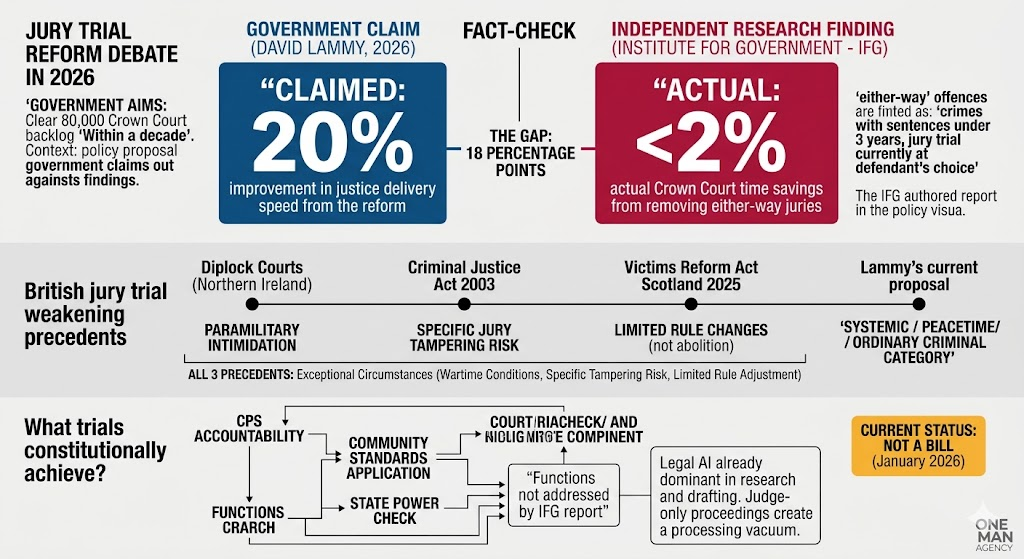
Legal commentators have noted a further layer. Since artificial intelligence has begun to demonstrate significant capability in legal research and document drafting, the creeping depersonalisation of criminal trials may accelerate. Judge-only proceedings create a vacuum that automated legal processing could eventually fill in ways that jury proceedings, with their constitutional protection and public legitimacy, could not.
As of January 2026, the either-way offences jury reform is neither a bill nor a serious policy agenda moving through Parliament. The IFG report may force the government to recalibrate before it reaches that stage. What the debate has exposed is a tension that no adjustment to court procedures will resolve: the backlog is a symptom of decades of underinvestment, and the proposed cure addresses a different problem.