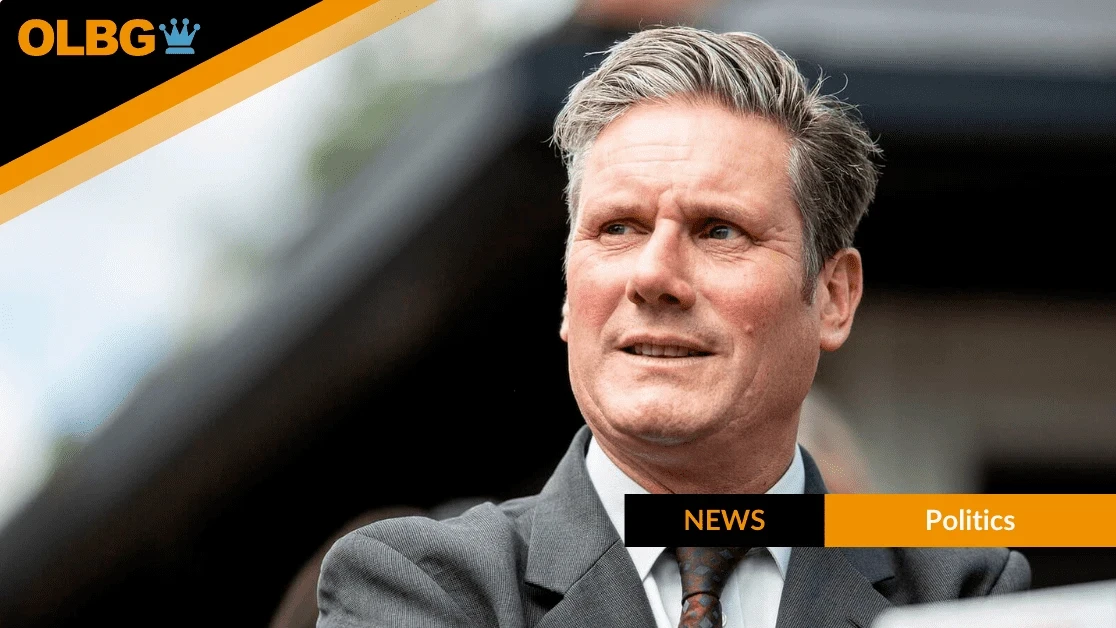
Petro Poroshenko: former president, opposition leader, army supplier
The only former president in this series, the only name British readers have known since 2014, and the only one whose distrust number has been published. All three facts belong together.
In the spring of 2014 British newspapers had to explain Ukraine to their readers more or less from scratch, and the man they were explaining was a confectionery manufacturer who had just won a presidential election in the middle of an invasion of Crimea. The chocolate detail went into almost every profile, because it was the kind of thing a foreign desk can hang a paragraph on without further research.
Twelve years on he sits as an opposition MP with a bloc polling around seven per cent, a trust reading in the twenties, and a sideline in supplying the armed forces with electronic warfare kit. Almost nobody outside Ukraine has updated the file.
Who is Petro Poroshenko now?
He served as president from 2014 to 2019, then lost to Volodymyr Zelenskyy, and has since led European Solidarity from the opposition benches of the Verkhovna Rada. He remains a working member of parliament rather than a retired statesman, which is unusual for a former head of state anywhere.
Before politics he built a business empire whose best-known component made sweets, which is where the nickname came from and why it appears in every British article about him. The nickname has outlived its usefulness by roughly a decade and is still the first thing most foreign coverage reaches for.
| President | 2014 to 2019, one term |
| Born | 26 September 1965, Bolhrad, aged 60 |
| Now | Member of parliament, leader of European Solidarity |
| Party standing | Around 7 points on the 2026 trend |
| Personal trust | 26 per cent yes, 71 per cent no |
| Current activity | Supplying electronic warfare kit to the armed forces |
What did Poroshenko’s presidency actually produce?
Four things that a Ukrainian would name without hesitating, and they have aged very differently. The Association Agreement with the European Union was signed and ratified during his term and remains the legal foundation of everything the accession track now rests on. Visa-free travel arrived in 2017 and altered the ordinary experience of being Ukrainian more than any other single measure.
The Tomos, which granted autocephaly to the Orthodox Church of Ukraine, was a genuine historical event and is now largely outside politics. The Minsk agreements, negotiated to stop the fighting in the east, were the fourth, and February 2022 made them irrelevant.
Three of those four still stand, which is a better record than the polling suggests. The fourth is the one people remember, which is also how politics works.
The first round of the war in the east ran through his entire presidency. Any assessment that skips that and rests on the Minsk texts alone is judging a negotiator by the terms he was handed.
Why is Poroshenko’s trust rating so low?
The published 2026 reading has 26 in a hundred saying they trust him and 71 saying otherwise, which is the only clear distrust figure available for anyone in this series. Everyone else here is measured on trust alone, and that figure without its opposite tells you much less than people assume.
Two structural things explain most of the gap. He is the only person in this group who has actually governed and can therefore be blamed for outcomes, and the only one who leads a political organisation, which means half the electorate has a settled view of him by definition. Ambassadors, intelligence chiefs and former digital ministers enjoy the enormous advantage of never having raised anyone’s taxes.
Look at the bars underneath the main one. The three figures above him all sit in the sixties and seventies, and not one of them has ever asked a Ukrainian to vote for a programme.
A distrust figure is not a verdict on competence, nor evidence of anything specific. It measures accumulated political exposure, which is why every former head of government in Europe has one and no serving official ever does.
What is European Solidarity, and can it clear the five per cent barrier?
It is his own bloc, he leads it, and it holds seats in the current parliament. On the 2026 trend it runs at around seven points, which matters because Ukrainian lists need five per cent to enter parliament at all.
Seven against five is a comfortable-sounding gap that is not comfortable at all. An error of two points is ordinary, campaigns move numbers, and a bloc sitting two points above a cliff edge spends its energy on survival rather than on winning anything.
His own first-round readings, at five to seven points, sit in the same place. That is the definition of a floor: reliable, loyal, and not growing.
percentage points between his bloc and the parliamentary barrier
A margin that size turns every strategic decision into a defensive one. It also means that in any future election the bloc becomes a coalition partner rather than a contender, which is a different kind of political life.
Source: Ukrainian party polling trend published in 2026; the statutory threshold is five per cent.
Why is an opposition MP buying electronic warfare systems?
Because it is one of the few forms of political action available to someone with money, a national profile and no executive power. He has publicly promoted the Ai-Petri electronic warfare systems, saying he has put more than two hundred million hryvnia into the research behind them, and has been involved in discussions about acquiring twenty-four A-29 Super Tucano aircraft as a cheap counter to one-way attack drones.
The military logic of the aircraft proposal is straightforward and is argued about seriously. A slow turboprop with a gun is a poor answer to a fighter jet and a reasonable answer to a propeller drone flying at two hundred kilometres an hour, and the economics of shooting down a cheap drone with an expensive missile are indefensible for any country.
The political logic is just as clear. An opposition leader unable to pass legislation can still be photographed handing over equipment, and in a country at war that is a more persuasive argument than a speech.
Visible action that needs no parliamentary majority
A hearing from the armed forces directly
A defence against the charge of doing nothing
A distrust figure above seventy
A party parked two points above the barrier
The absence of any route back to office
What is Poroshenko’s connection to the United Kingdom?
Historical rather than current. He is the one man in this series whose name British readers recognise from before the full-scale invasion, because he was the face of Ukraine through 2014 and 2015 when the story first reached a general audience here. That recognition carries no political value in Kyiv and a great deal in London.
The formal bilateral architecture of the period bears on him indirectly. The Political, Free Trade and Strategic Partnership Agreement between Britain and Ukraine was signed on 8 October 2020, after he had left office, and it belongs to the post-Brexit reordering rather than to his presidency. What belongs to him is the earlier turn westward that made such an agreement obvious rather than remarkable.
If you followed the news in 2014, he is the Ukraine you were introduced to. It is worth knowing that the country has had three complete political generations since then.
Poroshenko, decade by decade
| Period | Position | What came of it | Status in 2026 |
|---|---|---|---|
| Before 2014 | Businessman and minister | The confectionery empire and the nickname | Still the detail foreign coverage leads with |
| 2014–2019 | President | EU association, visa-free travel, the Tomos | Three of four instruments still in force |
| 2014–2019 | Wartime president, first phase | The Minsk agreements | Overtaken by the full-scale invasion |
| 2019 | Loses the election | Leaves office after one term | The only ex-president in this series |
| 2019–2026 | Leader of European Solidarity | Seats on the opposition benches | Around 7 per cent on the party trend |
| 2026 | Equipment supplier | Ai-Petri systems, Super Tucano discussions | Stated spending of over 200 million hryvnia |
Sources: Ukrainian parliamentary and government records, and statements made publicly by Poroshenko, 2014–2026.
The final column is the honest ledger. He has more surviving achievements than his ratings imply and less political future than his profile suggests.
What to watch with European Solidarity
The threshold is the first thing. Any sustained movement below five points on that trend would change the arithmetic of a future coalition, and it would happen slowly enough to miss.
The second is whether the equipment work scales or stops. A one-off donation is a gesture; a sustained supply relationship with the armed forces is a political position, and the difference will be visible in whether the systems appear in official procurement rather than in his own announcements.
The third is succession. A bloc built around a single name with a seventy-one per cent distrust reading has an obvious structural problem, and nobody in it has yet proposed a solution in public.
Go back to 2014 and the chocolate paragraph. It was a shortcut then and it is a misdirection now, because the man it described has spent twelve years becoming something else entirely: a former head of state who never left the building, running a small bloc from the opposition benches and buying jamming equipment out of his own accounts. Britain still files him under 2014. Ukraine moved that file long ago, and the polling is what that folder looks like from the outside.
Figures reflect information published up to 2026. Polling readings refer to hypothetical scenarios; no national election has been held in Ukraine since February 2022.