Reform UK Odds 2026: Can Farage Actually Win?
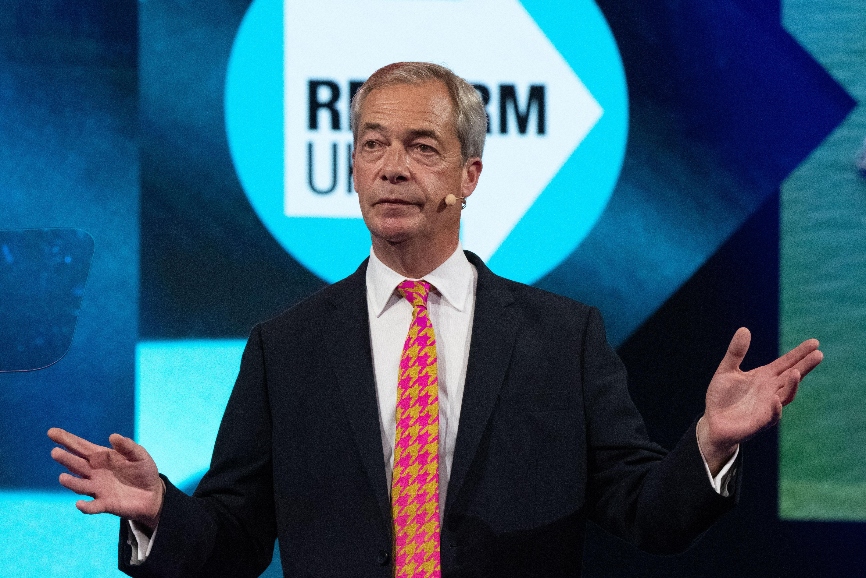
Twelve months ago, every major UK bookmaker had Reform UK odds-on to win the most seats at the next general election. The party had been polling above 30% for most of 2025, Nigel Farage was regularly described as the most influential politician in Britain, and the question wasn’t whether Reform could win – it was by how much. That picture has shifted. Reform now sit at 15/8, behind Labour at 13/8, and the Gorton and Denton by-election last week handed a win to the Greens, not Farage’s party. The odds still give Reform a credible shot. But the path to Downing Street just got more complicated.
What Changed – And Why It Matters for Bettors
The single biggest variable is Restore Britain, the new right-wing party launched by former Reform MP Rupert Lowe in February 2026. Lowe was suspended from Reform in March 2025 after publicly criticising Farage’s leadership. His new party draws from exactly the same voter pool – older, anti-immigration, economically anxious – that made Reform the dominant force in 2025.
Star Sports political betting analyst William Kedjanyi tracked the market impact directly: Labour shortened from 15/8 to 13/8 in a single week, while Reform drifted the other way. The change wasn’t driven by any Labour policy success or improvement in the government’s polling. It was purely mechanical – a split on the right that helps the left without the left doing anything to earn it.
Bookmakers currently give Restore Britain around a 7% implied probability of winning seats at the next election. That number looks small. But in a first-past-the-post system, vote splits matter at a constituency level far more than they do nationally. If Restore takes 4-5% from Reform in the seats Reform needs most, the arithmetic breaks badly.
The Gorton and Denton result adds a second complication. The Greens won a Labour-held seat on a low turnout. Reform came second. But second place in a by-election in inner Manchester is not the performance a party needs to project national credibility heading into local elections.
The Polling Picture vs the Betting Odds
This is where things get genuinely interesting for anyone trying to price a position.
The Electoral Calculus MRP poll from January 2026 – the most detailed seat-by-seat projection available – placed Reform on 31% of the vote, ahead of Conservatives on 21% and Labour on 17%. On those numbers, Reform would take 335 seats and a majority of 20. Their most recent February model has Reform still leading by 8 percentage points nationally, though that gap narrowed from 10 points the previous month.
The most recent Ipsos data has Reform on 30%, Labour on 22%, Conservatives on 19%.
So why are they 15/8 rather than odds-on?
Three reasons. First, a general election is still likely three years away – the current Parliament doesn’t need to dissolve until 2029. Three years of political volatility is a very long window. Second, tactical voting. Electoral Calculus modelled that strong anti-Reform coordination could cost the party dozens of seats, dropping their total from a potential 398 without tactical voting to 335 with it. Still a majority – but a thin one that gets thinner with every vote Restore Britain takes. Third, the local elections. A party that controls twelve English councils and promised DOGE-style spending cuts has a record to defend. Four of the five Reform-led local authorities have proposed 5% council tax rises – the maximum permitted – after failing to cut costs in the way Farage promised.
📊 Key Stat: 335 – seats Reform UK is projected to win at the next general election based on Electoral Calculus’s January 2026 MRP poll, assuming tactical voting. Without tactical coordination, that number rises to 398. (Source: Electoral Calculus / Find Out Now, January 2026)
“A party that did not exist in its current form until 2021 is now by several metrics the most popular political force in the country – regularly polling ahead of both established parties.” – IG Markets analysis, February 2026
The Reform story is generating more active political betting markets than anything since the 2016 Brexit vote. If you want to back a position on the general election winner, the local elections on May 7, or the Farage leadership exit date market, here’s where the best odds and deepest liquidity sit:
BetPortal Amunbet Fortunica VegasNova Highspin West Ace











The Markets the Smart Money Is Actually Watching
The general election winner market is the headline number, but it’s not where the value is. Election is three years away. The market prices in enormous uncertainty. The odds will move fifty times between now and polling day.
The sharper plays are closer to home.
May 7 local elections – Reform at 3/10. Nigel Farage pledged over £5 million in campaign spending across 4,348 seats in 106 English local authorities. He called it the “single most important event” before the next general election and said he would spend “every single penny in the bank account.” At 3/10, the market believes him. Labour are 5/1, Conservatives 6/1.
The catch: Reform already holds twelve councils and has a record. A strong night confirms the polling lead. A weak night – particularly if Restore Britain splits the vote in key councils – reshuffles the whole national picture overnight.
Nigel Farage PM odds. Smarkets exchange data currently has Farage at 13.16% implied probability to be the next prime minister. That’s third behind Wes Streeting and Angela Rayner – both Labour succession candidates. Farage’s price isn’t about an orderly transition. It’s about the chaos scenario: early election, fragmented opposition, Reform surge. Punters backing him at that price are essentially betting that British politics gets dramatic before it gets stable.
The Case Against Reform Winning
The most sober assessment comes from Brookings Institution research published in February 2026, which noted three structural problems Farage hasn’t solved.
First, Reform’s record in local government. Four of five Reform-led councils proposing maximum council tax rises directly contradicts the party’s central promise. Voters who backed Reform as a protest against the establishment now have a Reform establishment of their own to judge.
Second, candidate quality. The Guardian has documented 34 allegations against Farage personally for racist comments made during his school years. More recently, a senior Reform candidate suggested people of other religions should “eat bacon for a month to prove their sincerity.” These stories don’t collapse parties overnight – but they complicate the path to mainstream credibility that any party needs to form a government.
Third, tactical voting. Over a third of Labour voters in the Electoral Calculus poll said they would vote Conservative specifically to keep Reform out. That’s a coalition of people who disagree on almost everything except one thing. It kept Reform from a much larger majority in the modelling, and it could keep them from government entirely if it hardens between now and 2029.
What to Watch Before May
The local elections on 7 May are the next hard test. A strong Reform performance – winning the most seats nationally, making gains in the North and Midlands – shortens their general election odds and validates Farage’s spending pledge. A disappointing night, particularly if Restore Britain takes visible chunks of the vote in target areas, extends the drift that started in February.
Watch three specific things on election night. First, the Metropolitan boroughs – London results come in early and set the narrative. Second, any council where Restore Britain is standing candidates against Reform. Third, overall seat count versus 2025. Reform won 677 seats last May on 41% of all available seats. Anything short of that is a story about a party declining, not advancing.
The general election itself remains priced at 13/2 to happen in 2026 by Oddschecker – a long shot, but not a negligible one. If Starmer leaves before summer and a successor calls an early vote to get their own mandate, every political odds board resets simultaneously.
That’s the scenario where Farage’s 13.16% implied PM probability starts looking underpriced very fast.