Callum Gemmell: The TikToker Explaining Westminster to a Generation That Stopped Watching the News
It’s 11pm. You’re in bed. The phone is too bright and you know you should sleep. But something on the screen has made you stop scrolling.
It happens fast. A face. A direct address to camera. A politician has just said something — something you half-heard on the radio, something your parents mentioned at dinner, something that floated past you in a group chat without sticking. You weren’t sure what it meant. You weren’t sure if it mattered. But now, in thirty seconds, it’s been laid out in plain terms. No studio backdrop. No title bar crawl. No presenter in a suit telling you what to think about what you just heard. Just a person, looking into a phone, telling you what actually happened.
You watch it again.
The scroll stops. The rewatch happens. That is the whole mechanism. That is the thing that Newsnight has not managed to do with under-35s for a decade, and a TikTok creator has just done it in the time it takes to boil a kettle.
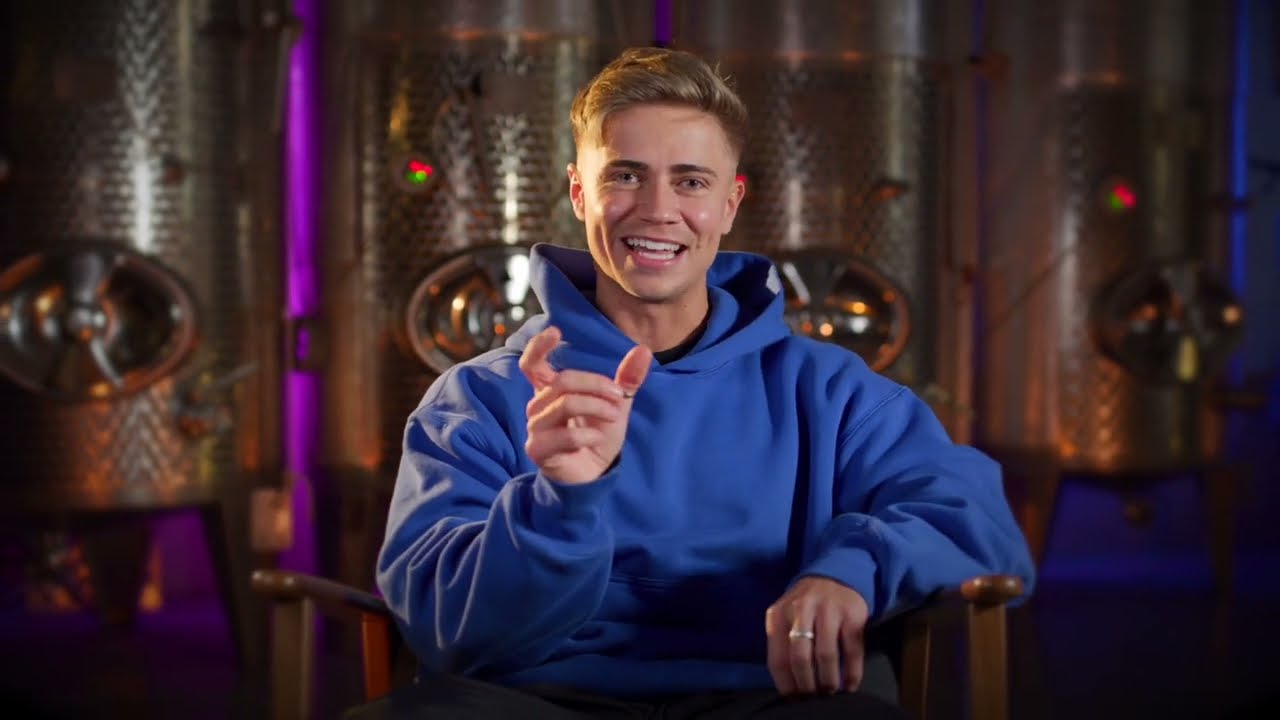
The account belongs to Callum Gemmell — known online as Callum the Ginger — who has built a following by doing something deceptively simple: taking what Westminster politicians say, checking it against what the record shows, and explaining the gap in language that does not require a politics degree to follow. His content sits at the intersection of fact-check and commentary. It moves fast. It assumes you are intelligent but not informed. It treats the viewer’s time as the scarcest resource in the room.
That 11pm stop-scroll has happened to enough people — in enough bedrooms, on enough phones — to make Gemmell part of a generation’s political education. The exact scale of his audience is hard to pin down precisely, and we won’t invent numbers here. But the phenomenon he represents is measurable. According to Ofcom’s 2024 News Consumption in the UK report, more than 60 per cent of 18-to-24-year-olds now use social media as a news source. BBC News is no longer the top news source for that age group. Something shifted. The phone in the bedroom replaced the television in the living room. Creators like Callum Gemmell moved into the space.
Sources: Ofcom News Consumption in the UK 2024; BARB viewing data (Newsnight, ITV News at Ten); Ofcom Online Nation 2024. TikTok political creator figures represent combined platform reach across multiple UK accounts, not a single creator.
The formula that works
The format Gemmell uses is not complicated. That is the point. A politician says X. The record shows Y. Here is the difference between X and Y, explained without jargon, in the time it takes to ride a bus stop to bus stop. End of video.
What makes it land is not just the information. It is the register. Traditional broadcast political journalism speaks in a dialect that signals expertise — the careful hedge, the neutral framing, the reluctance to say plainly what happened. That dialect has a purpose. It carries a certain institutional authority. But it also carries distance. It creates a feeling, in the viewer, that the conversation is happening above their head, between professionals, in a language they were not quite taught.
Gemmell does not speak that language. He speaks the way you explain something to a friend who missed the news but wants to know what happened. Direct. A bit impatient with spin. Willing to say this was misleading, or this claim does not hold up. The informality is not a stylistic choice made in a production meeting. It is the product itself.
This works because the audience it reaches is not disengaged from politics. The Ofcom data makes that clear. The people who stopped watching Newsnight did not stop caring about what their government was doing. They stopped tolerating a presentation style that felt slow, mannered, and aimed at someone else. During the 2024 UK general election, consumption of political content on TikTok rose significantly — not because young people suddenly became interested in politics, but because the format finally arrived that matched how they actually consumed information.
The 2024 election became a landmark for this. Parties ran TikTok operations. Leaders attempted duets. Political creators — including those doing straight commentary and fact-checking — saw their audiences grow sharply in the weeks before polling day. The algorithm served political content to people who had never sought it out. The stop-scroll happened, nationally, at scale.
Gemmell’s approach in this environment is to hold one consistent position: what did they actually say, and does it match the facts. That consistency is itself a kind of brand. It is what makes a viewer come back. If the last video was accurate, you trust the next one enough to watch it. Trust, built video by video, is the only currency that works in an environment where the feed never ends and the next thing is always one swipe away.
What the old media doesn’t know what to do with
Here is the tension that neither side has resolved cleanly.
Callum Gemmell has no journalism degree, as far as public record shows. He has no newsroom behind him. No editor checking his scripts. No compliance team reviewing his output before it goes live. No Broadcasting Code obligations in the way that ITV News or the BBC carry them. Ofcom’s Broadcasting Code applies strict impartiality requirements to licensed broadcasters. It does not apply to a TikTok creator in the same way. The regulatory gap is real, acknowledged by Ofcom, and as yet without a settled answer.
And yet he reaches, on his better weeks, more people than some of the political journalism operations that carry all of those obligations. That asymmetry is uncomfortable for established media. It is also, if you look at it from the audience’s side, a fairly accurate reflection of where trust went.
Ofcom’s own research finds something interesting here. UK adults increasingly distrust social media as a news source — they say, when surveyed, that they know they should be sceptical. And yet consumption continues to rise. People distrust the medium and use it anyway. This is not irrational. It reflects something the trust-in-institutions data has shown for years: distrust of traditional sources is running alongside distrust of new ones. No one has a clean bill of health. Viewers are navigating this without a map, making judgments call by call, video by video, based on whether the information checks out when they look it up themselves.
That is exactly the bet Gemmell appears to be making. If the information is accurate, and the audience checks it and finds it accurate, they come back. The accountability is crowd-sourced rather than institutional. It is faster. It is less formal. Whether it is as reliable, over time and at scale, is the question that no one has answered yet — including the people asking it from inside broadcasting organisations who have watched their own audiences erode.
What established media does not know what to do with Gemmell is partly a question of format and partly a question of culture. The BBC commissioned research showing the decline in news consumption among under-35s via traditional broadcast. The response, largely, has been to create social media accounts and short-form content — to go where the audience is. The results have been mixed. Because the problem was never simply that the content was in the wrong place. The problem was that the content felt like it was made for a different audience and then redistributed.
A Newsnight clip on TikTok is still a Newsnight clip. The grammar of the thing — the presenter, the formality, the pacing — signals a world the viewer left. A video made natively for TikTok, by someone who speaks the same register as the viewer, lands differently. This sounds obvious when stated plainly. It was not obvious to the organisations who spent years optimising for broadcast and now find themselves renegotiating every assumption about what political journalism is supposed to sound like.
The question Gemmell poses, without quite posing it, is whether the format is separable from the accountability. Can you have the directness without the institution? The speed without the editor? The accessibility without the compliance framework? Right now, the answer is: apparently yes, at least well enough for millions of viewers to treat the output as trustworthy. Whether that holds as the stakes get higher — as the claims get more complex, as the political environment gets more contested — is where the story goes next.
The 22-year-old in the bedroom at 11pm has already made a choice. They swiped past the news alert. They watched the thirty-second explainer twice. They probably shared it with someone. They did not, that night, turn on Newsnight.
That choice, multiplied across enough phones and enough nights, is the whole argument.
- Ofcom, News Consumption in the UK: 2024 Report. Ofcom, 2024. (60%+ of 18–24s using social media as news source; BBC no longer top source for young adults.)
- Ofcom, Online Nation 2024. Ofcom, 2024. (UK adult social media news consumption trends; distrust and usage paradox.)
- BARB (Broadcasters’ Audience Research Board), weekly viewing data, 2024. (Newsnight average viewer figures ~800k; ITV News at Ten ~2.1M.)
- Ofcom, Broadcasting Code — Political Content Rules. (Regulatory framework applying to licensed broadcasters vs. online content creators.)
- Reuters Institute for the Study of Journalism, Digital News Report 2024, University of Oxford. (Trust in news sources; social media news consumption trends UK.)
- BBC, internal audience research cited in coverage of under-35 news consumption decline — various 2023–2024 industry reporting.
- Note: Specific follower counts or view figures attributed to Callum Gemmell individually have not been independently verified and are not cited here. The audience figures in this article refer to platform-wide trends documented by Ofcom and Reuters Institute.