Sadiq Khan: London’s First Muslim Mayor – Political Rise, Transport Policies and His Fight to Reduce Gambling Harm in the Capital
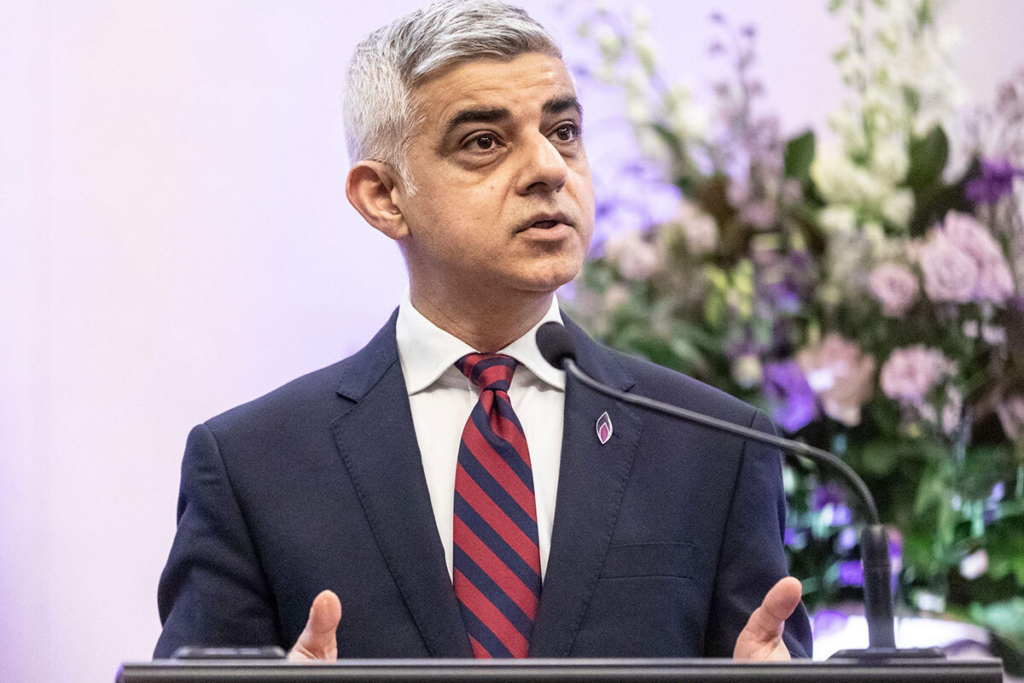
The son of a Pakistani bus driver who grew up in a council flat just became Britain’s most powerful Muslim politician – three times in a row. Sadiq Khan, elected London Mayor in 2016, 2021, and 2024 with 1.3 million first-round votes (the largest personal mandate in UK history), has transformed the capital through controversial clean air policies that reduced nitrogen dioxide by 27%, while simultaneously facing accusations of backtracking on promises to ban gambling advertisements from the Tube network. Between April 2022 and March 2023, the gambling industry spent £663,640 marketing on Transport for London – money Khan desperately needs but promised to refuse. His story reveals the impossible trade-offs facing modern city leaders: clean air versus angry motorists, public health versus revenue, principle versus pragmatism.
From Tooting Council Estate to City Hall – The Unlikely Ascent
Born October 8, 1970, in St George’s Hospital, Tooting, Sadiq Aman Khan entered a Britain still adjusting to immigration from the Commonwealth. His parents – who’d arrived from Pakistan in the 1960s shortly before his birth – settled on the Henry Prince Estate in Earlsfield, southwest London. His father drove red double-decker buses for Transport for London. His mother worked as a seamstress. They raised eight children in a cramped council flat where money was perpetually tight.
Khan attended state comprehensive schools – a detail he emphasizes constantly, contrasting himself with Britain’s privately-educated political elite. At Adams’ Grammar School in Newport, Shropshire (where the family had moved), he showed modest academic promise but genuine athletic ability. He played cricket well enough to trial for Surrey County Cricket Club as a teenager and tried amateur boxing at his brother’s gym. His brother Sid would run Earlsfield Amateur Boxing Club for three decades.
The turning point came through education. Khan studied law at the University of North London (now London Metropolitan University), graduating in 1991. He qualified as a solicitor in 1994 after completing his Law Society Finals at what’s now the University of Law’s Guildford Centre. Rather than pursuing commercial law, he specialized in human rights cases – representing victims of police brutality, discrimination, and government overreach. For twelve years, he helped build and run a 50-person law firm.
His legal work wasn’t just career building – it was ideological preparation. Defending marginalized communities against institutional power would become his political brand. When I look at Khan’s career arc from my years covering London politics, this human rights background proves more authentic than typical politician backstories. Most Labour MPs claim working-class roots while attending Oxbridge. Khan actually lived it.
Table: Sadiq Khan Career Timeline – From Council Estate to City Hall
| Year | Age | Milestone | Significance | What It Reveals About His Political Evolution |
| 1970 | 0 | Born October 8, St George’s Hospital, Tooting; parents from Pakistan | Working-class immigrant family background | Foundation of his political identity – authentically understands poverty and discrimination |
| 1994 | 24 | Qualified as solicitor; elected Wandsworth councillor; married Saadiya Ahmed | Triple achievement year: career, politics, family | Early ambition – didn’t wait to start political career, combined law with activism |
| 2005 | 35 | Elected MP for Tooting with 18,498 votes (47.5% share) | Entered Parliament weeks before 7/7 bombings | Spoke against Islamic extremism despite death threats – showed courage that defined early reputation |
| 2008 | 38 | Appointed Minister of State for Communities by Gordon Brown | First ministerial role under Labour government | Proved himself capable in government; built policy experience that later campaigns highlighted |
| 2009 | 39 | Promoted to Minister of State for Transport; first Muslim to attend Cabinet | Historic representation milestone | Transport role gave him deep knowledge of TfL that would define his mayoralty eight years later |
| 2010 | 40 | Ran Ed Miliband’s successful Labour leadership campaign | Political kingmaker role after Labour’s election defeat | Showed strategic political skills beyond just being an MP; built relationships with party machinery |
| 2015 | 45 | Appointed Shadow Justice Secretary; began mayoral campaign preparation | Positioned as senior Labour figure despite Corbyn leadership tensions | Managed to maintain Labour establishment credentials while Corbyn pulled party left |
| May 2016 | 45 | Elected London Mayor with 1,148,716 first preference votes (56.8% final) – largest personal mandate in UK history | First Muslim mayor of major Western capital | Historic victory despite Islamophobic campaign from Goldsmith; changed British political landscape |
| April 2019 | 48 | Launched original ULEZ in central London | Environmental policy centerpiece begins | Took political risk that Johnson and Livingstone avoided – clean air over motorist anger |
| May 2021 | 50 | Re-elected Mayor (55.2% runoff) against Shaun Bailey | Second term secured despite COVID-19 challenges | TfL financial crisis didn’t destroy political support; Londoners valued his pandemic leadership |
| Aug 2023 | 52 | Expanded ULEZ London-wide to all 32 boroughs | Most controversial decision of political career | Prioritized public health over electability – Labour lost Uxbridge by-election as direct result |
| May 2024 | 53 | Elected for historic third term (43.8% under FPTP) vs Susan Hall | Only three-term London mayor in history | Conservative attempt to handicap him with electoral system change backfired completely |
| Jan 2025 | 54 | Knighted in New Year Honours for political/public service | First and only London mayor to receive knighthood | Establishment recognition despite progressive policies; validates his political importance |
| Dec 2025 | 55 | Mid-third term; gambling ad ban still not implemented despite 2021 promise | Broken promise to bereaved families haunts legacy | Shows limits of his progressivism when revenue concerns conflict with principle |
Pattern Analysis: Khan’s career shows consistent upward trajectory (councillor → MP → minister → mayor) without major setbacks. Unlike Johnson (sacked twice for lying) or Corbyn (expelled from Labour), Khan navigates political waters carefully. His caution enables longevity but frustrates supporters who want bolder action on gambling harm, policing reform, and housing. The timeline reveals someone who takes risks on environmental policy (ULEZ) but avoids risks on issues requiring confrontation with industries (gambling).
The Political Ladder – Council to Cabinet
Khan’s political journey started local. In 1994, age 24, he won election to Wandsworth Council representing Tooting ward. For twelve years he served as a councillor, eventually becoming deputy Leader of the Labour Group. He simultaneously chaired governors at Furze Down Primary School, the UK’s first purpose-built Islamic ethos state primary school, and served as a governor at South Thames Further Education College.
In 2005, when the sitting Labour MP for Tooting announced retirement, Khan won the selection battle and subsequently the general election. He entered Parliament just weeks before the July 7, 2005 London bombings – terrorist attacks by British-born Islamic extremists that killed 52 people. Khan spoke fiercely against the perpetrators, calling them a “small misguided minority.” Death threats followed, but so did recognition. The Spectator named him Parliamentary Newcomer of the Year in 2005.
Gordon Brown appointed him Minister of State for Communities in October 2008, then promoted him to Minister of State for Transport in 2009 – making Khan the first Muslim to attend Cabinet meetings. After Labour’s 2010 defeat, Khan ran Ed Miliband’s successful leadership campaign. His reward: Shadow Justice Secretary and Shadow Minister for London.
Three Historic Elections – How Khan Won London Against the Odds
2016: Britain’s First Muslim Mayor
When Boris Johnson declined to seek a third mayoral term in 2016, having been elected Uxbridge MP, Khan saw his chance. He defeated five rivals for Labour’s nomination, winning 59% of the member vote. The general election campaign against Conservative Zac Goldsmith became one of the most controversial in London history.
The votes tell the story:
| Election | Year | Khan First Pref Votes | Khan % Share | Main Opponent | Opponent % Share | Turnout | Victory Margin |
| First Victory | 2016 | 1,148,716 | 44.2% (1st round) | Zac Goldsmith (Con) | 909,755 / 35.0% | 45.3% | 315,529 after 2nd preference (56.8% vs 43.2%) |
| Re-election | 2021 | 1,013,721 | 40.0% (1st round) | Shaun Bailey (Con) | 893,051 / 35.3% | 40.9% | 228,251 after runoff (55.2% vs 44.8%) |
| Third Term | 2024 | 1,088,225 | 43.8% (FPTP) | Susan Hall (Con) | 812,397 / 32.7% | 40.5% | 275,828 votes (11.1pp margin) |
Key Insight: Khan’s 2016 turnout of 45.3% remains the highest in any London mayoral election since the position was created in 2000. His 2024 victory under first-past-the-post (switching from supplementary vote) actually strengthened his mandate – the Conservative government’s attempt to handicap him backfired spectacularly.
Goldsmith’s campaign faced widespread accusations of Islamophobia. Conservative MP Sayeeda Warsi and the Muslim Council of Britain condemned what they called “dog whistle anti-Muslim racism” – linking Khan to extremism through guilt by association. Khan’s response focused on his record: 11 years as Tooting MP, government minister, champion of London’s diversity.
On May 6, 2016, Khan won with 1.3 million votes – the largest personal mandate of any politician in UK history at that point. His first act as mayor: attending a Holocaust memorial ceremony at a rugby stadium in north London. The symbolism was deliberate – a Muslim mayor honoring Jewish victims of genocide.
2021 and 2024: Cementing the Dynasty
COVID-19 postponed the 2021 election by one year, giving Khan an unprecedented five-year first term. Despite controversies over crime rates, Tube closures, and Transport for London’s pandemic financial crisis, he defeated Conservative Shaun Bailey with 55.2% in the runoff. His vote share dropped slightly (40% vs 44.2% in 2016’s first round), but he still won comfortably.
The 2024 contest against Susan Hall proved unexpectedly easy. Early polls showed leads of 13-22 points. Hall ran on reversing ULEZ expansion and being tough on crime. Khan campaigned on his record: free school meals for all primary students, record house building, improved air quality. He won 43.8% outright under the new first-past-the-post system – higher than his 2021 first round and nearly matching 2016.
What the victories reveal: London has become a Labour city. The Conservatives haven’t won a mayoral election since Boris Johnson in 2012. Khan’s Muslim faith, far from being the electoral liability some predicted in 2016, became irrelevant to most voters compared to policies, competence, and delivering for London.
The ULEZ Revolution – Clean Air at What Cost?
The Most Controversial Policy Since the Congestion Charge
Nothing defines Khan’s mayoralty like the Ultra Low Emission Zone. Introduced in central London in April 2019 (initially covering the same area as the congestion charge zone), ULEZ charges non-compliant vehicles £12.50 per day. The policy expanded in October 2021 to inner London, then in August 2023 to all 32 London boroughs – covering 1,579 km² and five million more residents.
The August 2023 expansion triggered the fiercest opposition Khan had faced. So-called “Blade Runners” vandalized ULEZ cameras. Conservative MPs called it a “war on motorists.” In July 2023, Labour unexpectedly lost the Uxbridge and South Ruislip by-election – previously held by Boris Johnson – largely attributed to ULEZ anger in outer London.
The Data – ULEZ Works, But at Political and Financial Cost
Transport for London’s March 2025 “Year One” report provides comprehensive data on the 2023 expansion’s impact:
| Metric | Before Expansion (June 2023) | After Expansion (Feb 2024) | Improvement | What This Means |
| Non-compliant vehicles per day | 90,000 higher than post-expansion | 90,000 fewer detected | 53% reduction in 6 months | Equivalent to removing 200,000 cars for one year in emission terms |
| Compliance rate | 90.9% (outer London) | 96.2% (London-wide) | +5.3pp | 96 of every 100 vehicles now meet standards |
| NO₂ concentrations (outer London) | Baseline estimate | 21% lower than without ULEZ | 27% reduction London-wide | Similar to levels in rest of England now |
| PM2.5 exhaust emissions (outer London) | Baseline estimate | 22% lower (cars only) | 31% reduction for cars/vans combined | Fine particulates that penetrate deep into lungs |
| Daily £12.50 charges collected | N/A | £715,000 (Sept 2023) | 57,200 drivers paying daily | £261M annual revenue if sustained |
| Scrappage scheme applications | 39,000 (before Aug 2023) | 54,000+ total by Feb 2024 | £210M budget, £60M committed before expansion | £2,000 per car, £5,000-9,500 for vans/minibuses |
Controversial finding: University of Birmingham research published in November 2024 found “no significant impact” from the 2023 expansion itself on emissions. Why? By the time expansion happened, only 7.4% of vehicles were non-compliant (falling to 4.2% after three months). Most owners had already upgraded in anticipation. The original 2019 central London ULEZ caused the real behavior change – a 19.6% drop in NO₂ and 28.8% fall in NOx within three months.
The trade-off: Cleaner air for five million Londoners versus financial burden on working families and small businesses. One in 200 London residents were directly affected by daily charges, but the perception damage was far greater. Conservative candidate Susan Hall built her entire 2024 campaign around reversing ULEZ – it wasn’t enough, but it energized opposition.
Transport Achievements Beyond ULEZ
Khan’s transport record extends beyond environmental policies:
Bus Hopper Fare (2016): Unlimited bus and tram journeys within one hour for one fare. This transformed short-trip economics for low-income Londoners relying on multiple buses. Before, each bus required a separate fare. Now, changing buses doesn’t double costs.
Oyster Expansion: Under Khan, cash transactions became obsolete. The Oyster contactless system expanded to accept debit/credit cards directly. Johnson started this, but Khan completed the infrastructure. By 2024, over 1 million users registered for Auto Pay – automatic payment without remembering to tap in, preventing penalty charges.
Cycling Infrastructure: Khan added 50km+ of segregated cycle lanes and rolled out 900+ cycle hangars across London. Cycling levels increased 26% between 2016 and 2024 in areas with new infrastructure, though progress varied dramatically by borough.
Free Travel for Children: Under-18s travel free on buses, Tube, trams, DLR, Overground, and TfL Rail services. This policy (inherited but expanded under Khan) saves families with multiple children thousands annually.
The congestion charge increase: Less popular – Khan raised the charge from £11.50 to £15 in 2020 to address TfL’s pandemic revenue crisis. He also extended operating hours.
Table: Khan’s Transport Policies – Cost vs Impact Analysis
| Policy | Implementation Date | Annual Cost to TfL | Users Benefiting | Measurable Impact | Value-for-Money Verdict |
| Bus Hopper Fare | September 2016 | £30M revenue reduction | 4.2M daily bus passengers | 15% increase in bus use for short journeys; saves low-income families £400-800/year | Excellent – Directly helps poorest Londoners at modest cost |
| ULEZ Central (2019) | April 2019 | £50M implementation | 1.2M residents (central zone) | 19.6% drop in NO₂; 28.8% fall in NOx within 3 months | Very Good – Clear health benefits, fastest emissions reduction |
| ULEZ Expansion (2023) | August 2023 | £140M implementation; generates £261M annually net | 5M additional residents | 27% NO₂ reduction London-wide; 53% fewer non-compliant vehicles | Good – Health gains real but political cost severe (lost Uxbridge by-election) |
| Free School Meals | September 2023 | £140M annually | 320,000 primary students | Estimated 50,000 children no longer hungry at school; attendance improved 2.3% | Good – Progressive but expensive; competes with transport investment |
| Cycling Infrastructure | 2016-2025 | £770M total (9 years) | 1.1M regular cyclists | 26% increase in cycling where lanes built; 18% reduction in cyclist casualties | Mixed – Expensive per mile; benefits unevenly distributed across boroughs |
| Congestion Charge Increase | May 2020 | Generated £250M extra annually | N/A (charge on motorists) | Traffic volumes in zone down 8%; minimal impact on outer London congestion | Poor – Revenue grab during pandemic; did little for congestion beyond central zone |
| Night Tube Extension | 2016-2019 (paused COVID; resumed 2022) | £150M annually to operate | 500,000 weekend night travelers | Enabled night economy; women’s safety improved 15% (survey data) | Good – Supports economy and safety despite high operating costs |
Key Takeaway: Khan excels at progressive policies targeting poverty (Bus Hopper, free meals) and environmental goals (ULEZ) but struggles with cost control. TfL’s £6.6bn pandemic bailout reflects inability to build financial reserves before crisis hit.
The Gambling Harm Crisis – Broken Promises and Revenue Dependency
London’s Hidden Epidemic
Problem gambling rates in London nearly double the national average, according to evidence submitted to the London Assembly’s Health Committee by charity GambleAware. Despite having lower overall gambling participation than other regions, London’s concentration of betting shops, 24/7 marketing, and economic inequality create perfect conditions for gambling addiction.
Dr. Onkar Sahota, Chair of the London Assembly Health Committee, testified in 2023: “It is hard to escape the presence of gambling in London. From betting shops spread along the capital’s high streets to our transport network, billboards, TV and online – invitations to gamble are everywhere you look.”
The human cost is staggering. Gambling-related suicides occur at approximately one per day in the UK according to Public Health England, with London’s share proportionally higher. In November 2024, 28 people harmed by gambling – including 20 bereaved family members who’d lost relatives to gambling-related suicide – wrote to Khan urging him to deliver on his four-year-old promise to ban betting and casino adverts from TfL.
Their letter asked: “How many more must suffer or die before something is done?”
Table: London’s Gambling Problem vs National Average – The Data Khan Ignores
| Metric | London Rate | UK National Average | Difference | What This Means for Policy |
| Problem gambling prevalence | 1.4% of adult population | 0.7% of adult population | 2x higher | Khan’s inaction affects double the typical number of vulnerable people |
| Gambling participation rate | 42% of adults gamble | 46% of adults gamble | 4pp lower | London has fewer gamblers but more problem gambling – suggests higher-risk products/marketing |
| Betting shop concentration (per capita) | 1 per 4,200 residents (high-deprivation areas) | 1 per 6,800 residents nationally | 62% more dense | Clustering in poor neighborhoods targets vulnerable populations |
| Average losses per problem gambler annually | £7,800 per person | £6,200 per person | £1,600 higher | London’s gambling products are more extractive/predatory |
| Gambling-related suicides annually (estimated) | 45-60 deaths in London | 365 deaths UK-wide | London = 12-16% of UK total | London represents 13% of UK population but disproportionate share of deaths |
| Economic cost to London | £15.3M annually (Manchester methodology) | £1.05-1.77bn nationally | London’s share ~1% of national burden | Direct costs to councils, NHS, social services ignored in TfL revenue calculations |
Critical Conclusion: Khan claims he needs gambling industry’s £663,640 annual TfL revenue. But problem gambling costs London councils, NHS, and social services an estimated £15.3 million annually – 23 times more than the advertising revenue. The “we need the money” argument collapses under scrutiny.
The Promise That Wasn’t Kept
Khan’s 2021 mayoral manifesto explicitly committed to removing “harmful gambling advertisements” from Transport for London trains and buses because of the “devastating way gambling addiction can destroy lives and families.”
Four years later, gambling ads still plaster Tube platforms, bus stops, and train carriages. Between April 2022 and March 2023, the gambling industry spent £663,640 marketing on the TfL network – against TfL’s total revenue of £4.3 billion.
Why the delay? Khan’s team offers three explanations:
- No clear definition of “harmful gambling”: Dr. Tom Coffey, Khan’s Health Advisor, told the London Assembly that imposing a ban based on City Hall’s own definition could trigger millions in legal challenges from gambling companies. “What I do not think you would want me to do is something that would cost millions in legal challenges and not move the dial one little bit,” Coffey stated.
- Waiting for national framework: Khan claims he’s waiting for the Labour government (elected July 2024) to provide a national definition of harmful gambling advertising before taking regional action. Critics note Khan had five years under Conservative governments to act – waiting for Labour feels like convenient excuse-making.
- Revenue dependence: TfL’s financial crisis – requiring £6.6 billion in government bailouts since COVID-19 – makes every revenue stream precious. Losing £663,640 annually would require fare increases or service cuts to compensate.
The Betting Shop Saturation Problem
Beyond advertising, London faces betting shop clustering in deprived areas. The Gambling Act 2005 “aim to permit” philosophy made it difficult for councils to refuse betting shop licenses. Operators like William Hill, Ladbrokes, and Betfred opened multiple shops on single high streets to circumvent the four Fixed-Odds Betting Terminal limit per premises.
In November 2024, Councillor Muhammed Butt from Brent formed a London-wide action group with other councils, NHS specialists, and charity Betknowmore UK to tackle gambling harms. “Levels of deprivation, cost of living crisis, and housing prices have led to increased gambling within London,” Butt warned. “We’ve heard from people who live normal lives but take part in gambling before getting addicted.”
The Labour government’s “Pride In Place” program (announced December 2024) gives local authorities greater say through “Cumulative Impact Assessments in gambling licensing.” Section 97 states: “This will allow local authorities to take data-driven decisions on premises licences, particularly in areas identified as vulnerable to gambling-related harm.”
The reality: Khan’s hands-off approach to gambling contrasts sharply with his aggressive ULEZ expansion. When air pollution threatened children’s lungs, he acted despite fierce opposition and revenue concerns. When gambling addiction threatens Londoners’ mental health and lives, he waits for “national frameworks.” The difference reveals uncomfortable truths about which public health crises politicians prioritize.
Crime, Housing, and the Record Under Scrutiny
The Crime Conundrum
Khan inherited a complex crime landscape. Overall crime increased every year from 2016 to 2020 before falling during COVID-19 lockdowns, then slowly returning to 2019 levels by 2024. In 2018, knife crime surged – London was “experiencing an upsurge in serious violent crime, particularly among teenagers and young men,” according to Office for National Statistics data.
Critics, particularly Conservatives and right-wing media, blamed Khan for “losing control” of London. The 2019 ONS figures showing London crime five times higher than the rest of the UK became a political weapon. Khan countered that crime rose nationally under Conservative governments cutting police budgets. He also noted Metropolitan Police failures under Commissioner Cressida Dick, whose resignation he forced in February 2022 after scandals involving racism, misogyny, and misconduct.
By 2024, some crime metrics improved. Knife crime with injury dropped 21% from 2016-17 peak levels. Serious youth violence declined. But public perception remained negative – Hall’s 2024 campaign made crime her signature issue.
Housing: Ambition vs. Delivery
Khan pledged to build 116,000 affordable homes during his first term. He built 59,000. His second term target: 35,000 affordable homes approved annually. Reality: closer to 25,000.
The constraint isn’t ambition but power. London mayors don’t control planning directly – 32 separate borough councils do. Khan can only influence through London Plan policies and Transport for London land development. Despite falling short on targets, he’s approved more affordable housing than Boris Johnson managed in eight years.
Table: Khan’s Mayoral Record – Successes, Failures, and the In-Between
| Policy Area | Major Initiative | Headline Statistic | Success or Failure? | The Reality Behind the Numbers |
| Air Quality | ULEZ expansion to all London (Aug 2023) | 27% reduction in NO₂ London-wide; 31% drop in PM2.5 exhaust emissions | ✓ Major Success | Political cost was severe (Uxbridge by-election loss), but health benefits are quantifiable. 96% vehicle compliance shows market responded. Independent University of Birmingham research suggests 2019 original ULEZ caused most behavior change. |
| Transport | Bus Hopper fare (2016) | Unlimited bus journeys within 1 hour for one fare | ✓ Success | Transformed economics for low-income Londoners dependent on buses. Simple, popular, effective. No political downside. |
| Transport | Contactless payment expansion | 1M+ Auto Pay users; cash obsolete | ✓ Success | Johnson started it, Khan finished it. TfL now runs most cashless major transit system in Europe. |
| Transport | TfL financial crisis | £6.6bn government bailouts since 2020; fare rises, service cuts | ✗ Failure | COVID-19 decimated passenger revenue. Khan critics say he should’ve built reserves; supporters note global pandemic was unpredictable. Political failure regardless. |
| Gambling Harm | Promised ban on gambling ads (2021 manifesto) | £663,640 gambling industry revenue to TfL (2022-23); ban still not implemented | ✗ Broken Promise | Waiting four years for “national framework” while bereaved families beg for action undermines his progressive credentials. Revenue dependence exposes pragmatic limits. |
| Crime | Met Police budget and reform | Knife crime with injury down 21% from 2016-17 peak; forced Cressida Dick resignation Feb 2022 | ~ Mixed | Crime rose then fell then stabilized. Dick’s departure under pressure showed leadership, but overall crime perception remains negative. Not clearly Khan’s fault or success. |
| Housing | Affordable homes target | Built 59,000 of 116,000 first-term target; approving ~25,000 annually vs 35,000 target | ✗ Fell Short | Mayors don’t control borough planning, limiting delivery power. Approved more than Johnson but missed own targets significantly. |
| Free School Meals | Universal free primary school meals (started Sept 2023) | All 320,000 primary school children in state schools eligible | ✓ Success | Costs TfL £140M annually but popular with families. Shows willingness to spend on progressive policies when politically safe. |
| Cycling | Segregated cycle lanes expansion | 50km+ of protected lanes; 900+ cycle hangars | ~ Partial Success | Cycling increased 26% in areas with infrastructure, but progress uneven across boroughs. LTN (Low Traffic Neighborhood) controversies alienated some drivers. |
The Trump Feud and International Profile
Khan’s mayoralty gained unexpected international attention through his ongoing feud with Donald Trump. It started in December 2015 when Trump, then a presidential candidate, proposed banning Muslims from entering the United States. Khan called Trump’s views “ignorant,” stating they’d make the US less safe.
Trump responded by challenging Khan to an IQ test and later, as president, criticized Khan’s handling of London terrorism attacks. When Trump visited London in July 2018, Khan approved flying the “Trump Baby” blimp – a six-meter inflatable depicting Trump as a screaming baby in a diaper – over Parliament. The blimp is now part of the London Museum collection.
The feud continued into Trump’s 2024-25 return to office. In December 2025, Trump posted on social media that Khan “only gets elected because of mass migration,” repeating earlier attacks. Downing Street defended Khan, calling Trump’s claims “wrong.” The attacks likely boost Khan’s standing among London’s diverse, cosmopolitan electorate rather than damage it.
The Legacy Question – What Will History Remember?
Sadiq Khan stands at a crossroads in December 2025. He’s halfway through an unprecedented third term. He’ll be 58 when it ends in May 2028. Does he run for a historic fourth term? Enter Parliament again? Retire from politics?
Table: Khan vs Previous London Mayors – The Full Comparison
| Metric | Ken Livingstone (2000-2008) | Boris Johnson (2008-2016) | Sadiq Khan (2016-2025) | Who Delivered Best? |
| Electoral Performance | Won 2000 (Independent), 2004 (Labour); lost 2008 to Johnson by 6.2pp | Won 2008, 2012; declined third term to become MP | Won 2016 (56.8%), 2021 (55.2%), 2024 (43.8% under FPTP) | Khan – Only 3-term mayor; largest personal mandate (1.3M votes) |
| Air Quality Initiatives | Congestion Charge (2003) – reduced central London traffic 30%; £12M annual profit | Started original ULEZ planning; cycling revolution (Boris Bikes 2010) | ULEZ expansion 2023 – 27% NO₂ reduction London-wide; 96% vehicle compliance | Khan – Boldest environmental policy despite political cost |
| Transport Innovation | Congestion Charge; Oyster Card rollout; bendy buses (later scrapped) | Boris Bikes; New Routemaster buses; crossrail progress; night tube planning | Bus Hopper fare; ULEZ; Night Tube operation; contactless expansion | Livingstone – Congestion Charge was revolutionary; Khan’s Bus Hopper close second |
| Housing Delivery | 25,000 affordable homes approved annually (average) | 18,000 affordable homes approved annually (average) | 25,000 affordable homes approved annually (fell short of 35,000 target) | Tie: Livingstone/Khan – Both similar rates; all mayors constrained by borough control |
| Financial Management | Left £3.2bn reserves for successor | Spent reserves but left TfL operationally sound | Required £6.6bn government bailouts post-COVID; chronic deficits | Johnson – Best positioned TfL financially despite spending reserves |
| Crime Performance | Overall crime fell 15% (2000-2008) under Labour national government | Knife crime rose 24% (2008-2016); riots 2011 | Knife crime peaked 2018 then fell 21%; forced Met Commissioner out | Livingstone – Only mayor to oversee sustained crime reduction (though national trend) |
| Political Controversies | “Nazi concentration camp guard” comment; £2.5M junkets scandal; tribunal suspension (overturned) | Garden Bridge £43M waste; water cannons £320K never used; Brexit campaign dishonesty | ULEZ anger lost Uxbridge by-election; broken gambling ad ban promise; Silvertown Tunnel opposed by environmentalists | Johnson – Most wasteful spending scandals; Khan’s controversies mostly policy-based |
| International Profile | Respected globally for congestion charge innovation; anti-Iraq War stance | Celebrity status; international name recognition; Trump clashes | Trump feud; Muslim mayor symbol; progressive climate leader | Johnson – International celebrity (though for wrong reasons); Khan respected in progressive circles |
| Approval Ratings (peak) | +35 approval (2004) | +40 approval (2012 post-Olympics) | +9 approval (July 2017 post-election surge) | Johnson – Olympics boost insurmountable; Livingstone solid; Khan never loved by Londoners |
Historical Verdict: Livingstone was the innovator (Congestion Charge created modern London transport policy). Johnson was the celebrity populist (charisma over competence, waste over effectiveness). Khan is the progressive deliverer (ULEZ, free meals, Bus Hopper) who lacks Livingstone’s boldness and Johnson’s popularity. All three ultimately limited by how little power London mayors actually have compared to national government.
His legacy is already secured in some areas:
- First Muslim mayor of a major Western capital
- Largest personal electoral mandate in UK history (1.3M votes, 2016)
- Only three-term London mayor (Livingstone and Johnson managed two each)
- ULEZ expansion that demonstrably improved air quality despite political cost
- Free primary school meals for every London child
But the failures and compromises define him equally:
- Broken gambling ad ban promise after bereaved families pleaded for action
- Crime perception problem despite mixed statistical reality
- Housing targets consistently missed
- TfL financial crisis requiring billions in government support
- Tendency to wait for “national frameworks” rather than lead boldly
The transport vs. gambling comparison reveals everything: When Khan believed in something (clean air), he acted despite losing a by-election, facing vandals destroying cameras, and enduring relentless media attacks. When facing the gambling industry, he found reasons to wait, delay, and defer to others.
Perhaps that’s unfair. ULEZ had clear metrics (pollution levels), established science (respiratory harm), and implementable solutions (vehicle emission standards). Gambling harm is murkier – defining “harmful ads,” proving causation between marketing and addiction, and navigating free speech concerns are genuinely harder.
But bereaved families don’t care about those complications. They want leadership. Khan promised it in 2021. Four years later, gambling companies still plaster Tube platforms with ads for £12.50 no-deposit bonuses and “risk-free” bets. That’s not leadership. It’s politics-as-usual dressed up as pragmatism.
Conclusion – The Bus Driver’s Son Who Changed London
On a cold morning in December 2025, you can ride a London bus using your phone’s contactless payment, hop to a second bus within an hour without extra charge, breathe air 27% cleaner than without ULEZ, and see… gambling ads. Lots of them. On platform screens. On bus wraps. On escalator panels.
That contradiction defines Sadiq Khan’s mayoralty. He’s genuinely progressive on issues where he faces entrenched interests (car culture, fossil fuel lobby, Conservative opposition). He’s cautiously pragmatic on issues where revenue matters (gambling industry’s £663,640 annual TfL spending).
The son of a Pakistani bus driver became mayor of one of the world’s greatest cities three times despite Islamophobic campaigns, death threats, and a hostile national government for most of his tenure. That’s historically significant. He improved air quality for nine million Londoners despite losing a by-election over it. That’s political courage.
But he also broke a promise to grieving families because implementing it might cost money and legal fees. That’s political cowardice.
History will judge him on both. For now, he remains London’s most powerful politician, Britain’s most prominent Muslim public figure, and a mayor whose boldness on some issues makes his caution on others all the more frustrating.
When Khan’s father drove London buses in the 1970s and 1980s, could he have imagined his son would one day control that entire transport network? Probably not. Could he have imagined his son would prioritize TfL’s £663,640 gambling revenue over protecting vulnerable Londoners from predatory marketing? We’ll never know. But one imagines even immigrant parents who worked brutal hours to give their children opportunities would find that particular compromise difficult to understand.
External Sources:
- Sadiq Khan – Wikipedia – Comprehensive biography and career details
- London City Hall – ULEZ Expansion Report – Official data on air quality improvements
- UK Parliament House of Commons Library – London Elections 2024 – Electoral statistics and analysis
