Liz Truss: The Shortest-Serving PM in History – Career Trajectory, Economic Crisis and Attitude Toward Gaming Industry
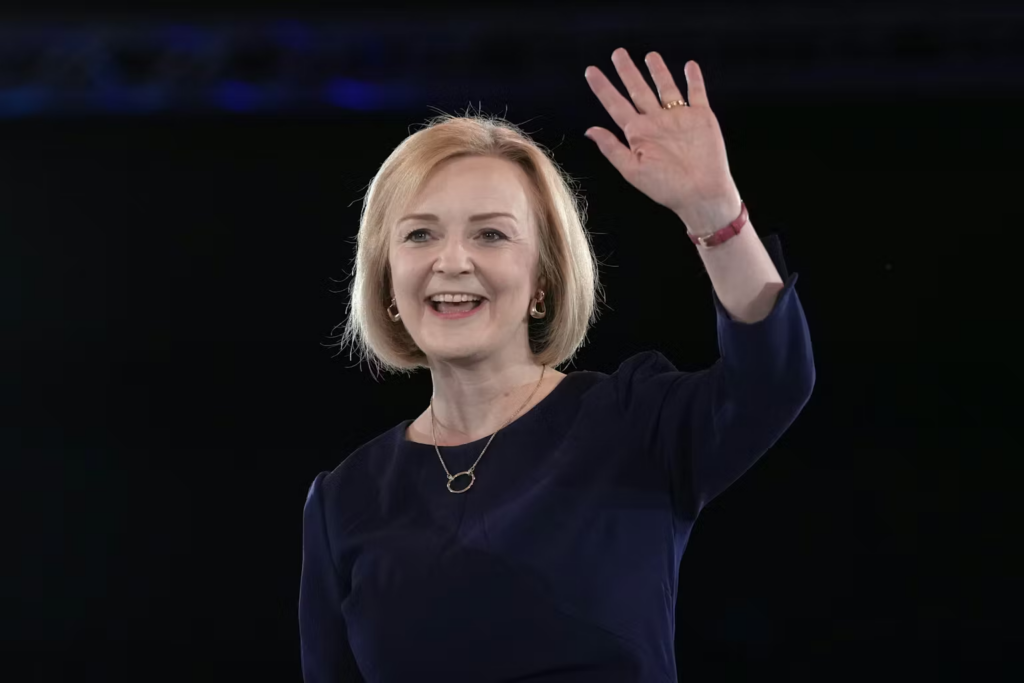
On September 6, 2022, Liz Truss walked into 10 Downing Street as Britain’s 56th prime minister, full of ambitious plans to slash taxes, deregulate business, and unleash economic growth through radical free-market policies. Just 49 days later, on October 25, she walked out again – the shortest-serving prime minister in British history, brought down by an economic crisis of her own making.
Her catastrophic tenure would be defined by a single moment: the September 23 “mini-budget” that crashed the pound, spooked financial markets, and forced the Bank of England into emergency intervention to prevent pension fund collapse. The £45 billion in unfunded tax cuts sent government borrowing costs soaring, mortgage rates through the roof, and public confidence in Britain’s economic competence to historic lows.
But there’s another dimension to Truss’s brief, chaotic premiership that’s received less attention: her attitude toward gambling regulation. As a committed libertarian who’d spent years railing against the “nanny state,” Truss represented the gambling industry’s best hope for avoiding stricter regulation. Her rise to power sparked speculation that the long-delayed gambling white paper might be shelved entirely in favour of market self-regulation.
This is the story of how Britain’s third female prime minister crashed and burned in spectacular fashion – and what her free-market ideology meant for UK political betting reform efforts.
From Liberal Democrat Republican to Thatcherite Conservative
Early Life – The Left-Wing Child Who Became a Right-Wing Icon
Mary Elizabeth Truss was born on July 26, 1975, at John Radcliffe Hospital in Oxford to decidedly left-wing parents. Her father, John Truss, was a mathematics professor at Leeds University. Her mother, Priscilla, worked as a nurse and teacher while actively campaigning for the Campaign for Nuclear Disarmament (CND).
Truss later recalled: “My mum was a member of the CND and I have memories of going on marches with her when I was a child, so I suppose I had an awareness of and an interest in politics from quite an early age.”
The family moved to Paisley, Scotland when Truss was four (1979-1985), then relocated to suburban Leeds where she attended Roundhay School, a comprehensive state school. Despite later criticizing her educational experience at Roundhay, her grades were sterling enough to gain admission to Oxford.
Oxford Years – The Radical Phase
At 18, Truss entered Merton College, Oxford to study Philosophy, Politics and Economics (PPE) – the classic degree path for British politicians. But her Oxford years were spent on the opposite side of the political spectrum from where she’d eventually land.
As president of the Oxford University Liberal Democrats, Truss was actively involved in the party’s youth wing. In 1994, aged just 19, she delivered a speech at the Liberal Democrat annual conference in Brighton calling for the abolition of the monarchy:
“I agree with Paddy Ashdown when he said: ‘Everybody in Britain should have the chance to be a somebody.’ But only one family can provide the head of the state. We Liberal Democrats believe in opportunity for all. We do not believe people are born to rule.”
She also advocated for cannabis legalization and embraced typical student left-liberal positions. Her involvement with the Oxford Hayek Society, celebrating Austrian economist Friedrich Hayek’s free-market philosophy, hinted at the ideological journey ahead.
The Conversion to Conservatism
By the time Truss graduated in 1996, she’d joined the Conservative Party – a stunning ideological U-turn from her republican, cannabis-legalizing student days. The transformation wasn’t instant or completely explained, but she later attributed it partly to witnessing what she called “failing Labour-run local authorities” in Paisley and Leeds.
Her path into Conservative politics included:
- 1996-2000: Commercial manager at Royal Dutch Shell, where she qualified as an accountant
- 2000-2005: Economics director at Cable & Wireless telecommunications
- 2006-2010: Greenwich Council councilor (Conservative)
- 2008-2010: Deputy director at Reform, a free-market think tank
Two failed parliamentary bids – Hemsworth in 2001, Calder Valley in 2005 – preceded her eventual 2010 election as MP for South West Norfolk with a comfortable majority.
The Cabinet Years – A Decade of Ministerial Musical Chairs
Founding the Free Enterprise Group
Once in Parliament, Truss immediately positioned herself on the libertarian, economically liberal wing of the Conservative Party. She founded the Free Enterprise Group of Conservative MPs, advocating tax cuts and deregulation with evangelical fervour.
In 2012, she co-authored “Britannia Unchained” with fellow rising stars including Kwasi Kwarteng (who’d become her chancellor), Priti Patel, and Dominic Raab. The provocative pamphlet famously declared:
“The British are among the worst idlers in the world. We work among the lowest hours, we retire early and our productivity is poor.”
This controversial claim would haunt her political career, but it crystallized her worldview: Britain needed tougher work culture, lower taxes, less regulation, and government to get out of the way of enterprise.
Six Cabinet Roles Under Three Prime Ministers
Truss’s ministerial career was remarkably long – over ten years of continuous cabinet service from 2014 to 2022, surviving three prime ministers:
Under David Cameron:
- Secretary of State for Environment, Food and Rural Affairs (2014-2016)
- Made headlines declaring it a “disgrace” that Britain imports two-thirds of its cheese
- Advocated for tech innovation in farming
Under Theresa May:
- Lord Chancellor and Secretary of State for Justice (2016-2017)
- First female lord chancellor in British history
- Clashed with judges over criticism of Brexit-related rulings
- Chief Secretary to the Treasury (2017-2019)
- Budget watchdog role, overseeing public spending
Under Boris Johnson:
- Secretary of State for International Trade (2019-2021)
- Negotiated post-Brexit trade deals with Japan, Australia, Canada
- Submitted UK’s application to join Trans-Pacific Partnership
- Secretary of State for Foreign, Commonwealth and Development Affairs (2021-2022)
- Second female Foreign Secretary after Margaret Beckett
- Took central role in response to Russia’s Ukraine invasion
- Consciously styled herself as Thatcher 2.0, even being photographed in a tank
The 2022 Leadership Campaign – Promising What She Couldn’t Deliver
When Boris Johnson resigned in July 2022 amid cascading scandals, Truss entered the leadership race against former Chancellor Rishi Sunak and several other candidates. Her pitch was simple: massive tax cuts, deregulation, and economic growth through radical free-market policies.
The Conservative Membership Contest
After MPs narrowed the field to Truss and Sunak, it went to the party membership – approximately 160,000 Conservative activists who skew older, wealthier, and more ideologically right-wing than MPs.
Truss’s campaign promises included:
- Reverse the rise in National Insurance contributions
- Cancel the planned corporation tax increase from 19% to 25%
- Cut the basic rate of income tax from 20% to 19%
- Energy price cap to protect households from soaring bills
- No windfall taxes on energy companies
- Reject “Treasury orthodoxy” about balanced budgets
Sunak warned these plans were economically irresponsible “fairy tales” that would fuel inflation. He positioned himself as the fiscally responsible adult in the room. Members didn’t care.
Final Result (September 5, 2022):
- Liz Truss: 57.4% (81,326 votes)
- Rishi Sunak: 42.6% (60,399 votes)
Truss had won – and would immediately set about proving Sunak’s warnings prophetic.
The Queen’s Final Act
On September 6, 2022, Queen Elizabeth II formally appointed Truss as prime minister at Balmoral Castle in Scotland – the first time in history the appointment happened outside England, due to the Queen’s mobility issues.
It would be the Queen’s final major constitutional act. She died just two days later on September 8, plunging the nation into 10 days of mourning that suspended normal political business. Truss delivered heartfelt tributes to the Queen, calling her “the rock on which modern Britain was built.”
But beneath the national mourning, Truss’s team was preparing to unleash the most radical economic policy in decades. They had no idea it would destroy her premiership within weeks.
The 49 Days That Shook Britain
The Mini-Budget – September 23, 2022
After the mourning period ended, Chancellor Kwasi Kwarteng rose in the House of Commons on September 23 to deliver what the government called “The Growth Plan” – a ministerial statement rather than an official budget, hence the media nickname “mini-budget.”
It was anything but mini. The proposals included:
Tax Cuts Totaling £45 Billion:
- Abolish the 45% top rate of income tax for earnings over £150,000
- Cut the basic rate of income tax from 20% to 19% (brought forward from 2024)
- Cancel the planned corporation tax rise from 19% to 25%
- Reverse the April 2022 National Insurance increase
- Cancel the Health and Social Care Levy
Energy Support:
- Energy Price Guarantee capping household bills at £2,500 annually
- Business energy support scheme
- Combined estimated cost: £60-150 billion over two years
Other Measures:
- Remove caps on bankers’ bonuses
- Create “investment zones” with planning deregulation and tax breaks
- Accelerate infrastructure projects
The total package represented the largest tax cuts in 50 years. And crucially, Kwarteng presented it without an independent assessment from the Office for Budget Responsibility (OBR) – the fiscal watchdog created specifically to prevent irresponsible budgets.
The Market Meltdown – September 23-28, 2022
The reaction was swift, devastating, and comprehensive.
September 23 (Day 1):
- Pound falls 3.6% against the dollar during Kwarteng’s speech
- 10-year gilt yields (government borrowing costs) surge 0.33 percentage points
September 26 (Day 4):
- Pound crashes to $1.0327 – lowest level since 1985, near parity with dollar
- 30-year gilt yields jump 0.51 percentage points in single session
- IMF issues unprecedented public criticism of UK economic policy
September 27-28 (Days 5-6):
- Mortgage lenders withdraw hundreds of products as rates spike
- Pension funds face margin calls on liability-driven investments (LDIs)
- Bank of England forced into emergency £65 billion intervention
The IMF’s statement was particularly damning: the measures would “likely increase inequality” and should be “re-evaluated.” For a developed economy like the UK to receive such public criticism from the IMF was extraordinary.
International economists piled on. Former US Treasury Secretary Lawrence Summers said the UK was behaving like “an emerging market turning into a submerging market.” Nouriel Roubini, who predicted the 2008 crash, drew comparisons with the 1976 sterling crisis that required an IMF bailout.
Why Did Markets Panic?
Three factors combined to create the perfect storm:
1. Unfunded Tax Cuts in High-Inflation Environment: Britain already had 9.9% inflation. Cutting taxes by £45 billion without offsetting spending cuts or revenue increases would require massive government borrowing. This risked making inflation worse, not better.
2. No OBR Assessment: By refusing an independent forecast, Truss and Kwarteng signaled they didn’t care about fiscal credibility. Investors interpreted this as ideological recklessness.
3. Pension Fund LDI Crisis: Pension funds had invested heavily in liability-driven investments – complex financial products that use borrowed money to buy gilts. When gilt yields spiked, LDIs faced margin calls and were forced to sell gilts to reduce leverage. This created a doom loop: selling gilts pushed yields higher, triggering more selling.
The Bank of England’s £65 billion emergency intervention prevented outright financial crisis, but the damage was done.
The Mortgage Catastrophe
For millions of Britons, the mini-budget’s most immediate impact was mortgage chaos:
- Two-year fixed mortgage rates jumped from 4.74% (pre-mini-budget) to 6.65% by mid-October
- Five-year fixed rates hit 6.51% – highest since 2008 financial crisis
- Lenders withdrew 935 mortgage products in 48 hours as markets became too volatile to price
Bloomberg estimated that if rates settled at these levels, average monthly mortgage payments would climb from £725 to £1,325 – a 83% increase. For families already struggling with an energy crisis and food inflation, this was catastrophic.
The U-Turns Begin – October 3-14, 2022
Facing financial meltdown and political mutiny, the government began reversing course:
October 3 (Day 10): Kwarteng announces abolition of the 45% top tax rate is being scrapped – the most politically toxic element of the mini-budget. Truss says “we get it and we have listened.”
October 14 (Day 21): Kwarteng flies home early from IMF meetings in Washington to be sacked. Truss appoints Jeremy Hunt as new Chancellor – a safe pair of hands from the party’s centrist wing.
October 17 (Day 24): Hunt reverses virtually the entire mini-budget:
- Reverse corporation tax cut cancellation (tax will rise to 25% as originally planned)
- Reverse basic rate income tax cut
- Reverse National Insurance reversal
- Cut Energy Price Guarantee from two years to six months
- Cancel most other tax measures
BBC economics editor Faisal Islam called it “the biggest U-turn in British economic history.”
The Lettuce Outlasts the PM
On October 11, The Economist published an article comparing Truss’s remaining time in office to the shelf life of a lettuce. On October 14, the Daily Star began live-streaming a lettuce dressed in a blonde wig next to a framed photo of Truss, asking: “Will Liz Truss outlast this lettuce?”
It became a viral sensation. The lettuce was even given a plate of tofu to mock Home Secretary Suella Braverman’s comment about “tofu-eating wokerati.”
The lettuce won. On October 20, Truss announced her resignation after just 45 days – though she’d serve until October 25 when Rishi Sunak was appointed. The lettuce livestream celebrated with “God Save the King” and a party popper.
The End – October 20, 2022
Standing at a lectern in Downing Street, Truss delivered the shortest resignation speech in modern political history – lasting just 7 minutes:
“I recognize though, given the situation, I cannot deliver the mandate on which I was elected by the Conservative Party. I have therefore spoken to His Majesty the King to notify him that I am resigning as leader of the Conservative Party.”
Conservative MP Charles Walker summed up the party mood: “I think it’s a shambles and a disgrace. I hope all those people that put Liz Truss into Number 10, I hope it was worth it… because the damage they have done to our party is extraordinary.”
Rishi Sunak, the man Truss had defeated just weeks earlier, was elected unopposed as her successor. The man who’d warned about the economic consequences of her plans would now have to clean up the mess.
Table 1: The 49-Day Timeline – How a Premiership Collapsed
| Date | Day | Event | Impact |
| Sept 6, 2022 | 1 | Truss appointed PM by Queen Elizabeth II | Historic moment – Queen’s final PM appointment |
| Sept 8, 2022 | 3 | Queen Elizabeth II dies | 10-day mourning period suspends political business |
| Sept 19, 2022 | 14 | Queen’s funeral | Mourning period ends, government returns to business |
| Sept 23, 2022 | 18 | Kwarteng delivers mini-budget (£45B unfunded tax cuts) | Pound crashes 3.6%, gilt yields surge, markets panic |
| Sept 26, 2022 | 21 | Pound hits $1.0327 (lowest since 1985) | IMF publicly criticizes UK policy, mortgage lenders withdraw products |
| Sept 28, 2022 | 23 | Bank of England emergency £65B intervention | Prevents pension fund collapse, stabilizes gilt market temporarily |
| Oct 3, 2022 | 28 | Government U-turns on 45% tax rate abolition | First major reversal, Truss says “we get it and we have listened” |
| Oct 11, 2022 | 36 | Economist compares Truss tenure to lettuce shelf life | Daily Star begins lettuce livestream (14 Oct), becomes viral sensation |
| Oct 14, 2022 | 39 | Kwarteng sacked as Chancellor, replaced by Jeremy Hunt | Return to “safe hands” centrist, emergency reset |
| Oct 17, 2022 | 42 | Hunt reverses virtually entire mini-budget | “Biggest U-turn in British economic history” – BBC |
| Oct 19, 2022 | 44 | Chaotic fracking vote, chief whip resignation confusion | Government authority collapses, MPs openly in revolt |
| Oct 20, 2022 | 45 | Truss announces resignation | Shortest-serving PM in British history |
| Oct 25, 2022 | 50 | Sunak appointed PM, Truss officially leaves office | Truss eligible for £115K/year Public Duty Costs Allowance (which she refused) |
Key Statistics:
- Market losses: £300 billion wiped off UK stock and bond markets
- Pound decline: 19% fall for the year, 3rd worst G10 currency
- Mortgage rate peak: 6.51% on five-year fixed (up from 4.74%)
- Government borrowing cost jump: 30-year gilts hit highest since 1998
- Political approval: -59 personal rating (worst for any PM on record)
Table 2: The Mini-Budget Economic Damage
| Indicator | Pre-Mini-Budget (Sept 22) | Peak Crisis (Sept 26-28) | Long-term Impact | Change |
| GBP/USD Exchange Rate | $1.1444 | $1.0327 (lowest since 1985) | Recovered to ~$1.11 by Nov 2022 | -9.8% at worst |
| 2-Year Gilt Yield | 3.76% | 4.60% | Settled around 4.0% by Dec 2022 | +84 basis points |
| 10-Year Gilt Yield | 3.49% | 4.51% | Remained elevated at 3.9% | +102 basis points |
| 30-Year Gilt Yield | 3.76% | 5.14% | Highest since 1998, stayed elevated | +138 basis points |
| 5-Year Fixed Mortgage Rate | 4.74% | 6.51% (Oct 20) | Slowly declined to ~5.5% by year-end | +177 basis points |
| Number of Mortgage Products Available | ~4,000 | ~2,100 (935 withdrawn in 48hrs) | Gradual recovery | -47.5% at worst |
| FTSE 100 Index | 7,237 points | 6,893 points (Oct 3 low) | Recovered to ~7,300 by Dec | -4.7% at worst |
| Market Capitalization Lost | N/A | £300 billion off stocks/bonds combined | Partial recovery | ~£200B permanent loss estimated |
| Conservative Poll Rating | 28% (Sept 1-4) | 14% (Oct 22-23) | Stayed below 25% thereafter | -14 percentage points |
| Truss Personal Approval | -26 net (Sept 9-11) | -59 net (Oct 20-21) | Worst PM approval rating on record | -33 percentage points worsening |
Cost to Households:
- Average mortgage payment increase: +£600/month (if rates held at 6.5%)
- Estimated additional annual cost to 2M households remortgaging: £14.4 billion
- Energy bill support partially offset damage but couldn’t prevent overall cost-of-living worsening
Political Fallout:
- 4 consecutive by-election losses for Conservatives in following months
- Labour opens 30+ point polling lead (largest in 25 years)
- Conservative membership falls 24% in 2023 as members blame Truss
- “Mini-budget” enters political lexicon as shorthand for reckless policymaking
Truss’s Gambling Policy Stance – The Industry’s Lost Champion
The Free-Market Ideologue Who Opposed Regulation
Throughout her ministerial career, Truss was consistently skeptical of government intervention in personal choice and business operations. In a June 2018 speech, she explicitly attacked “nanny state” policies:
“Too often, we’re hearing about rules and regulations which just get in the way of consumers’ choices and lifestyles, including the government’s efforts to reduce alcohol consumption and unhealthy eating habits.”
This philosophical opposition to paternalistic regulation extended naturally to gambling. Truss had voted against heightened gambling restrictions in parliament and was known as a fierce advocate of personal freedom – “freedom” being reportedly her favorite political word according to colleagues.
The Gambling White Paper Under Threat
When Truss became prime minister in September 2022, the gambling industry white paper had already been delayed multiple times across 22 months, four gambling ministers, and three prime ministers (Cameron initiating, Johnson delaying, Truss inheriting).
Industry observers immediately speculated that Truss might shelve the gambling review entirely. The Guardian’s Jessica Elgot wrote that gambling reform “would fit the mould of the kind of regulatory reform that Truss is keen to avoid burdening businesses with.”
Key indicators of Truss’s likely approach:
1. Chris Philp’s Endorsement: The previous gambling minister, Chris Philp, who’d prepared the white paper for Johnson’s approval, publicly backed Truss in the leadership contest. This suggested continuity for pro-industry voices.
2. Iain Duncan Smith’s Support: The long-time anti-gambling campaigner and former Conservative leader backed Truss, saying “she is keen to do something” on gambling – though his comment was ambiguous about what that “something” might be.
3. Small Government Philosophy: Truss’s inaugural remarks about government’s role not being to “tell us what our tastes should be” and complaints about “drinking too much, eating too many doughnuts” signaled hostility to behavioral regulation.
4. Obesity Bill Speculation: Reports emerged that Truss planned to scrap the Obesity Bill – restrictions on junk food advertising and promotions. If true, gambling restrictions would likely face similar fate.
What the Industry Hoped For
The Betting and Gaming Council and major operators had specific hopes if Truss survived long enough to deliver policy:
Avoiding or Watering Down:
- Mandatory affordability checks on customers (seen as intrusive and likely to drive business offshore)
- Per-player budget limits that would restrict high-stakes recreational gamblers
- Further restrictions on bonus offers and VIP schemes
- Tighter controls on advertising beyond what already existed
Maintaining:
- Current self-regulatory framework wherever possible
- Industry-funded voluntary levy rather than mandatory statutory levy
- Market-driven approach to player protection rather than prescriptive rules
The BGC’s Michael Dugher had called for a “sensible, proportionate and carefully targeted” white paper – code for minimal intervention. With Truss’s libertarian instincts, the industry saw its best opportunity in years to avoid heavy-handed regulation.
The 49-Day Window That Closed
Truss’s economic catastrophe meant she never had time to make decisions on gambling policy. The white paper remained in limbo throughout her chaotic 49 days, with the Department for Culture, Media and Sport focused on crisis management rather than policy delivery.
When Rishi Sunak replaced her on October 25, 2022, the industry’s hopes for light-touch regulation evaporated. Sunak, while also favoring market solutions, had Racing constituency interests that made him sympathetic to concerns about gambling harm. More importantly, he needed to project stability and competence – not controversial deregulation.
The white paper would eventually be published under Sunak on April 27, 2023 – 29 months after the review began, surviving three prime ministers. It contained stricter regulations than the industry had feared but weaker than reform advocates wanted – a politically cautious middle ground.
If Truss had survived, gambling regulation might look very different today.
Table 3: Liz Truss vs Other Modern PMs – Tenure and Legacy Comparison
| Prime Minister | Tenure Length | Entry Method | Major Policy | Exit Method | Post-PM Approval | Historical Legacy |
| Liz Truss | 49 days (Sept-Oct 2022) | Conservative member vote (57.4%) | Mini-budget: £45B unfunded tax cuts | Forced resignation after market crash | -59 net (worst on record) | Shortest-serving PM ever, economic catastrophe warning |
| Rishi Sunak | 616 days (Oct 2022-July 2024) | Unopposed after Truss resignation | Stabilized economy, Rwanda deportation plan | Lost 2024 election landslide | -35 net | Brief stabilizer between chaos periods |
| Boris Johnson | 1,078 days (July 2019-July 2022) | Conservative member vote (66.4%) | Brexit “Get It Done”, COVID vaccine rollout | Forced resignation (Partygate, scandals) | -29 net (at resignation) | Delivered Brexit, scandal-plagued, historic COVID deaths |
| Theresa May | 1,106 days (July 2016-July 2019) | Unopposed after leaderhip contest | Failed three Brexit deal votes | Forced resignation after Brexit impasse | -56 net | Brexit failure, “strong and stable” mockery |
| David Cameron | 2,283 days (May 2010-July 2016) | Coalition then majority government | Austerity, Brexit referendum | Resigned after losing Brexit vote | -18 net | Austerity architect, Brexit catalyst |
| Gordon Brown | 1,048 days (June 2007-May 2010) | Unopposed Labour succession | Navigated 2008 financial crisis | Lost 2010 general election | -38 net | Financial crisis management, election loss |
| Tony Blair | 3,895 days (May 1997-June 2007) | Won 1997 landslide (418 seats) | Iraq War, minimum wage, devolution | Resigned amid Iraq backlash | -40 net (by 2007) | Iraq War defines legacy despite domestic reforms |
Key Comparisons:
- Shortest tenure: Truss at 49 days vs previous record George Canning’s 119 days (1827)
- Worst approval: Truss’s -59 beats previous worst (May’s -56, Sunak’s -35)
- Fastest collapse: Truss went from PM to resignation in 45 days (announcing Oct 20, effective Oct 25)
- Market damage: Only PM to cause immediate financial crisis (1976 Jim Callaghan faced crisis but didn’t cause it)
- Cabinet service: Truss had 10+ years continuous cabinet experience, more than any other modern short-tenure PM
Unique Features of Truss Era:
- Only PM to serve under one monarch (Elizabeth II appointed her, Charles III accepted resignation)
- Only PM whose entire tenure was shorter than national mourning period (Queen died day 3, 10-day mourning)
- Only PM to be outlasted by a lettuce in viral livestream
- Only PM to see Chancellor reverse entire economic agenda within 3 weeks
Table 4: Philosophical Comparison – Truss vs Other Conservative PMs on Regulation
| PM | Economic Philosophy | Gambling Stance | Regulatory Approach | Signature Policy | Market Freedom vs State Protection |
| Liz Truss | Radical libertarian – Thatcher 2.0 aspirations, “Britannia Unchained” author | Anti-regulation – Opposed heightened gambling restrictions, likely to shelve white paper | Minimum intervention – “Small government,” anti-nanny state, let markets self-regulate | Abolish top tax rate, deregulate planning, remove banker bonus cap | 90% freedom / 10% protection |
| Rishi Sunak | Technocratic pragmatism – Data-driven, cautious, “sound money” | Balanced approach – Published white paper with moderate reforms, constituency racing interests | Evidence-based – Wants protections but fears offshore displacement | Stabilize economy after Truss, gradual reforms | 60% freedom / 40% protection |
| Boris Johnson | Populist opportunism – Whatever polls well, inconsistent ideology | Delayed action – Launched review 2020 but never published white paper | Headline-grabbing – Big announcements, weak follow-through | “Levelling up,” Brexit, COVID furlough | 50% freedom / 50% protection (whichever polls better) |
| Theresa May | Paternalistic conservatism – “Burning injustices,” worker protections | Toughening stance – Cut FOBT stakes from £100 to £2 | Active intervention – Willing to regulate markets for social good | FOBT stake reduction, Modern Slavery Act | 40% freedom / 60% protection |
| David Cameron | Compassionate conservatism (early) → Austerity (later) | Light-touch – Minimal gambling intervention despite growing concerns | Pro-business – Avoid regulation unless politically essential | Big Society, gay marriage, austerity | 70% freedom / 30% protection |
| Margaret Thatcher (baseline) | Pure free-market – Deregulation, privatization, anti-union | N/A – Gambling Act 1968 preceded her tenure | Destroy regulations – “Government is the problem, not the solution” | Poll tax, coal mine closures, privatization | 95% freedom / 5% protection |
Analysis: Truss was the most ideologically committed to radical free-market policies of any PM since Thatcher. Her gambling stance flowed naturally from her broader philosophy of minimum state intervention in personal choice and business operations. However, her catastrophic economic crash proved that markets aren’t always self-correcting and that credibility matters.
Sunak’s more cautious approach – publishing the white paper with moderate protections – represented a return to post-Thatcher Conservative pragmatism. Even Cameron, who was business-friendly, never attempted Truss’s level of deregulatory shock therapy.
Truss’s failure effectively killed radical libertarianism as a governing philosophy in British politics for the foreseeable future. The gambling industry lost its best chance for light-touch regulation when her premiership collapsed.
Table 5: The Cost of 49 Days – Economic and Political Damage Assessment
| Category | Immediate Cost (Sept-Oct 2022) | Medium-term Cost (Oct 2022-Dec 2023) | Long-term Impact (2024+) | Responsible Party |
| Market Capitalization | £300 billion wiped off stocks/bonds | £200 billion permanent loss estimated | UK assets remain undervalued vs peers | Truss mini-budget (50%), LDI fire sales (50%) |
| Government Borrowing | 30-year gilt yields up 138 bps | Increased annual debt servicing by ~£5 billion | Long-term higher borrowing costs | Truss fiscal credibility destruction |
| Household Mortgages | 935 products withdrawn, rates +177 bps | 2M households remortgaging paid £600/month more | Estimated £14.4 billion extra costs to 2025 | Truss mini-budget caused rate spike |
| Pension Funds | £1.5 trillion in LDI positions threatened | Major reforms to LDI market, reduced leverage | Stricter regulation, lower returns | LDI design flaws (70%), Truss catalyst (30%) |
| Bank of England Intervention | £65 billion emergency gilt purchases | BoE delayed interest rate hikes, extended QE | Inflation stayed higher longer than needed | Truss forced emergency measures |
| Political Capital for Conservatives | Poll ratings crashed from 28% to 14% | Sustained 20-30 point Labour lead through 2023 | Lost 2024 election 121 seats (worst since 1906) | Truss destroyed economic competence reputation |
| Party Membership | Immediate recriminations within party | 24% membership drop in 2023 | Existential crisis, possible Reform UK defections | Truss members’ choice blamed |
| Currency Stability | Pound fell 9.8% to near-parity with dollar | Recovered slowly, UK seen as less stable | “Emerging market” reputation lingers | Truss policy uncertainty |
| International Reputation | IMF public criticism (unprecedented for G7) | Ongoing skepticism of UK fiscal management | Reduced influence in global forums | Truss amateur hour economics |
Total Estimated Cost:
- Direct market losses: £200-300 billion
- Increased borrowing costs: £5-10 billion annually (2023-2025)
- Household mortgage costs: £14-20 billion (2022-2025)
- Political costs: Immeasurable, but led to historic 2024 electoral defeat
Who Paid:
- Homeowners: Higher mortgage payments, some forced sales
- Pensioners: LDI crisis threatened pension security, required reforms
- Taxpayers: Higher government borrowing costs mean less for public services
- Conservative Party: Electoral annihilation, generational political damage
- Truss herself: Political career ended, historical infamy, no future role
Comparisons:
- 2008 Financial Crisis UK impact: ~£150 billion bank bailouts, but global crisis not UK-specific
- 1976 Sterling Crisis: Required £2.3 billion IMF loan (~£15B in 2022 money), but slow-moving not shock
- Black Wednesday 1992: £3.3 billion lost in single day (~£7B in 2022 money), but economy recovered quickly
Truss’s mini-budget caused more immediate self-inflicted economic damage to Britain than any peacetime policy decision since at least World War II. The speed of the collapse – just 3 weeks from announcement to emergency reversal – was unprecedented.
Life After Number 10 – From PM to Political Pariah
The First Year – Denial and Blame-Shifting
Rather than accept responsibility for the economic chaos, Truss spent her first year out of office blaming everyone except herself:
“Groupthink” Speech (October 2023): Speaking at the Institute for Government think tank, she attributed her downfall to “groupthink” among officials and media rather than her own policies.
Conservative Party Conference (October 2023): Held a “Great British Growth Rally” event that attracted hundreds of Conservative members while government ministers spoke to nearly empty halls. She remained unrepentant about her economic agenda.
Popular Conservatism Launch (February 2024): Co-founded “Popular Conservatism” (PopCon) movement with Jacob Rees-Mogg, Lee Anderson, and Priti Patel – a right-wing faction promoting the same policies that had crashed the economy.
The Memoir – “Ten Years to Save the West”
In April 2024, Truss published her memoir “Ten Years to Save the West” – positioning herself as a misunderstood visionary rather than a failed prime minister. The book:
- Blamed the “administrative state,” Bank of England, and Treasury “orthodoxy” for sabotaging her agenda
- Doubled down on the mini-budget’s core policies being correct
- Accused her detractors of being “stupid or malevolent”
- Used a fabricated quote attributed to a member of the Rothschild family (later fact-checked and debunked)
The book was widely panned by reviewers but sold reasonably well among Conservative members who shared her free-market ideology.
The 2024 Election – Losing Her Seat
On July 4, 2024, Truss faced voters for the first time since her premiership disaster. The result was brutal:
South West Norfolk Result:
- Labour (Terry Jermy): 11,847 (26.0%) – GAIN
- Conservative (Liz Truss): 11,217 (24.6%) – LOSS
- Reform UK: 9,958 (21.9%)
- Liberal Democrat: 5,909 (13.0%)
Truss lost the seat she’d held since 2010, defending a 26,195 majority, by 630 votes to Labour. The Spectator magazine called it a “Portillo moment” – referring to Michael Portillo’s shocking 1997 defeat that ended his cabinet career.
The loss was particularly humiliating given that Reform UK – the hard-right party led by Nigel Farage – took 22% of the vote. Many Truss supporters had defected to Reform, viewing even her libertarian economics as insufficiently radical.
The Liz Truss Show – YouTube Punditry
On December 5, 2025, Truss launched “The Liz Truss Show” on YouTube, positioning herself as a right-wing political commentator. The show features:
- Interviews with conservative politicians and activists
- Commentary on current political events from a libertarian perspective
- Continued promotion of the mini-budget’s core ideas
- Attacks on Sunak, Starmer, and the “establishment”
Early episodes attracted modest viewership (tens of thousands rather than millions) from the Conservative right wing and curious observers. Critics noted the irony of a failed prime minister lecturing others on governance.
Public Duty Costs Allowance – Money Refused
Former prime ministers are entitled to claim up to £115,000 annually from the Public Duty Costs Allowance to support ongoing public duties. After 49 days in office, Labour leader Keir Starmer argued Truss “shouldn’t take that entitlement… she has not earned the right.”
Truss declined to claim the allowance, aware that accepting it would generate enormous backlash. It was one of the few politically astute decisions of her post-premiership.
What Lessons Should Politicians Learn?
The Danger of Ideological Purity Without Market Credibility
Truss’s core mistake was confusing ideological commitment with economic reality. She genuinely believed that announcing massive tax cuts would boost confidence, attract investment, and generate growth. She was wrong – spectacularly so.
The lesson: Markets care about credibility more than ideology. Radical policies can work if implemented with institutional support, independent validation, and market preparation. Springing £45 billion in unfunded cuts without OBR assessment destroyed credibility instantly.
The Conservative Membership Problem
Conservative members chose Truss over Sunak despite most MPs backing Sunak and despite his explicit warnings about her plans. The membership – older, wealthier, more ideological than the broader electorate – selected a candidate optimized for Conservative fantasy rather than governing reality.
This highlights a flaw in the Conservative leadership election system: the final choice goes to members who don’t have to face voters or govern. Labour’s system gives MPs the final say precisely to avoid this problem.
The Gambling Policy Parallel
Truss’s approach to gambling regulation mirrored her approach to fiscal policy: assume that removing restrictions automatically improves outcomes, ignore potential harms, and dismiss institutional warnings as “nanny state” interference.
The gambling industry was hoping for exactly this mindset to prevail – light-touch self-regulation rather than prescriptive rules. Truss’s economic crash demonstrated that markets don’t always self-correct and that protections exist for reasons beyond “groupthink.”
For those wondering how to become a political consultant in the UK, Truss provides a masterclass in what not to advise: never promise what markets won’t let you deliver, never ignore institutional safeguards, and never confuse ideological conviction with governing competence.
Speed Matters – But Not Always Positively
Truss wanted to move fast and break things – Silicon Valley startup culture applied to government. The mini-budget was deliberately presented as a fait accompli to avoid being “watered down” by cautious advisers.
This backfired catastrophically. Markets punished the speed and lack of preparation more than the policies themselves. Had the same measures been introduced gradually, with OBR assessments, consultation periods, and institutional buy-in, some might have worked.
Conclusion – The Cautionary Tale of Liz Truss
Liz Truss entered Number 10 with grand ambitions to revolutionize British economic policy through radical free-market reforms. She left 49 days later, having destroyed her own premiership, crashed the pound, cost millions of homeowners thousands in mortgage payments, and handed Labour a historic electoral landslide.
Her failure wasn’t just political – it was economic, demonstrating that ideology without credibility is a recipe for disaster. Markets don’t care about your convictions if they don’t trust your competence.
For the gambling industry, Truss represented a fleeting opportunity to avoid tighter regulation. Her libertarian instincts would likely have shelved or severely watered down the white paper. But her economic catastrophe ended that hope, ushering in Rishi Sunak’s more cautious pragmatism instead.
Truss’s legacy will be as a warning: the shortest-serving prime minister in history, who confused confidence with competence and nearly took the British economy down with her. As the lettuce demonstrated, sometimes shelf life matters – and hers expired faster than anyone imagined possible.
For those interested in offshore betting regulations or political journalism in the UK, Truss’s story offers a reminder that political chaos creates regulatory uncertainty – and that 49 days of chaos can cause damage lasting far longer.
The shortest premiership in history taught the longest-lasting lesson: credibility matters more than ideology, markets punish recklessness swiftly, and no amount of conviction can overcome catastrophic policy failure.
External Links and Further Reading
- Wikipedia: Liz Truss – Comprehensive biography and political career
- Wikipedia: September 2022 Mini-Budget – Detailed account of the economic crisis
- UK Parliament: October 2022 Government Crisis – Documentation of her resignation