Keir Starmer: From Human Rights Barrister to Prime Minister – Career, Policies and His Stance on Gambling Reform
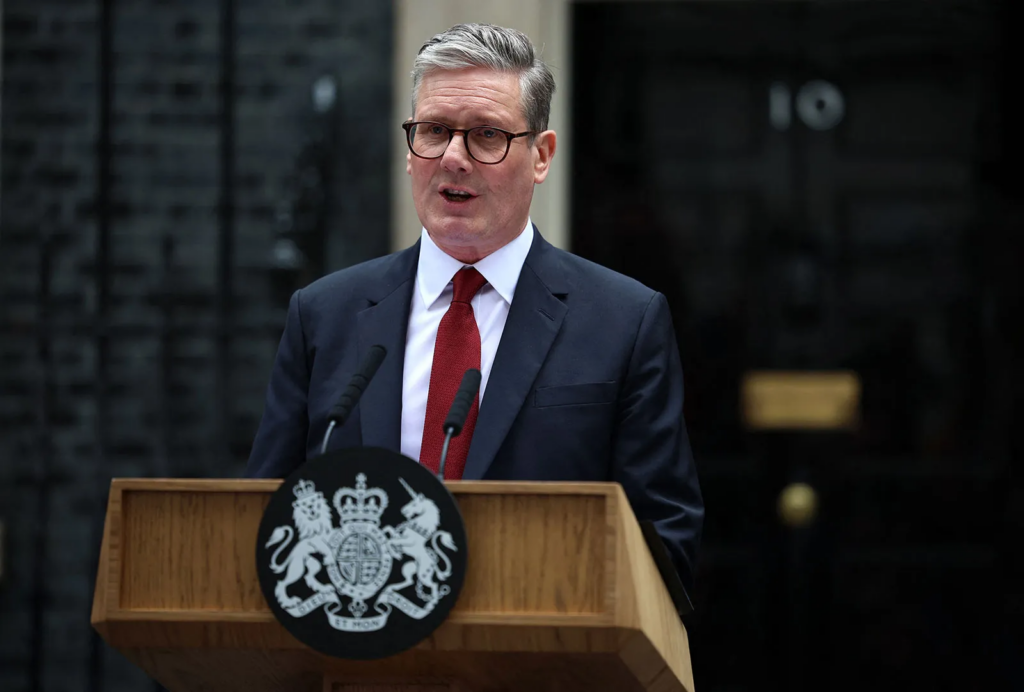
Born in a modest Southwark flat and raised in Surrey’s suburban streets, Keir Starmer became Britain’s Prime Minister through an unusual path—not via political dynasties or Oxbridge debating societies, but through criminal courtrooms and human rights battles. By July 2024, the former Director of Public Prosecutions secured Labour’s largest parliamentary majority since Tony Blair’s 1997 landslide, ending 14 years of Conservative governance. His approval rating sits at –46% as of November 2025, making him Britain’s most unpopular Prime Minister in polling history. Yet his government pushes forward with reforms touching everything from NHS funding to—surprisingly—the regulation of Britain’s £14 billion gambling industry.
Here’s what most profiles miss: Starmer’s legal background fundamentally shapes how he approaches contentious issues like betting shop proliferation, online casino taxation, and affordability checks on gamblers. His career defending death row inmates and prosecuting government ministers created a methodical decision-maker who weighs evidence over ideology. This matters enormously when understanding UK political betting dynamics, where policy shifts can swing odds overnight and reshape entire markets.
You’ll learn how a toolmaker’s son became Britain’s chief prosecutor, why his government inherited unfinished gambling reforms, and what his actual record suggests about future regulatory direction—not speculation, but documented positions and cabinet decisions from his first 18 months in office. According to Britannica’s verified biography, Starmer represents something rare in modern British politics: a leader whose pre-parliamentary career spanned decades of substantive achievement rather than political manoeuvring.
Early Life: Growing Up Between Factory Floors and NHS Wards
Keir Rodney Starmer entered the world on September 2, 1962, in Southwark—a working-class London borough more famous for tower blocks than political legacies. His parents, Rodney and Josephine Starmer, named him after Keir Hardie, Labour’s first parliamentary leader. That choice proved prophetic, though the journey took decades.
Rodney worked as a toolmaker in a Surrey factory, operating machinery that shaped metal components for manufacturing. Josephine served as an NHS nurse until Still’s disease—a rare autoimmune condition causing joint inflammation and chronic pain—forced her retirement. Starmer spent much of his childhood visiting hospitals, watching his father maintain bedside vigils during his mother’s recurring complications.
The family relocated to Oxted, Surrey, where Starmer attended Reigate Grammar School. The institution operated as a selective state school during his early years before transitioning to independent status—a change that later became politically contentious when critics accused him of attending private school. He passed the 11+ examination, gaining entry through academic merit rather than fees.
University Years: Finding Purpose Through Law
| Period | Institution | Qualification | Significance |
| 1982-1985 | University of Leeds | Bachelor of Laws | First family member to attend university; discovered human rights law |
| 1985-1986 | St Edmund Hall, Oxford | Bachelor of Civil Law (BCL) | Specialized in international human rights; shaped career direction |
| 1987 | Called to the Bar | Barrister qualification | Began criminal defence practice |
Starmer arrived at Leeds in 1982 carrying Boomtown Rats and Status Quo albums, sporting shoulder-length hair that wouldn’t survive his first year. The transformation wasn’t just aesthetic. Leeds introduced him to academics teaching international human rights law—concepts that felt abstract in textbooks but came alive through case studies of torture victims, political prisoners, and judicial executions.
“It absolutely formed me,” Starmer told Leeds Magazine in 2023. “I’d never met a lawyer. I didn’t know what they did. Suddenly I was here and there were solicitors and barristers.” His immersion extended beyond lectures. Leeds’s indie rock scene consumed his evenings—gigs featuring Orange Juice, Aztec Camera, and The Smiths at venues where student discount tickets cost less than pints.
The political awakening started earlier. At 16, Starmer joined Labour Party Young Socialists, though his teenage radicalism softened considerably by the time he entered Oxford for postgraduate study. The Bachelor of Civil Law at St Edmund Hall cemented his specialization in human rights, providing theoretical frameworks he’d later apply defending Caribbean death row inmates and representing Northern Ireland policing reforms.
Legal Career: Building a Reputation in Human Rights Law
After qualification in 1987, Starmer joined Doughty Street Chambers—a barristers’ set known for taking difficult, often unpopular cases. His early work focused on criminal defence, but human rights cases dominated his portfolio by the mid-1990s.
Landmark Cases and International Work
Starmer represented clients facing execution in Caribbean jurisdictions where British law still influenced judicial systems. Death penalty work required meticulous preparation—one procedural error could mean the difference between life imprisonment and execution. He travelled extensively, appearing before Caribbean courts and the Judicial Committee of the Privy Council in London, then the final court of appeal for many Commonwealth nations.
His 2005 appearance before the House of Lords (now the Supreme Court) established crucial precedent: evidence obtained through torture could not be used in British courts, regardless of which foreign government conducted the torture. The ruling affected terrorism prosecutions where intelligence services used information extracted through “enhanced interrogation” in other countries.
Between 2003-2008, Starmer advised Northern Ireland’s Policing Board, helping implement reforms mandated by the Good Friday Agreement. The role required navigating sectarian tensions while modernizing police practices—technical legal work with profound political implications.
In 2002, he “took silk,” becoming a Queen’s Counsel (QC)—a designation recognizing senior barristers of exceptional ability. The appointment came during his work on the McLibel case, where he represented environmental activists sued by McDonald’s for distributing leaflets criticizing the corporation’s practices. The case became Britain’s longest-running trial, establishing important precedents about corporate power and free speech.
Director of Public Prosecutions: Leading Criminal Prosecutions Nationwide
Starmer’s appointment as Director of Public Prosecutions (DPP) in 2008 marked a career inflection point. The DPP leads the Crown Prosecution Service (CPS), deciding which cases proceed to trial across England and Wales. The role combines legal expertise with administrative leadership—managing 6,000+ prosecutors handling 600,000+ cases annually.
High-Profile Prosecutions and Controversial Decisions
| Case | Year | Outcome | Controversy |
| MPs’ Expenses Scandal | 2009-2010 | Several MPs prosecuted and imprisoned | Established that MPs aren’t above the law |
| Chris Huhne (Energy Secretary) | 2012 | Guilty plea, forced resignation | First sitting cabinet minister prosecuted in decades |
| Stephen Lawrence Murder | 2012 | Two convictions secured | After 19 years and previous failed prosecutions |
| Jimmy Savile Case | 2012-2013 | No prosecution (deceased) | CPS criticized for failing to act in 2009 |
The Chris Huhne prosecution demonstrated Starmer’s willingness to pursue political figures. Huhne, then Secretary of State for Energy and Climate Change, faced charges for perverting the course of justice—he’d convinced his wife to accept speeding points to avoid a driving ban. Huhne initially denied charges but pleaded guilty in 2013, ending his political career.
The Stephen Lawrence case represented partial justice after decades of failure. In 1993, Black teenager Stephen Lawrence was murdered by racist attackers in South London. Initial investigations collapsed amid police incompetence and alleged corruption. Under Starmer’s leadership, the CPS used new forensic evidence to secure convictions against two defendants in 2012—a landmark moment in British race relations, though other suspects remained free.
The Jimmy Savile controversy damaged Starmer’s tenure. The late BBC presenter and charity fundraiser was posthumously revealed as a prolific sexual predator. Victims had reported allegations to police in 2009, but the CPS decided not to prosecute, citing insufficient evidence. After Savile’s death in 2011, hundreds more victims came forward. Starmer commissioned an independent review that found CPS prosecutors had made errors in assessing the original case, though Starmer himself hadn’t been directly involved in the decision.
The 2011 Riots Response
In August 2011, riots erupted across London and other English cities following police shooting of Mark Duggan in Tottenham. Five days of disorder resulted in five deaths, thousands of arrests, and £200 million in property damage. Starmer’s CPS prioritized rapid prosecutions—fast-tracking cases through courts within days rather than the usual months-long process.
Critics argued haste compromised justice; defenders said swift consequences deterred further violence. Starmer maintained that speed didn’t mean shortcuts—prosecutors still followed evidence rules, defendants received legal representation, and courts retained discretion on sentencing.
Entry into Politics: From Legal Elite to Parliamentary Candidate
Starmer entered electoral politics relatively late—53 years old when first elected as MP for Holborn and St Pancras in May 2015. The constituency, covering parts of inner London including King’s Cross and Camden, had been safe Labour territory for decades. His predecessor, Frank Dobson, retired after serving since 1979.
The timing proved significant. Labour, led by Ed Miliband, lost the 2015 general election to David Cameron’s Conservatives. Miliband resigned, triggering a leadership contest that Jeremy Corbyn unexpectedly won. Starmer initially kept distance from leadership speculation—”I don’t have enough experience,” he told reporters who floated his name.
Corbyn appointed Starmer Shadow Home Secretary, overseeing Labour’s response to security and immigration policies. The role lasted barely a year. In June 2016, following the Brexit referendum result, Starmer joined dozens of shadow ministers resigning in protest at Corbyn’s leadership. They’d lost confidence in Corbyn’s direction, particularly his ambiguous position on European Union membership.
Shadow Brexit Secretary: Navigating Labour’s EU Dilemma
Corbyn survived the rebellion through a membership vote, then reshuffled his team. He appointed Starmer Shadow Brexit Secretary—a poisoned chalice given Labour’s internal divisions. The party’s voter coalition included both pro-EU urban progressives and Leave-supporting former industrial communities. Any clear position alienated millions.
Starmer crafted Labour’s position: respect the referendum result, but negotiate a softer Brexit maintaining close EU ties, then hold a second referendum allowing voters to choose between the negotiated deal and remaining in the EU. This satisfied almost nobody. Remainers wanted unequivocal rejection of Brexit; Leavers saw it as attempting to overturn the democratic vote.
The 2019 general election devastated Labour. The party suffered its worst defeat since 1935, losing 60 seats—many in traditional northern strongholds that had voted Labour for generations. Brexit split the coalition catastrophically. Boris Johnson’s Conservatives won a decisive majority on the simple message: “Get Brexit Done.”
Party Leadership: Rebuilding Labour After Historic Defeat
Corbyn resigned immediately after the 2019 defeat. Starmer announced his leadership candidacy in January 2020, positioning himself as the unity candidate—leftist enough for Corbyn supporters, centrist enough for moderate MPs. His campaign emphasized competence over ideology: “We need to win elections.”
The contest occurred during COVID-19’s emergence. Traditional rallies and hustings moved online. Starmer won convincingly in April 2020, securing 56% of members’ votes against rivals Rebecca Long-Bailey (27%) and Lisa Nandy (16%).
Starmer’s leadership transformation proved ruthless. Within months, he suspended Corbyn from the parliamentary party after Corbyn downplayed antisemitism findings in the Equality and Human Rights Commission report. The move signaled that past leaders enjoyed no special protection under new management.
Party finances improved dramatically. Under Corbyn, donations dried up from businesses and wealthy individuals wary of socialist policies. Starmer rebuilt relationships with business donors while maintaining union support. By 2023, Labour’s treasury matched Conservative fundraising for the first time in years.
Policy positions shifted rightward on economics, leftward on social issues. Starmer abandoned Corbyn’s nationalisation plans but retained commitments to green investment and NHS funding. He pledged fiscal responsibility—no unfunded spending commitments—while promising to restore public services after Conservative cuts.
The strategy worked. By early 2024, Labour led consistently in polls by 15-20 points. When Rishi Sunak called a July election, Labour won 412 seats—a 209-seat majority, Labour’s second-largest ever. Starmer became Prime Minister on July 5, 2024.
Prime Minister: Governing Amid Unprecedented Unpopularity
Starmer’s honeymoon lasted approximately three weeks. By August 2024, his net approval rating turned negative. By November 2025, it reached –46%—the worst recorded for any sitting Prime Minister since Ipsos began tracking in 1977, according to polling data from Wikipedia.
Several factors explain the collapse. First, harsh economic realities contradicted campaign promises. Chancellor Rachel Reeves discovered a £22 billion fiscal shortfall—the “black hole” Labour blamed on Conservative accounting. This necessitated difficult choices: means-testing winter fuel payments for pensioners, maintaining the two-child benefit cap despite poverty concerns, and considering tax increases across multiple sectors.
Second, early missteps damaged credibility. The government implemented emergency prisoner releases to address overcrowding, but inadequate vetting led to reoffending incidents including a sexual assault case. Home Secretary Yvette Cooper faced fierce criticism when it emerged that insufficient planning preceded the policy.
Third, Starmer’s personal style alienated voters. His lawyerly precision—effective in courtrooms—translated poorly to retail politics. Voters perceived him as cold, calculating, and disconnected from working-class concerns despite his modest background.
The Gambling Reform Conundrum
Gambling regulation became an unexpected flashpoint revealing deeper tensions within Labour’s coalition. The party inherited unfinished reforms from Conservative predecessors—the 2023 “High Stakes” White Paper proposing modernisation of the 2005 Gambling Act. Starmer’s government faces pressure from multiple directions simultaneously.
Labour’s 2024 Manifesto Commitment:
“Labour is committed to reducing gambling-related harm. Recognising the evolution of the gambling landscape since 2005, Labour will reform gambling regulation, strengthening protections. We will continue to work with the industry on how to ensure responsible gambling.”
The statement’s vagueness reflects internal divisions. Reformist MPs, particularly the All-Party Parliamentary Group (APPG) on Gambling Reform chaired by Conservative Sir Iain Duncan Smith, push for comprehensive overhaul. They propose replacing the entire 2005 Act, drastically limiting advertising, and treating gambling as a public health crisis managed by the Department of Health rather than Culture, Media and Sport (DCMS).
Conversely, industry voices—including former Labour MP Michael Dugher, now chairing the Betting and Gaming Council—argue that excessive regulation drives consumers to black-market operators while destroying legitimate businesses employing 109,000 people and contributing £4 billion annually in tax.
Starmer occupies the uncomfortable middle. His government accepted over £400,000 in gambling industry donations during 2020-2024, with both Starmer and Reeves receiving Bet365 contributions. Critics allege this creates conflicts of interest; defenders counter that engagement with legal industries doesn’t constitute corruption.
Starmer’s Documented Gambling Policy Actions (July 2024-December 2025)
Rather than speculation, here’s what actually happened under Starmer’s leadership, based on government announcements and parliamentary records:
| Policy | Status | Implementation Date | Impact |
| Online Slot Stake Limits | Approved | September 2025 | £5 maximum for 25+, £2 for 18-24 age group |
| Statutory Levy on Operators | Confirmed | TBD 2026 | Funds NHS gambling addiction treatment |
| Local Authority Powers | Committed | Under consultation | Councils can reject betting shop licenses based on community harm |
| Gambling Ombudsman | Delayed | No timeline | Independent dispute resolution body |
| Affordability Checks | Under review | Stephanie Peacock cautious | Financial verification before large bets |
| Advertising Restrictions | Minimal progress | 2026-27 football season | Gambling sponsors banned from shirt fronts |
Stake Limits: First Major Reform
In September 2025, Starmer confirmed online slot stake limits—a policy drafted under Conservatives but implemented under Labour. The age-differentiated approach reflects research showing younger players face higher addiction risks. Maximum stakes of £2 for 18-24 year-olds and £5 for older players represent significant reductions from the previous unlimited structure.
Industry response proved mixed. Operators like Bet365 and William Hill publicly supported the changes, having anticipated tighter regulation. Smaller platforms warned that low stakes would push players toward offshore sites lacking UKGC oversight. Early data remains inconclusive—enforcement only began in late 2025.
The Statutory Levy: NHS Funding Mechanism
November 2024’s announcement confirmed a mandatory levy on all gambling operators, replacing voluntary contributions. The levy will charge varying rates depending on activity type—online casinos face higher percentages than National Lottery sales, reflecting different harm profiles.
Estimated revenue projections range from £100-250 million annually, though Treasury hasn’t published official forecasts. Funds will finance NHS gambling addiction services, education programs, and academic research into problem gambling. The levy addresses criticism that gambling companies profited while taxpayers funded treatment for addiction they helped create.
Implementation details remain unclear. Will offshore operators licensed in Gibraltar or Malta pay the levy? How will enforcement work for cryptocurrency casinos operating beyond UKGC jurisdiction? These questions await regulatory guidance expected in early 2026.
Local Authority Empowerment: Betting Shop Proliferation
During September 2024 Prime Minister’s Questions, Brent East MP Dawn Butler pressed Starmer on local councils’ inability to reject betting shop licenses in areas with concentrated gambling harm. Starmer committed to giving authorities “additional tools and powers to ensure vibrant high streets,” specifically mentioning cumulative impact assessments.
Current law includes an “aim to permit” clause in the 2005 Gambling Act—licensing authorities must permit gambling unless it conflicts with specific licensing objectives. Reformers argue this biases decisions toward approval, even in communities with high problem gambling rates or household debt.
Starmer’s position represents evolution from his campaign stance. In 2020-23, he rarely mentioned gambling policy. By 2025, facing pressure from betting market participants tracking political shifts, he signaled willingness to empower local governments—a pragmatic response to grassroots Labour MP concerns.
Andy Burnham, Mayor of Greater Manchester, exemplifies this pressure. Burnham vocally opposes betting shop clustering in deprived areas, arguing they exploit vulnerable populations. With Burnham rumored as potential leadership challenger if Starmer’s popularity doesn’t recover, the Prime Minister faces incentives to accommodate local authority demands.
What Starmer Hasn’t Done: The Dog That Didn’t Bark
Equally revealing are reforms Starmer’s government avoided. Despite backbench pressure, he hasn’t:
- Banned gambling advertising on television before 9pm watershed
- Required warning labels on betting apps similar to cigarette packaging
- Implemented maximum monthly deposit limits across all platforms
- Transferred gambling policy from DCMS to Department of Health
- Restricted affiliate marketing websites promoting casino comparisons
These omissions suggest Starmer prioritizes incremental reform over radical transformation. His legal training emphasizes evidence-based policy—he likely awaits data from stake limit implementation before expanding restrictions.
Alternatively, donor relationships may constrain boldness. Between 2020-2024, Labour accepted £466,000 from gambling firms according to Electoral Commission records. While legal and transparent, such funding inevitably shapes access and influence. Starmer met with gambling executives multiple times during opposition, though meeting content remains private.
Personal Life: Balancing Privacy and Public Scrutiny
Starmer married Victoria Alexander in May 2007. Victoria worked as a solicitor at the time; they met through legal circles in the early 2000s. The couple maintains strict privacy regarding their two children, rarely discussing family publicly.
Victoria practices as an occupational health professional in the NHS—a detail Starmer occasionally mentions when defending NHS funding increases. The family lives in North London, and Starmer reportedly continues playing amateur football on Sundays, describing himself as a “box-to-box midfield general.”
He’s a lifelong Arsenal supporter, holding a season ticket at Emirates Stadium. This football allegiance occasionally creates optics challenges—accepting hospitality in corporate boxes while implementing austerity measures drew criticism in autumn 2024.
Starmer identifies as atheist but respects religious faith’s community role. He rarely discusses personal beliefs, preferring to emphasize policy outcomes over philosophical positions.
Legacy in Progress: Too Early to Judge
Eighteen months proves insufficient for historical assessment. Starmer inherited profound challenges: a £22 billion fiscal deficit, crumbling public infrastructure, NHS waiting lists at record highs, and public cynicism after years of Conservative dysfunction.
His gambling reform approach illustrates broader governance philosophy—cautious incrementalism prioritizing evidence over ideology. This disappoints those wanting revolutionary change but may prove sustainable. Compare this to Boris Johnson’s bombastic promises that collapsed upon implementation, or Liz Truss’s market-crashing mini-budget after 49 days.
Starmer’s unpopularity reflects harsh realities. Governing requires disappointing various constituencies simultaneously. Pensioners losing winter fuel payments, welfare recipients facing continued caps, and businesses anticipating tax increases all have legitimate grievances. Yet fiscal mathematics constrain options.
The gambling industry watches carefully. Stake limits and mandatory levies create precedents for further intervention. If evidence shows reduced harm, momentum for advertising bans and affordability checks strengthens. Conversely, if black market growth explodes or legitimate operators collapse, reform appetite may diminish.
Those interested in how political developments affect betting markets should monitor Starmer’s approval ratings and internal Labour dynamics. Bookmakers currently price Nigel Farage at evens for next Prime Minister, Andy Burnham at 6/1—suggesting markets expect potential Labour leadership challenges if polling doesn’t improve.
Conclusion: The Human Rights Lawyer Governing Through Crisis
From defending death row inmates to prosecuting cabinet ministers to leading Britain through economic turmoil—Starmer’s journey defies conventional political trajectories. His legal career spanning two decades provided skills valuable in government: analytical rigour, attention to detail, and comfort with unpopularity when following evidence.
His approach to gambling regulation exemplifies this style. Rather than ideological crusading or industry capture, he pursues measured reforms grounded in research about harm reduction. Stake limits address specific risks identified in Gambling Commission studies. The mandatory levy creates sustainable funding for treatment without eliminating the industry.
Whether this proves sufficient remains unclear. Over one million Britons experience gambling-related harm according to NHS data. The industry generates £14 billion annually in gross gambling yield. Finding the regulatory sweet spot that protects vulnerable individuals without destroying legitimate entertainment proves extraordinarily difficult.
Starmer’s biography suggests he’ll approach these questions methodically. His time advising Northern Ireland’s Policing Board taught patience with intractable problems. His DPP tenure managing 6,000 prosecutors demonstrated organizational competence. His leadership transformation of Labour showed strategic ruthlessness when necessary.
The next general election must occur by August 2029. Between now and then, Starmer needs to deliver tangible improvements in living standards, public services, and national mood. Gambling reform represents one small piece of this larger puzzle—but one revealing his governance philosophy.
For those following British politics through emerging podcast discussions, Starmer’s evolution from opposition leader to embattled Prime Minister offers lessons about the gap between campaigning and governing. His legal precision served him well building Labour’s case against Conservatives. That same precision now constrains his ability to offer simple solutions to complex problems.
History will judge whether his cautious, evidence-led approach succeeded or whether bolder leadership could have achieved more. For now, Britain has a Prime Minister shaped by courtrooms and prosecutors’ offices rather than political careers—an unusual background that may prove either strength or limitation as challenges multiply.
The gambling industry, meanwhile, adapts to new realities under Starmer’s watch. Operators invest in responsible gambling technology, knowing tighter regulation approaches. Treatment services expand NHS capacity, funded increasingly by mandatory levies. And millions of Britons continue gambling—some safely, some harmfully—as policymakers debate how best to protect the vulnerable while respecting individual choice.
That balance between protection and freedom defines Starmer’s broader challenge. His answer to it will determine whether his premiership succeeds or joins the list of disappointing Labour governments that promised transformation but delivered disappointment.