Angela Rayner: From Care Worker to Deputy PM – Working-Class Roots, Union Politics and Support for Safer Gambling Legislation
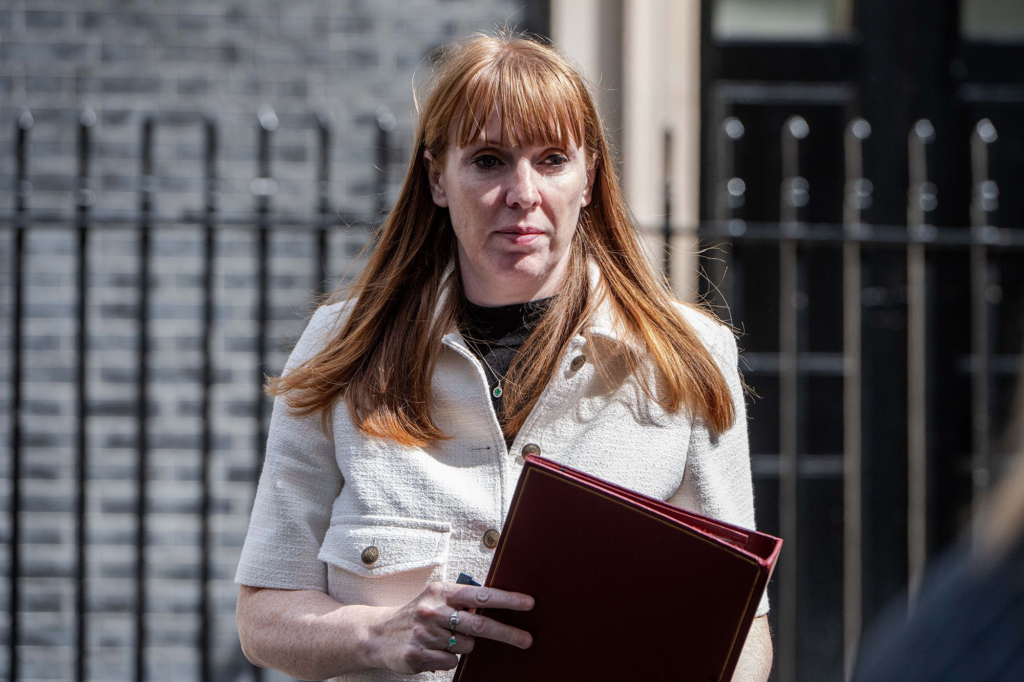
A 16-year-old girl drops out of school pregnant, no qualifications, told she’d “never amount to anything” by teachers. Twenty-nine years later, she’s Deputy Prime Minister of the United Kingdom. That’s Angela Rayner’s journey – from wiping elderly bottoms on a council estate to running Cabinet meetings at 10 Downing Street. Her story embodies everything Labour claims to represent: working-class mobility, union power, socialist values overcoming privilege. But it ended in September 2025 with a £40,000 stamp duty scandal forcing her resignation after just two months as Deputy PM. Between those extremes lies a political career defined by contradictions – fierce advocate for workers’ rights who earned £159,584 as Deputy PM, champion of the disadvantaged who misclassified property taxes, grassroots union organizer who became political elite. And on gambling reform, the issue threatening millions of working-class families, Labour under her watch delivered vague manifesto promises without concrete action.
The Council Estate Beginning – Poverty, Bipolar Disorder, and Three-Inch Heels
Born Angela Bowen on March 28, 1980, in Stockport, Greater Manchester, Rayner grew up experiencing British poverty firsthand. Her mother suffered from severe bipolar disorder. When manic episodes hit, the family functioned; when depression descended, it collapsed. “When I was young, we didn’t have books because my mother could not read or write,” Rayner recalled years later. Money was perpetually tight. Some days there wasn’t enough food.
Her grandmother became the family’s anchor – working three jobs simultaneously to keep Rayner, her older brother, and younger sister housed and fed. The grandmother worked until dropping dead at 65, exhausted from decades of manual labor. Rayner witnessed this and internalized a simple lesson: working-class people kill themselves working for the system, and the system doesn’t care.
She attended Avondale High School in Stockport – a comprehensive where expectations for council estate kids ran low. At 16, Rayner became pregnant. Teachers told her bluntly she’d “never amount to anything.” She left school with zero qualifications and a baby on the way. Most teenagers in that situation disappear into poverty statistics. Rayner decided to prove them wrong.
Table: Angela Rayner’s Life Timeline – From Teen Mum to Deputy PM
| Year | Age | Life Event | Significance | What It Reveals About Her Character |
| 1980 | 0 | Born March 28, Stockport; mother has bipolar disorder | Working-class origins in poverty | Foundation of her political identity – authentic understanding of deprivation |
| 1996 | 16 | Left Avondale High School pregnant, no qualifications, told she’d “never amount to anything” | Life-defining rejection by education system | Fueled lifelong determination to prove doubters wrong; shaped education policy views |
| 1997-98 | 17-18 | Became care worker for Stockport Council; enrolled at Stockport College part-time | First job providing personal care for elderly in their homes | Discovered purpose in caring work; learned about zero-hours contracts and low pay |
| 1998 | 18 | Nominated by female coworkers as UNISON shop steward after outsourcing threat | “What’s a trade union?” – became union rep overnight | Natural leadership recognized by peers; discovered political education through union activism |
| 2000-2012 | 20-32 | Rose to become UNISON North West Convenor (most senior official in region) | Represented thousands of workers across NW England | Mastered negotiation, public speaking, collective action – skills that defined political career |
| 2010 | 30 | Married Mark Rayner (fellow UNISON official); second son Charlie born premature at 23 weeks | NHS saved her son’s life | Deepened commitment to public services; became grandmother at 37 in 2017 |
| 2015 | 35 | Elected MP for Ashton-under-Lyne with 49.8% vote (18,498 votes) | First woman to represent constituency in 183-year history | Historic achievement; maiden speech referenced “three-inch heels” to highlight difference from male predecessors |
| 2016 | 36 | Appointed Shadow Secretary of State for Education by Jeremy Corbyn | Rapid promotion to shadow cabinet within one year of election | Corbyn recognized working-class authenticity as political asset |
| March 2020 | 40 | Elected Deputy Leader of Labour Party with 52.6% vote (third round) | Second most powerful position in Labour Party | Represented party’s left-wing base while Starmer moved center |
| July 2024 | 44 | Appointed Deputy Prime Minister and Housing Secretary after Labour landslide | Peak of political career – among most powerful people in UK | Represented Labour’s working-class credibility in government |
| Sept 2025 | 45 | Resigned all positions after £40K stamp duty underpayment found | Career-ending scandal after just 2 months as Deputy PM | Failure to seek tax advice when entering government broke ministerial code |
Pattern Recognition: Rayner’s ascent shows consistent upward trajectory broken only by the sudden 2025 resignation. Unlike many politicians who gradually accumulate wealth and distance from origins, Rayner maintained working-class identity throughout – both her greatest political asset and, ultimately, her vulnerability. The stamp duty scandal involved misclassifying a property sold to fund her Hove flat – a mistake born from navigating complex property transactions without the professional advisors that elite politicians take for granted.
The Care Worker Years – Where Politics Became Personal
Rayner’s first real job was wiping elderly people’s bottoms in their homes. As a Stockport Metropolitan Borough Council care worker, she provided personal care for the most vulnerable – bathing, dressing, feeding, toileting. The work was physically exhausting, emotionally draining, and paid poverty wages. Zero-hours contracts meant unpredictable income. No sick pay. Minimal training. Constant pressure to complete visits faster, see more clients, spend less time with each person.
“I loved the work itself,” Rayner said in a 2012 Guardian profile. “Looking after people, making them feel valued. But the conditions were terrible. We were treated like we didn’t matter. The people we cared for deserved better. We deserved better.”
When management announced plans to outsource the homecare service to private contractors in the late 1990s, Rayner – still a teenager – stood up in meetings and challenged them. “This is crazy,” she told management. “Why would you outsource something that works? Private sector treats staff worse, gives less time with clients. This is better for everyone.”
Her female coworkers noticed her courage. “You should be our union rep,” they told her. Rayner’s response: “What’s a trade union?”
From Shop Steward to Regional Convenor
Overnight, Rayner became the local UNISON shop steward. She joined the union, attended her first regional meeting, and discovered something that would change her life: political education. “My word, the first ever UNISON conference I went to,” she recalled. “I’d never done politics before. It sort of connected everything. Everything we were suffering around austerity, the cuts, the privatisation, had context all of a sudden. And my mind was just like a sponge.”
UNISON gave Rayner what the education system never did – a framework to understand why her life had been so hard, why her grandmother worked herself to death, why care workers earned poverty wages while bankers earned millions. It wasn’t personal failure. It was systemic exploitation. And unions provided the collective power to fight it.
“UNISON took me in as a rebel and turned me into a rebel with a cause,” Rayner said.
Over twelve years, Rayner rose through UNISON ranks to become Convenor for the North West of England – the union’s most senior elected official in the region, representing thousands of workers. She fought against:
- Stock transfers privatizing council housing
- Attacks on final salary pension schemes
- Pay freezes during austerity
- Arms-length management organizations undermining direct service provision
- Zero-hours contracts proliferating across care sector
“I started as a union rep in the middle of the biggest onslaught of attacks that local government has seen in its history,” Rayner said. She learned to negotiate, organize, speak publicly, build coalitions, and win campaigns. These were the skills that would define her political career – skills no university could have taught her.
Table: UNISON vs Parliamentary Career – Skills Comparison
| Skill | UNISON Years (1998-2015) | Parliamentary Career (2015-2025) | How Union Experience Shaped Political Style |
| Public Speaking | Addressed union conferences, membership meetings, media interviews | PMQs, shadow cabinet speeches, conference addresses, TV debates | UNISON taught her direct, plain-speaking style without political jargon – became signature strength |
| Negotiation | Bargained with council management over pay, conditions, restructuring | Cross-party cooperation, shadow cabinet coordination, government legislation | Understood power dynamics, leverage points, when to compromise vs fight |
| Grassroots Organizing | Mobilized care workers for strikes, petitions, campaigns | Constituency work, party campaigns, voter engagement | Maintained authentic connection with working-class communities |
| Strategic Thinking | Planned multi-year campaigns against outsourcing, privatization | Developed party policy, coordinated election strategy | Learned to think beyond immediate battles to long-term goals |
| Crisis Management | Handled member grievances, workplace disputes, disciplinary cases | Media scandals, policy controversies, internal party conflicts | Developed thick skin and ability to fight back under pressure |
| Coalition Building | United diverse workforce groups (healthcare, education, local gov) | Balanced Labour left-wing and centrist factions | Mastered art of holding together groups with conflicting interests |
| Economic Literacy | Analyzed council budgets, outsourcing costs, pension fund impacts | Housing economics, welfare policy, taxation proposals | Grounded understanding of how austerity hits ordinary people’s lives |
| Media Combat | Defended unions against hostile press during strikes, disputes | Fought Tory attacks, Conservative media, internal Labour critics | UNISON prepared her for constant media hostility toward socialists |
Critical Insight: Rayner’s UNISON background gave her something most MPs lack – experience actually representing working people rather than theorizing about them. When she spoke about zero-hours contracts, care worker exploitation, or pension theft, she wasn’t quoting think tank reports. She was describing her life and her friends’ lives. This authenticity became both her greatest strength (voters trusted her) and greatest weakness (elite media and politicians looked down on her lack of formal education).
The Parliamentary Breakthrough – First Woman in 183 Years
In 2014, Labour’s Ashton-under-Lyne MP David Heyes announced retirement. The constituency – covering Ashton-under-Lyne, Audenshaw, Droylsden, and Dukinfield in Greater Manchester – had been continuously Labour since 1935. Safe seat meant competitive selection battle. Rayner, backed by UNISON and the soft left, won the nomination.
On May 7, 2015, she was elected with 18,498 votes (49.8% share), becoming the first woman to represent Ashton-under-Lyne in the constituency’s 183-year existence. Her maiden speech on June 2, 2015, addressed this directly:
“All the previous MPs who have represented my historic constituency have had one thing in common that I do not share: they have all been men. Today, I stand here making my maiden speech as the first woman MP to serve Ashton-under-Lyne in 183 years, and, as the first woman MP, I promise that I will do all in my power to live up to the examples shown by my predecessors. Of course, I could never fill their shoes—mine tend to have three-inch heels and to be rather more colourful—but I walk in their footsteps.”
The “three-inch heels” line became famous – Rayner’s way of acknowledging she was different from every MP who’d gone before while asserting she was just as capable. It encapsulated her political brand: working-class woman, unapologetically female, refusing to conform to Westminster’s stuffy male traditions.
Rapid Rise Under Corbyn
Jeremy Corbyn, elected Labour leader in September 2015, promoted Rayner to Shadow Whip that October. Within four months, she became Shadow Pensions Minister in January 2016. By October 2016, Corbyn appointed her Shadow Secretary of State for Education – a full shadow cabinet position just 17 months after entering Parliament.
Why the rapid promotion? Corbyn recognized Rayner’s working-class authenticity gave Labour credibility. While Corbyn himself was Old Etonian-raised middle-class left-winger, Rayner actually came from poverty. When Corbyn talked about helping working people, media could dismiss it as champagne socialism. When Rayner said it, nobody could question her sincerity.
As Shadow Education Secretary (2016-2020), Rayner championed:
- Free school meals for all primary students
- Abolishing tuition fees and student debt
- National Education Service with lifelong learning
- Ending academies program and restoring local authority control
- Massive investment in schools, especially deprived areas
- Higher teacher pay and reduced workloads
Her education platform drew directly from personal experience – she’d been failed by the system, then saved by adult education through Stockport College and UNISON training. She wanted to ensure no child faced what she’d faced at 16.
Deputy Leader Victory – Representing Labour’s Soul
When Corbyn resigned after Labour’s December 2019 election catastrophe (losing 60 seats), the party faced existential crisis. Keir Starmer won the leadership promising unity between left and center. The deputy leadership race became proxy war for Labour’s future direction.
Rayner ran against Richard Burgon (hard left), Angela Eagle (soft left), Dawn Butler (Corbyn loyalist), and Rosena Allin-Khan (centrist). Her pitch: she could unite the party’s warring factions while maintaining connection to working-class base. She was left-wing enough for Corbyn supporters, pragmatic enough for moderates, and authentically working-class in ways no other candidate could match.
Table: 2020 Labour Deputy Leadership Election Results
| Candidate | First Preference % | Second Round % | Third Round % | Final Result | Electoral Coalition |
| Angela Rayner | 27.6% | 39.1% | 52.6% | Winner | Soft left + unions + Northern working-class + women’s vote |
| Rosena Allin-Khan | 19.9% | 25.1% | Eliminated round 3 | 3rd place | Centrist + London + professional middle class |
| Dawn Butler | 17.8% | 22.6% | Eliminated round 3 | 4th place | Hard left + BAME voters + Corbyn loyalists |
| Richard Burgon | 19.9% | Eliminated round 2 | N/A | 4th place (technically) | Hard left + Socialist Campaign Group |
| Angela Eagle | 14.8% | Eliminated round 2 | N/A | 5th place | Moderate left + veterans + anti-Corbyn faction |
Victory Analysis: Rayner won by assembling the broadest coalition – soft left base, union backing (UNISON obviously, plus GMB and Unite), Northern working-class voters, and women across factional lines. Her 52.6% final round victory gave her strong mandate. Critically, she won second-preference votes from Butler and Burgon supporters (hard left) AND Allin-Khan supporters (centrists), proving she could bridge Labour’s divides.
Elected April 4, 2020, Rayner became Deputy Leader alongside Starmer. The partnership would prove complicated – Starmer represented Labour’s professional middle-class centrism, Rayner its working-class socialist heart. For five years they maintained uneasy alliance.
The 2024 Election – Labour’s Landslide and Rayner’s Peak
Labour’s July 4, 2024 general election victory was historic – 411 seats with 33.7% vote share under first-past-the-post, largest Labour majority since Tony Blair’s 1997 landslide. Starmer became Prime Minister. On July 5, 2024, he appointed Rayner Deputy Prime Minister and Secretary of State for Housing, Communities and Local Government.
The double appointment made Rayner one of the most powerful politicians in Britain. As Deputy PM, she deputized for Starmer at Prime Minister’s Questions, attended all Cabinet meetings, and coordinated government policy. As Housing Secretary, she controlled the ministry responsible for:
- House building targets (1.5 million new homes over 5 years)
- Affordable housing delivery
- Planning reform
- Homelessness prevention
- Local government funding
- Levelling up deprived areas
- Community development
Rayner’s housing brief aligned perfectly with her background – she’d grown up in council housing, knew firsthand how lack of affordable homes destroyed lives, understood local government from her care worker days. This was her chance to transform the communities she came from.
For two months, July-September 2024, Rayner was at her career peak. She deputized for Starmer at PMQs three times, jokingly calling one session “battle of the gingers” with Conservative Oliver Dowden. She announced £2 billion investment in social housing. She fast-tracked planning reforms to meet house-building targets. She was delivering.
Then the stamp duty scandal broke.
The £40,000 Tax Scandal – How It All Fell Apart
The controversy centered on property transactions dating to the 2010s. Here’s what happened:
The Properties:
- Council house in Stockport: Rayner bought it under Right to Buy scheme in 2007
- Mark Rayner’s house: Separate property owned by her then-husband (they married 2010, separated 2020)
- Hove flat: £800,000 seaside apartment purchased May 2025
The Transaction: In January 2025 (before becoming Deputy PM), Rayner sold her 25% interest in the Stockport council house to her son’s trust to raise money for the Hove flat deposit. Tax advice she received suggested she should pay lower stamp duty rate (£30,000) because she no longer owned the Ashton property.
The Problem: Under UK tax law, if you hold property in trust for your child under 18, you’re still deemed to own it for stamp duty purposes. Rayner should have paid £70,000 stamp duty, not £30,000 – a £40,000 underpayment.
Why It Matters: When Rayner entered government in July 2024, she should have immediately sought specialist tax advice to declare potential liabilities. She didn’t. Her solicitors during the May 2025 purchase had advised her to get tax guidance. She relied on non-specialist advice instead.
On September 3, 2025, Prime Minister’s Independent Adviser on Ministerial Interests, Sir Laurie Magnus, ruled Rayner had breached the Ministerial Code. Magnus accepted she’d acted “in good faith” and with “integrity” – she genuinely believed she’d paid correctly. But the failure to seek proper advice when entering government, despite knowing the issue might be complex, violated ministerial standards.
Extract from Magnus Report: “I believe Ms. Rayner has acted with integrity and with a dedicated and exemplary commitment to public service. However, I conclude that her unfortunate failure to pay her taxes correctly, particularly given she was minister for housing at the time [of the May 2025 purchase], constitutes a breach of the Ministerial Code’s requirement for the highest standards of conduct.”
On September 5, 2025, Angela Rayner resigned as Deputy Prime Minister, Housing Secretary, and Deputy Leader of Labour. After ten years in Parliament, five years as Deputy Leader, and just two months at the peak of British politics, her government career ended over £40,000 in mispaid taxes.
Table: The Stamp Duty Scandal Timeline
| Date | Event | Significance | What Rayner Did (or Should Have Done) |
| 2007 | Bought Stockport council house under Right to Buy | Acquired first property | Legal and normal – Right to Buy scheme designed for tenants |
| 2010 | Married Mark Rayner; he owned separate property | Created complex living arrangements | Both owned separate properties – tax implications unclear at time |
| 2020 | Separated from Mark; questions about which property was main residence | Tax implications become relevant | Should have sought tax advice then but didn’t realize issue’s complexity |
| Jan 2025 | Sold 25% interest in Stockport house to son’s trust for Hove flat deposit | Transaction that triggered stamp duty liability | Received legal advice to get tax guidance – relied on non-specialist advice instead |
| May 2025 | Purchased £800,000 Hove flat; paid £30,000 stamp duty | Underpayment of £40,000 | Should have paid £70,000 because son’s trust ownership counted as hers for tax purposes |
| July 2024 | Became Deputy PM and Housing Secretary | Entered government with undisclosed tax issue | CRITICAL FAILURE: Should have immediately declared potential liability and sought specialist advice |
| Aug 2025 | Media investigations revealed underpayment | Public scandal erupted | Referred herself to ethics adviser – too late to avoid ministerial code breach |
| Sept 3, 2025 | Magnus Report found ministerial code breach | Ethics verdict sealed fate | Accepted findings showed integrity, but damage done |
| Sept 5, 2025 | Resigned all positions | Career-ending moment | Maintained “deeply proud” of legacy in resignation letter |
The Class Angle: Rayner’s defenders noted wealthy politicians regularly use complex tax arrangements without scrutiny. Nigel Farage admitted funneling earnings through private companies to reduce tax – no investigation, no consequences. Conservative MPs who underpaid taxes or used offshore accounts faced minimal accountability. Rayner, a working-class woman, made a £40,000 mistake navigating property transactions without the accountants and tax lawyers that elite politicians use automatically. The Daily Mail graffitied “Tax Evader Rayner” on her Hove flat. Her class background made her vulnerable in ways privilege would have protected her from.
Labour’s Gambling Reform – Vague Promises Without Delivery
Where does Angela Rayner stand on gambling reform? The honest answer: it’s unclear. Labour’s 2024 manifesto contained exactly 48 words on gambling:
“Labour is committed to reducing gambling-related harm. Recognising the evolution of the gambling landscape since 2005, Labour will reform gambling regulation, strengthening protections. We will continue to work with the industry on how to ensure responsible gambling.”
That’s it. No specific policies. No stake limits. No advertising bans. No affordability checks details. Nothing concrete. Compare this to Labour’s smoking commitments in the same manifesto: specific policies to ban cigarettes for next generation, “opt-out” cessation interventions in hospitals, ban vapes marketed to children. On gambling, Labour said almost nothing.
Why the vagueness? Three factors:
- Industry lobbying: Betting companies contribute substantially to UK economy (£4.2bn tax revenue, 100,000+ jobs) and fight reform aggressively
- Divided party: Labour contains both anti-gambling campaigners and MPs with ties to bookmaker-heavy constituencies
- Low political priority: With NHS, housing, and economy dominating agenda, gambling fell down priority list
What Labour Delivered (So Far)
In November 2024, Labour government announced:
- Statutory levy on gambling operators to fund research, treatment, prevention
- Online slot stake limits: £5 for over-25s, £2 for 18-24 year-olds
- Plans to strengthen Gambling Commission enforcement
These were continuations of Conservative white paper proposals from April 2023. Labour added nothing new. Stephanie Peacock, Labour’s Shadow Gambling Minister before the election, supported affordability checks and stake limits – but implementation timeline remains unclear.
Table: Labour’s Gambling Policy – Promises vs Reality
| Issue | Labour Manifesto Promise | What’s Been Delivered (as of Dec 2025) | What Campaigners Want | Verdict on Labour’s Ambition |
| Online slot stake limits | “Strengthening protections” (vague) | £5 limit for over-25s, £2 for 18-24s (announced Nov 2024, implementation pending) | £2 maximum for all ages; some want £1 or lower | Weak – Adopted Tory policy without going further; £5 still allows significant losses |
| Affordability checks | No mention in manifesto | Consultation ongoing; industry fighting hard against “light-touch” proposals | Mandatory checks before large deposits; algorithms to detect problem gambling early | Very Weak – No timeline, no specific thresholds, industry still negotiating terms |
| Gambling advertising ban | No mention in manifesto | No action; industry spent £1.2bn on UK advertising in 2023-24 | Complete ban on all gambling advertising (Australian model) | Nonexistent – Labour refuses to touch this despite evidence linking ads to youth gambling |
| Credit card gambling ban | No mention (already law since 2020) | Already banned under Conservatives | Extend to e-wallets and crypto gambling | N/A – Existing policy, Labour added nothing |
| FOBT stake reduction | No mention (already £2 since 2019) | Already reduced from £100 to £2 in 2019 under Tories | Some want £1; focus now on online equivalents | N/A – Labour claims credit but contributed nothing |
| Statutory levy | “Reducing gambling-related harm” | Introduced Nov 2024; details sparse | Levy should be 2% of gross gambling yield (£320M annually) vs current voluntary £180M | Partial – Levy introduced but rate and enforcement unclear |
| Loot boxes in video games | No mention in manifesto | No action; games industry self-regulates | Classify loot boxes as gambling, ban for under-18s | Nonexistent – Labour ignores issue despite widespread concern about child gambling |
| Gambling harm prevention commissioner | No mention in manifesto | No appointment; role doesn’t exist | Independent commissioner to coordinate govt response, report annually | Nonexistent – Labour hasn’t prioritized creating oversight |
| Gambling Act 2005 reform | “Reform gambling regulation” | White paper implementation delayed; no new legislation | Complete overhaul for digital age; reverse 2005 liberalization | Very Weak – Vague promise, no timeline, no draft legislation |
Overall Grade: D- (Minimal Progress, No Ambition)
Labour inherited Conservative white paper proposals from April 2023 and implemented the easiest parts (statutory levy, slot limits). They’ve refused to tackle advertising, loot boxes, or comprehensive reform. The manifesto’s vague language allows them to claim they’re “reforming gambling” while doing virtually nothing.
Rayner’s Personal Position – Unknown
Did Angela Rayner, as Deputy PM and Deputy Leader, champion gambling reform? There’s no evidence of it. She gave no major speeches on gambling harm. She held no publicized meetings with anti-gambling campaigners. Her Housing brief didn’t directly involve gambling policy, but as Deputy PM she attended Cabinet meetings where gambling levy was discussed.
Rayner’s union background would logically support strong gambling regulation. UNISON represents many workers whose families suffer gambling harm. Care workers’ low wages make them vulnerable to gambling addiction marketed in deprived areas. But Rayner never connected those dots publicly.
This is Labour’s pattern: vague sympathy for anti-gambling campaigners, but no political will to fight a £14 billion industry. Rayner fit that pattern perfectly.
The Class Politics of Gambling Harm
Here’s what makes Labour’s timidity on gambling reform particularly egregious: gambling harms disproportionately affect working-class communities. Areas of high deprivation have:
- 2-3x more betting shops per capita than affluent areas
- Higher rates of problem gambling (1.4% vs 0.4%)
- Greater financial harm from losses (gamblers in deprived areas lose higher % of income)
- More gambling advertising saturation
- Less access to treatment services
Table: Gambling Harm by Social Class – The Working-Class Crisis Labour Ignores
| Metric | Working-Class/Deprived Areas | Middle-Class/Affluent Areas | Multiple | Why This Matters for Labour |
| Betting shop density | 1 per 4,200 residents | 1 per 8,500 residents | 2x higher | Industry targets Labour’s base constituencies |
| Problem gambling rate | 1.4% of adults | 0.4% of adults | 3.5x higher | Labour voters suffering disproportionately |
| FOBT losses (before 2019 reduction) | £1,800 annual average per user | £600 annual average per user | 3x higher | FOBTs were “working-class crack cocaine” |
| Gambling harm-related NHS treatment | 68% from bottom 40% income | 32% from top 60% income | 2.1x overrepresentation | NHS costs fall on Labour councils |
| Economic cost to councils annually | £1.05-1.77bn nationally (45% in 20% most deprived areas) | £0.55-0.93bn (55% in 80% least deprived) | Disproportionate burden | Labour-controlled councils pay most |
| Average household losses in problem gambling | £7,800 annually (18% of median income) | £4,200 annually (5% of median income) | 1.9x higher | Working families devastated by losses |
| Children exposed to gambling advertising | 2.7 ads per hour TV viewing (commercial channels popular in deprived areas) | 1.8 ads per hour (different viewing habits) | 1.5x higher | Next generation targeted from childhood |
| Gambling-related suicide deaths | 52% from bottom 40% socioeconomic groups | 48% from top 60% | Slight overrepresentation | Working-class families bury their dead while Labour dithers |
The Indictment: Gambling harm is a working-class issue. Betting shops cluster on deprived high streets. FOBTs targeted benefit claimants. Online gambling markets to shift workers, offering “quick wins” to people who can’t afford losses. Loot boxes groom working-class children into gambling. The annual economic cost (£1.05-1.77bn) falls disproportionately on Labour-controlled councils providing social services to families destroyed by addiction.
Angela Rayner grew up in exactly these communities. She was a care worker in Stockport where betting shops line the high street. She represented Ashton-under-Lyne, a working-class constituency with significant gambling harm. She rose through UNISON representing workers whose low wages made them gambling industry targets.
Yet on gambling reform, she was silent. Labour under her deputy leadership delivered vague manifesto promises and Conservative-lite policies. This is the fundamental betrayal: when working-class issues threaten powerful industries, Labour’s working-class champions go quiet.
The Resignation Letter – “Deeply Proud” Despite Everything
Rayner’s September 5, 2025 resignation letter to Keir Starmer ran 327 words. The key passage:
“Politics has changed my life and the lives of my family beyond measure. It has given me the opportunity to pay it forward by serving working class communities like the one that I grew up in, which are too often overlooked by those in power. I am deeply proud of the legacy I leave, and everything we have achieved together.”
“Deeply proud.” After two months as Deputy PM ending in tax scandal. Proud of what, exactly? She didn’t deliver housing reform – she was only in post eight weeks. She didn’t champion gambling reform – Labour’s policy remained vague throughout her deputy leadership. She didn’t transform Labour into a working-class party – Starmer’s government immediately angered unions with public sector pay offers and austerity-lite budgets.
What was the legacy? First female Ashton-under-Lyne MP. Deputy Leader for five years holding Labour’s left-wing and center together. Shadow Education Secretary pushing free school meals (which Labour did implement). Housing Secretary for two months announcing investment (which others will now deliver).
It’s a respectable but not transformative record. Rayner’s tragedy is that she rose so high from so low, came so close to real power, and left without fundamentally changing anything. She represented working-class aspiration but couldn’t overcome the systemic barriers that created her poverty in the first place.
Conclusion – The Care Worker Who Almost Made It
In December 2025, Angela Rayner is 45 years old, living in her Hove flat (still stained with “Tax Evader” graffiti), no longer Deputy PM, no longer Deputy Leader, no longer Housing Secretary. She remains MP for Ashton-under-Lyne with a 19,027 majority (57.3% vote share in 2024). Her political future is uncertain. Potential comebacks exist – Labour has short memory for scandals affecting popular figures. But the path from here to meaningful power again looks narrow.
History will remember her as the teen mum who became Deputy Prime Minister and immediately fell. The care worker who rose through unions to challenge privilege and couldn’t navigate tax law complexity. The working-class champion whose government failed to champion working-class causes like gambling reform.
Three narratives define Rayner’s story:
Narrative One – Working-Class Hero: She overcame poverty, teenage pregnancy, educational failure, told she’d “never amount to anything.” She became union convenor, MP, Deputy Leader, Deputy PM. She proved working-class people can reach the highest offices despite systemic barriers. She gave hope to millions that background doesn’t determine destiny.
Narrative Two – System Failure: She made it to the top but couldn’t change the system. Labour under her deputy leadership didn’t tackle gambling industry’s exploitation of deprived communities. Didn’t reverse Tory austerity. Didn’t transform housing. Didn’t redistribute wealth. Starmer’s centrist government used Rayner’s working-class credibility as window dressing while governing like Blairites. When she fell over £40K tax issue, the same elite who’d never faced accountability for millions in offshore accounts destroyed her.
Narrative Three – Personal Responsibility: She entered government knowing she’d handled complex property transactions without specialist advice. When appointed Housing Secretary and Deputy PM – literally the minister responsible for housing policy while owning multiple properties – she should have immediately declared everything to avoid even appearance of impropriety. She didn’t. That’s not class warfare or elite double standards. It’s a failure to meet minimum standards for public office.
All three narratives are true simultaneously. Rayner is both inspiring and disappointing, both victim and author of her downfall, both working-class hero and cautionary tale about what happens when working-class politicians reach power in systems designed by the elite.
On gambling reform specifically, Rayner’s record is disappointing. Labour’s manifesto was vague. Their policies are Conservative-lite. The industry still exploits working-class communities while Labour dithers over “working with industry on responsible gambling.” Rayner came from those communities but never championed their protection from predatory gambling.
Maybe that’s unfair. Gambling reform wasn’t her brief. She was Housing Secretary, not Culture Secretary. But as Deputy PM and Deputy Leader representing Labour’s working-class base, she could have made it a priority. She chose not to. That choice defines her legacy as much as her rise and fall.
The care worker who almost changed Britain returned to being just another MP. The teen mum who proved teachers wrong proved they were also partly right – she amounted to something significant, just not quite enough to transform the system that had tried to destroy her. And working-class families in deprived constituencies still walk past betting shops on every high street, still lose money they can’t afford on FOBTs’ digital successors, still bury loved ones dead from gambling addiction.
Labour’s gambling reform, like Angela Rayner’s political career, promised more than it delivered.
External Sources:
- Angela Rayner – Wikipedia – Comprehensive biography and political career details
- UK Parliament – Angela Rayner Parliamentary Career – Official record of parliamentary positions and votes
- House of Commons Library – Gambling Harms Research Briefing – Analysis of Labour government’s gambling policy