Suella Braverman: Conservative Firebrand on Immigration – Legal Career, Home Office Tenure and Approach to Offshore Gambling Operators
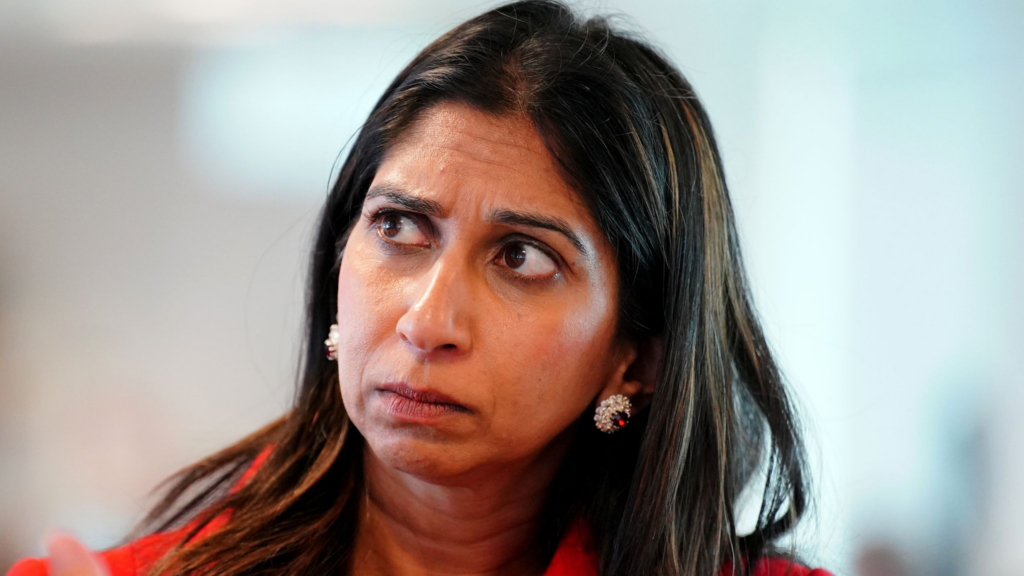
When Suella Braverman described asylum seekers crossing the English Channel as an “invasion” on October 31, 2022, she wasn’t dog-whistling – she was air-raiding. The former Home Secretary, born to Indian immigrant parents who fled political turmoil in the 1960s, spent 14 months weaponizing the same anti-immigrant rhetoric that could have been used against her own family. Her “dream” and “obsession” (her exact words at Conservative Party conference) was seeing a Telegraph front-page photo of migrants being deported to Rwanda on a one-way flight. She never got that photo. Rishi Sunak fired her on November 13, 2023, after she publicly accused the Metropolitan Police of “playing favourites” with Pro-Palestinian protesters. But here’s what nobody discusses: while Braverman obsessed over small boats carrying desperate refugees, she completely ignored a different kind of offshore operation – unlicensed gambling sites based in Curaçao and Anjouan targeting British punters with zero consumer protection, dodging UK taxes, and operating outside regulatory reach. Her CV once falsely claimed she “contributed” to a 2007 textbook on gambling regulation for local authorities. The author, Philip Kolvin KC, told The Big Issue she’d done nothing except “photocopying for the book” on one occasion. She quietly had the claim removed from her chambers website after being exposed but never addressed the fabrication publicly. This article examines Braverman’s journey from Cambridge law student to twice-sacked Home Secretary, her hardline immigration policies that defined her tenure, and the glaring contradiction: cracking down on asylum seekers while turning a blind eye to offshore gambling operators flooding the UK market.
Sue-Ellen from Dallas – Immigrant Parents, Scholarship Girl, Triple Legal Qualification
Sue-Ellen Cassiana Fernandes arrived in this world on April 3, 1980, at Whittington Hospital in Harrow, northwest London. Her parents – Christie Fernandes and Uma Mootien-Pillay – had immigrated to Britain in the 1960s from Kenya and Mauritius respectively, both fleeing economic hardship and political instability. Christie worked for a housing association. Uma was recruited by the NHS at age 18 and worked as a nurse for 45 years, later serving as a Conservative councillor in Brent for 16 years.
The family settled in Wembley, one of London’s most diverse areas. Young Sue-Ellen was named after Sue Ellen Ewing, the iconic character from American soap opera Dallas, which her mother watched religiously. But primary school teachers found “Sue-Ellen” too cumbersome and abbreviated it to Suella – the name that would later appear on ministerial briefing papers and resignation letters.
Her parents weren’t wealthy, but they prioritized education ferociously. Suella attended state primary school in Wembley, then won a partial scholarship to Heathfield School, an independent day school in Pinner. This scholarship – covering perhaps 50-70% of fees based on typical arrangements – allowed her to access elite education her family couldn’t fully afford. It’s a detail worth noting: Braverman later opposed widening access to top universities through affirmative action despite benefiting from exactly that kind of financial assistance herself.
At Heathfield, she excelled academically while developing early political ambitions. By age 17, she’d joined the Conservative Party. In 1998, she won a place at Queens’ College, Cambridge University, to read Law. Cambridge’s Law Faculty is brutal – only about 10% of students achieve First Class Honours. Braverman graduated in 2001 with a 2:1 (Upper Second-Class Honours), a respectable result but not the First that typically leads to Supreme Court clerkships or magic circle law firm partnerships.
Undeterred, she pursued a Master of Laws (LLM) at Panthéon-Sorbonne University in Paris, specializing in European and French Law. This was strategic: as Brexit debates emerged in the 2000s, having European legal credentials positioned her as an expert who could critique EU law from inside knowledge, not ignorance.
Then came the truly impressive credential: in 2004, she passed the New York Bar exam and qualified as a New York Attorney. This is extraordinarily difficult for UK-trained lawyers – different legal system, different case law tradition, different exam format. Only about 15-20 UK lawyers per year achieve New York qualification. Braverman was one of them. She could practice law in England, France, and New York State – a triple qualification that opened doors to international commercial law, human rights litigation, and judicial review cases.
In 2005, at age 25, she was called to the Bar of England and Wales at Lincoln’s Inn. She joined No5 Chambers in Birmingham, specializing in public law and judicial review – the legal mechanism by which individuals and organizations challenge government decisions in court. Her practice focused on three areas:
- Immigration cases: Defending the Home Office against asylum seekers challenging deportation orders (the irony!)
- Prison law: Defending the Parole Board in challenges by prisoners seeking release
- Military law: Defending the Ministry of Defence in cases involving injured soldiers
From 2010-2015, she was appointed to the Attorney General’s Panel of Treasury Counsel – an elite group of barristers who represent government departments in complex litigation. This gave her insider knowledge of how government operates, how ministers make decisions, and crucially, how judicial review cases can be won by government lawyers skilled in procedural technicalities.
According to her official government biography, these roles provided “extensive experience in public law and judicial review.” What it doesn’t say: this experience taught her how to avoid judicial review scrutiny, how to draft policies that survive legal challenges, and how to weaponize technical legal language to defend morally questionable policies.
Table: Suella Braverman’s Legal and Political Timeline (1980-2025)
| Year | Age | Achievement | What It Taught Her | How She Used It Later |
| 1980 | 0 | Born April 3, Harrow; parents from Kenya/Mauritius; named after Dallas character | Immigrant family experience, economic struggle, “outsider” identity despite being born in London | Weaponized own immigrant background to legitimize anti-immigration policies: “My parents came legally; modern migrants are different” |
| 1988-1997 | 8-17 | Attended Heathfield School, Pinner, on partial scholarship | Elite private school education funded by merit aid; exposed to wealthy white classmates | Opposed widening university access through affirmative action despite benefiting from it herself |
| 1997 | 17 | Joined Conservative Party; served as president of Cambridge University Conservative Association | Early political networking; learned to navigate party structures, build alliances | Built relationships with future MPs, ministers; positioned herself as rising star |
| 1998-2001 | 18-21 | Queens’ College, Cambridge – Law degree, 2:1 (Upper Second-Class Honours) | High-quality legal training but not top-tier First; developed work ethic, analytical skills | Used Cambridge credential to claim intellectual authority even with middling result |
| 2001-2003 | 21-23 | Panthéon-Sorbonne University, Paris – LLM in European and French Law | Mastery of EU legal structures, French civil law, comparative legal systems | Became anti-EU “expert” who understood system well enough to dismantle it from within |
| 2004 | 24 | Passed New York Bar exam; qualified as New York Attorney | Rare UK-to-US legal qualification; demonstrated exceptional exam performance, determination | International legal credential enhanced credibility; suggested global expertise beyond UK-focused peers |
| 2005 | 25 | Called to Bar of England and Wales at Lincoln’s Inn; joined No5 Chambers, Birmingham | Practicing barrister specializing in public law, immigration, judicial review | Learned how to defend Home Office in immigration cases – skills she’d later use as Home Secretary to resist challenges |
| 2010-2015 | 30-35 | Attorney General’s Panel of Treasury Counsel – represented government in complex litigation | Insider knowledge of how government avoids accountability; mastered technical legal defenses | Used procedural expertise to draft Rwanda scheme in ways that (barely) survived judicial review |
| 2005 (May) | 25 | Lost Leicester East parliamentary election to Keith Vaz (Labour) by 18,000+ votes | First taste of electoral defeat; learned Labour heartlands impenetrable | Shifted focus to winnable Conservative constituencies |
| 2015 (May) | 35 | Elected MP for Fareham (Hampshire) with 56.9% vote share, 22,262 majority | Entry into Parliament after 10 years trying; safe Conservative seat | Became backbencher with ambitions; started building reputation as hardline Brexiteer |
| 2017-2018 | 37-38 | Chair of European Research Group (ERG) – pro-Brexit Conservative MPs | Leadership of parliamentary faction pushing hardest for clean break from EU | Positioned herself as Brexit warrior; built base among Tory right-wing |
| 2018 (Jan-Nov) | 38 | Parliamentary Under-Secretary at Dept for Exiting the European Union under Theresa May | Junior ministerial role negotiating Brexit; resigned November 15 protesting May’s “soft” Brexit deal | Public resignation raised profile; showed willingness to sacrifice career for principles (or ambition disguised as principle) |
| 2020-2022 | 40-42 | Attorney General for England & Wales under Boris Johnson | Top government lawyer; advised on legality of policies; defended government in Supreme Court | Learned how to push legal boundaries; developed expertise in avoiding accountability through technical legal arguments |
| Sept 2022 | 42 | Appointed Home Secretary by Liz Truss (first time) | Achieved one of four “great offices of state”; controlled immigration policy, policing, security | Used platform to launch Rwanda scheme, describe migrants as “invasion,” attack human rights lawyers |
| Oct 19, 2022 | 42 | Resigned as Home Secretary after 43 days – broke Ministerial Code by sending classified document from personal email | First sacking; exposed carelessness with sensitive information | Claimed martyrdom; blamed “technicality” despite clear security breach |
| Oct 25, 2022 | 42 | Reappointed Home Secretary by Rishi Sunak 6 days later | Unprecedented rehabilitation; showed Sunak needed right-wing support | Used second chance to pursue even more aggressive immigration policies |
| Nov 13, 2023 | 43 | Sacked as Home Secretary (second time) by Rishi Sunak after attacking Met Police publicly | Final dismissal after 14 months total; accused police of “playing favourites” with Pro-Palestinian protesters | Became Conservative right-wing hero; positioned for potential leadership bid |
| July 2024 | 44 | Conservatives lost general election (Labour landslide); Braverman kept Fareham seat with reduced majority | Tory wipeout but she survived; began positioning for party leadership | Declined to run for leadership (unexpected); focused on building support for future attempt |
| Jan 2025 | 44 | Attended Donald Trump’s inauguration wearing MAGA hat; delivered Heritage Foundation speech | Aligned openly with Trump; embraced American right-wing populism | Signaled willingness to import US-style culture war politics to UK Conservatives |
Pattern Analysis: Braverman’s career shows consistent upward trajectory through elite institutions (Cambridge, Paris, NY Bar) followed by political calculation. She positioned herself as Brexit purist, used legal expertise to push policy boundaries, and strategically resigned/got sacked to build right-wing credibility. The photocopying scandal reveals willingness to embellish credentials. The MAGA hat moment shows she’s given up pretense of mainstream respectability.
The CV Scandal – “Contributor” to Gambling Book vs “Did Some Photocopying”
Here’s where things get interesting for gambling policy analysis. Braverman’s CV on the No5 Chambers website (her barristers’ chambers) for years stated she was “a contributor to Philip Kolvin QC’s book Gambling for Local Authorities, Licensing, Planning and Regeneration,” a 2007 textbook used by council licensing officers across Britain to regulate betting shops, casinos, and bingo halls.
This credential suggested Braverman had specialist expertise in gambling regulation – exactly the kind of knowledge a Home Secretary would need to tackle offshore gambling operators flooding the UK market. Local authorities grant licenses for physical betting shops; understanding that regulatory framework theoretically equips someone to also regulate online operators.
The Observer questioned this claim in 2020. Nothing happened. Then in October 2022, as Braverman served her first stint as Home Secretary, The Big Issue investigated the claim and contacted the book’s author, Philip Kolvin KC (now a King’s Counsel, one of UK’s most senior barristers specializing in licensing law).
Kolvin’s response destroyed her claim: “She did not make a written or editorial contribution to the book. However on one occasion I asked her to do some photocopying for the book, which she did.”
Let that sink in. Braverman claimed “contributor” credit for a specialized legal textbook. Her actual involvement? Photocopying documents once. This is like claiming you “contributed” to the Large Hadron Collider because you once brought coffee to a CERN physicist.
Braverman’s parliamentary office, the Home Office, and No5 Chambers all declined to comment on the discrepancy. Shortly after The Big Issue inquired, the claim mysteriously disappeared from her chambers website. No explanation. No apology. No acknowledgment of having misrepresented her credentials.
A complaint was filed with the Bar Standards Board (BSB), which regulates barristers’ professional conduct. The BSB’s decision remains secret – they don’t publicly disclose investigation outcomes in most cases. Braverman has never been asked about this in interviews. She’s never addressed it publicly. Media moved on.
But the implications are significant: as Home Secretary responsible for gambling policy coordination (though DCMS leads on regulation), she’d falsely claimed gambling expertise she didn’t possess. This matters because offshore gambling operators – licensed in jurisdictions like Curaçao, Anjouan, Gibraltar – were exploding in the UK market during her 2022-2023 tenure. These operators pay no UK tax, bypass Gambling Commission oversight, offer no consumer protection, and funnel money offshore.
A Home Secretary with genuine gambling regulation expertise might have coordinated cross-government action: Home Office (border control of illegal operators), Treasury (tax avoidance), DCMS (Gambling Commission enforcement), Foreign Office (pressure on Curaçao/Anjouan to stop issuing licenses for UK-facing operators).
Braverman did none of this. She never gave a major speech on gambling harm. She never met with anti-gambling campaigners. She never pushed Cabinet to crack down on offshore operators. Why? Because she had no real expertise despite her CV claiming otherwise, and because gambling reform wasn’t politically useful for building her right-wing base.
Table: The Gambling CV Scandal – What She Claimed vs What Actually Happened
| What Braverman’s CV Claimed | What Actually Happened (per Philip Kolvin KC) | When Exposed | Her Response | Consequences | Why It Matters for Gambling Policy |
| “Contributor to Philip Kolvin QC’s book Gambling for Local Authorities, Licensing, Planning and Regeneration (2007)” | “She did not make a written or editorial contribution to the book. However on one occasion I asked her to do some photocopying for the book, which she did.” | October 2022 (Big Issue investigation) | No comment from Braverman, Home Office, or No5 Chambers; claim quietly removed from website | Bar Standards Board complaint filed; outcome secret; never addressed publicly in interviews | Falsely claimed gambling regulation expertise as Home Secretary responsible for coordinating cross-government policy on offshore operators |
| Implied expertise: Legal knowledge of licensing laws, planning regulations, local authority powers, gambling harm | Actual involvement: Made photocopies once – administrative task requiring zero legal or technical knowledge | Big Issue contacted author: Philip Kolvin confirmed she had no substantive role | She avoided all accountability: Removed claim without explanation | No professional sanctions publicized: BSB keeps disciplinary outcomes confidential in most cases | Policy impact: She never coordinated offshore operator crackdown despite Home Office role in border/tax enforcement |
Critical Analysis: This isn’t a minor résumé padding – it’s systematic misrepresentation of qualifications for political advancement. Braverman presented herself as having technical expertise in gambling regulation when her involvement was doing photocopying as a junior chambers member. She used this fabricated credential to suggest competence in policy areas (licensing, planning, local government) where she had none. As Home Secretary, she could have leveraged claimed expertise to push offshore gambling crackdown. Instead, she focused entirely on immigration while ignoring an industry causing £1.05-1.77bn annual social harm and dodging hundreds of millions in UK taxes.
Attorney General (2020-2022) – Defending Rwanda Scheme Legality, Attacking Human Rights Lawyers
In February 2020, Boris Johnson appointed Braverman as Attorney General for England and Wales – the government’s most senior legal adviser. This role carries constitutional significance: the AG advises Cabinet on law, represents government in major court cases, and must maintain independence from political pressure while serving political masters.
Braverman served as AG for 30 months (Feb 2020 – Sept 2022), during which she:
1. Defended Government’s Rwanda Deportation Scheme In April 2022, Home Secretary Priti Patel announced partnership with Rwanda: asylum seekers arriving in UK “illegally” (via small boats) would be sent to Rwanda to have asylum claims processed there, with no guarantee of returning to Britain even if claims succeed.
Human rights lawyers immediately challenged the scheme’s legality. Braverman’s job as AG was to defend it. She drafted legal advice stating the scheme complied with international law, specifically the 1951 Refugee Convention and European Convention on Human Rights (ECHR).
This legal advice later proved laughable. In December 2023, the UK Supreme Court ruled the Rwanda scheme unlawful because Rwanda’s asylum system couldn’t guarantee refugees wouldn’t be sent onward to dangerous countries (refoulement). Braverman’s legal analysis was wrong – or politically motivated.
2. Suggested UK Withdraw from ECHR In October 2022, as she transitioned from AG to Home Secretary, Braverman published an article arguing that to implement Rwanda scheme, UK must leave the European Convention on Human Rights. This was extraordinary: an outgoing Attorney General – supposed to defend the rule of law – publicly advocating withdrawal from international human rights treaty Britain helped write in 1950.
She claimed ECHR was “foreign court interference” (technically correct – European Court of Human Rights in Strasbourg issues binding rulings) that prevented Britain from “controlling our borders.” This wasn’t legal analysis; it was right-wing populism disguised as constitutional theory.
3. Attacked “Lefty Lawyers” and “Activist Judges” Throughout her AG tenure, Braverman repeatedly attacked human rights lawyers who challenge government deportation decisions. She called them “do-gooders” and “lefty lawyers” obstructing legitimate immigration enforcement.
This was deeply inappropriate for an Attorney General. The AG’s duty is to uphold rule of law, including the right of individuals to challenge government through courts. By attacking lawyers for doing their job, she undermined judicial independence and encouraged public hostility toward legal profession.
Priti Patel, as Home Secretary, even faced criticism from former Supreme Court justices for using similar language. Lord Sumption wrote in The Spectator: “When ministers attack lawyers for acting for unpopular clients, they attack the whole basis of the rule of law.”
Braverman didn’t care. She continued attacking “activist judges” who ruled against government, framing judicial review as illegitimate political interference rather than essential constitutional check on executive power.
Table: Braverman as Attorney General – Legal Advisor or Political Attack Dog? (2020-2022)
| AG Role Description | What Braverman Should Have Done (Constitutional Duty) | What She Actually Did | Why This Was Improper | Long-Term Damage |
| Advise Cabinet on legality of policies | Provide objective legal analysis; warn if policy breaches domestic or international law; recommend modifications to ensure legality | Provided legal cover for Rwanda scheme despite obvious ECHR conflicts; later proven wrong when Supreme Court ruled it unlawful | AG must be independent legal advisor, not political yes-man; her advice prioritized policy goals over legal compliance | Undermined trust in AG’s impartiality; future governments may ignore AG warnings if seen as political |
| Represent government in major court cases | Defend government robustly but accept adverse judicial rulings; respect judicial independence; update policy to comply with rulings | Defended Rwanda scheme aggressively even after court injunctions blocked flights; called judges “activist” for ruling against government | Government lawyers must respect courts even when losing; attacking judges undermines judicial independence | Encouraged public distrust of judiciary; emboldened ministers to ignore court rulings |
| Uphold rule of law and access to justice | Protect individuals’ rights to challenge government; defend lawyers who take unpopular cases; ensure executive doesn’t override law | Repeatedly attacked “lefty lawyers” and “do-gooders” for representing asylum seekers; framed legal challenges as illegitimate obstruction | Lawyers have professional duty to represent clients regardless of popularity; AG attacking them violates rule of law principles | Chilled legal profession’s willingness to challenge government; encouraged harassment of human rights lawyers |
| Advise on international treaty obligations | Explain UK’s commitments under ECHR, Refugee Convention, UN treaties; recommend compliance or formal withdrawal through proper process | Publicly advocated UK withdrawal from ECHR while still serving as AG; prioritized political goals over international law obligations | AG shouldn’t publicly advocate policy positions inconsistent with current legal framework; undermines Britain’s treaty reliability | Made UK seem untrustworthy partner; signaled willingness to break international commitments when inconvenient |
| Maintain political independence | Resist pressure from PM/Cabinet to provide biased legal advice; resign if asked to give advice contrary to law | Never publicly disagreed with government policy; provided legal justifications for every policy Cabinet wanted regardless of legal merit | AG must prioritize legal integrity over political loyalty; rubber-stamping everything destroys office credibility | Reduced AG to mere political appointment rather than independent constitutional officer |
Verdict: Braverman treated Attorney General role as political stepping stone rather than constitutional office. She used legal authority to legitimize questionable policies (Rwanda scheme), attacked legal profession for doing its job (representing unpopular clients), and advocated policy positions (leaving ECHR) inconsistent with her duty to uphold rule of law. She was arguably the most political, least independent Attorney General in modern British history.
Home Secretary Twice, Sacked Twice – The “Invasion” Rhetoric and Rwanda Obsession
On September 6, 2022, newly-appointed Prime Minister Liz Truss promoted Braverman from Attorney General to Home Secretary – one of the four “great offices of state” alongside Prime Minister, Chancellor, and Foreign Secretary. The Home Office controls immigration policy, policing, counter-terrorism, and domestic security. Budget: £18 billion. Staff: 35,000+ civil servants.
Braverman’s first tenure lasted 43 days (Sept 6 – Oct 19, 2022). On October 19, she resigned after admitting she’d emailed a confidential Cabinet document from her personal email address to a fellow Conservative MP – a clear breach of the Ministerial Code’s security protocols. The document was a draft government statement on immigration policy.
Most politicians sacked for breaking Ministerial Code stay sacked. Not Braverman. Six days later, on October 25, 2022, new Prime Minister Rishi Sunak reinstated her as Home Secretary – an unprecedented rehabilitation that showed Sunak needed right-wing Conservative support to stabilize his premiership after Liz Truss’s 49-day economic catastrophe.
Braverman’s second tenure lasted 13 months (Oct 25, 2022 – Nov 13, 2023). She used every day to push the immigration debate rightward using inflammatory language that shocked even hardline Conservatives.
The “Invasion” Speech – October 31, 2022
On October 31, 2022, Braverman gave a speech in the House of Commons describing asylum seekers crossing the English Channel in small boats as an “invasion” of Britain. This wasn’t off-the-cuff; it was prepared text approved by her team.
“The British people deserve to know which party is serious about stopping the invasion on our southern coast and which party is not,” she told MPs.
Invasion. A military term suggesting hostile foreign attack. She used it to describe people fleeing war, persecution, and torture seeking asylum under the 1951 Refugee Convention – an international treaty Britain helped write and ratified.
Labour MPs erupted in fury. Yvette Cooper: “That language is disgraceful and offensive. People fleeing persecution are not ‘invading’ – they’re seeking safety.” Even some Conservative MPs privately warned Braverman her rhetoric was dangerous.
She doubled down. In subsequent speeches and interviews, she repeatedly used “invasion,” “swarm,” “flood,” and “illegal migrants” (despite most Channel crossers having legitimate asylum claims once processed). This language wasn’t accidental – it was calculated to dehumanize asylum seekers and frame immigration as existential threat.
The Rwanda “Dream” and “Obsession” – October 2023
At Conservative Party conference in October 2023, Braverman delivered a speech that revealed her priorities with uncomfortable clarity:
“I would love to have a front-page Telegraph photograph of an airplane taking off to Rwanda. That’s my dream. It’s my obsession.”
Dream. Obsession. Not “policy goal” or “strategic priority” – visceral emotional attachment to deporting vulnerable people to a country 4,000 miles away.
The audience applauded. Braverman smiled. And Britain’s descent into cruelty as performance art reached its nadir.
The Rwanda scheme, as noted earlier, was later ruled unlawful by the Supreme Court. Not one person was ever successfully deported to Rwanda under the scheme before it was scrapped. Braverman spent hundreds of millions of pounds on a policy that achieved nothing except generating Telegraph headlines.
The Final Sacking – November 13, 2023
Braverman’s second Home Secretary tenure ended after she published an unauthorized article in The Times attacking the Metropolitan Police for “playing favourites” with Pro-Palestinian protesters while cracking down on right-wing counter-demonstrators. The article was supposed to be cleared by Downing Street before publication. Braverman bypassed the process.
The article appeared on November 8, 2023. On Armistice Day weekend (November 11-12), right-wing thugs including Tommy Robinson descended on London’s Cenotaph, clashing with police. Braverman’s rhetoric was blamed for stoking violence. Rishi Sunak sacked her on November 13.
She lasted 14 months total across two tenures. She was sacked twice. She became the first Home Secretary in modern history to repeatedly break Ministerial Code and still get promoted back to Cabinet.
Table: Braverman’s Home Secretary Record – What She Prioritized vs What She Ignored
| Policy Area | What She Did | Measurable Results | What She Ignored | Why This Matters |
| Small boats / Channel crossings | Described asylum seekers as “invasion”; pushed Rwanda scheme; increased detention capacity; deployed military in Channel | Channel crossings increased during her tenure: 45,755 (2022) → 29,437 (2023) – but 2023 decline due to weather, not policy | Legal asylum processing times doubled; 175,000+ asylum backlog; people waiting 2+ years for decisions | Focused on punishment (deportation) rather than processing (deciding claims quickly) |
| Rwanda deportation scheme | Called it her “dream” and “obsession”; spent £290M on scheme before single person deported; defended it as legal despite AG advice weakness | Zero people successfully deported before Supreme Court ruled scheme unlawful December 2023 | Alternative policies that actually work (e.g., safe legal routes from France, faster processing, returns agreements with EU) | Spent hundreds of millions on performative cruelty that achieved nothing |
| Attacking “lefty lawyers” | Repeatedly criticized human rights lawyers challenging deportations; framed judicial review as illegitimate obstruction | Chilled legal profession; some lawyers received death threats after Braverman named them publicly | Constitutional principle that everyone deserves legal representation; courts as check on executive power | Undermined rule of law; encouraged public hostility toward judiciary |
| Police operational independence | Wrote unauthorized Times article criticizing Met Police for “two-tier policing” favoring Pro-Palestinian protesters | Contributed to Armistice Day violence; undermined police authority; led to her second sacking | Home Secretaries must not interfere with operational police decisions (constitutional principle since 1970s) | Violated constitutional convention; politicized policing |
| Offshore gambling operators | Did absolutely nothing – no speeches, no enforcement, no coordination with DCMS/Gambling Commission | Zero action on offshore operators dodging UK taxes and consumer protection laws | 20+ new offshore jurisdictions (Curaçao, Anjouan, Timor-Leste) issuing cheap licenses to UK-targeting operators; £500M+ annual tax avoidance | Home Office could coordinate border enforcement, tax compliance, international pressure – Braverman never mentioned issue |
| Homelessness | Described rough sleeping as “lifestyle choice”; proposed banning charities from giving tents to homeless people | Proposal widely mocked; never implemented; homelessness increased during her tenure | Rough sleeping rose 17% (2022-2023); housing benefit frozen; mental health services cut | Demonized vulnerable people instead of addressing systemic causes |
Conclusion from table: Braverman prioritized performative culture war policies (attacking lawyers, calling migrants “invasion,” obsessing over Rwanda) that generated headlines but achieved nothing. She ignored complex policy areas requiring cross-government coordination (offshore gambling, homelessness, asylum processing backlog). She was sacked twice not for policy failures but for breaking constitutional norms (bypassing security protocols, attacking police publicly).
The Conservative Approach to Offshore Gambling Operators – Inaction Disguised as “Review”
While Braverman obsessed over small boats crossing the Channel, a different offshore operation was flooding Britain: unlicensed gambling sites based in jurisdictions like Curaçao, Anjouan, Gibraltar, and Timor-Leste targeting UK customers with zero consumer protection.
These operators don’t hold UK Gambling Commission licenses. They pay no UK tax on gross gaming revenue. They bypass responsible gambling checks, affordability assessments, and self-exclusion systems. When British customers have disputes – blocked withdrawals, rigged games, ignored self-exclusion requests – they have no recourse through UK regulators or courts.
According to research from the University of Bristol published in late 2024, over 20 jurisdictions now offer online gambling licenses, with several new regimes emerging specifically to capture operators fleeing stricter regulations in Curaçao, Philippines, and Isle of Man. The study found that unresolved player complaints against Anjouan-licensed operators surged 90% in 2024 to 148 cases.
Curaçao, the Caribbean island that’s a constituent country of the Netherlands, historically offered “master licenses” that private businesses could sub-license to hundreds of operators with minimal oversight. For €25,000, you could get a Curaçao sub-license covering all forms of gambling (casino, sports betting, poker, lottery) with 2% corporate tax and 0% VAT. Servers didn’t even need to be in Curaçao – operators could host anywhere.
The problem? Curaçao licenses don’t prohibit targeting UK customers. Until recently, operators could advertise to British punters, accept UK credit cards, and operate entirely outside Gambling Commission reach. The Gambling Act 2005 makes it illegal to offer gambling to UK consumers without a UK license, but enforcement has been nearly impossible because:
- Operators are based offshore with no UK assets to seize
- Payment processors and banks often don’t know which gambling transactions are licensed vs unlicensed
- Advertising occurs through affiliates, social media, and search engines difficult to police
- Customers often don’t realize they’re using unlicensed sites
What the Home Office Could Have Done Under Braverman
As Home Secretary, Braverman controlled:
- Border Force: Could coordinate with Gambling Commission to block payment processing for unlicensed operators (similar to how banks block terrorist financing)
- National Crime Agency: Could investigate offshore operators for money laundering, organized crime links, tax evasion
- International pressure: Could push Foreign Office to pressure Curaçao, Anjouan, and other jurisdictions to stop issuing licenses for UK-targeting operators
She did none of this. Search her speeches, parliamentary statements, and policy announcements: zero mentions of offshore gambling operators. She gave 47 speeches on immigration during her 14-month tenure. She gave zero on gambling harm.
Why? Because gambling enforcement doesn’t generate Telegraph front-page photos. It requires technical coordination between Home Office, Treasury, DCMS, and Gambling Commission. It involves complex international negotiations. It’s boring, detailed work with no culture war upside.
Braverman wanted headlines, not effective governance. So she ignored an industry costing Britain £500 million+ annually in unpaid taxes and £1+ billion in social harm while chasing her “dream” of Rwanda deportation flights that never happened.
Table: Curaçao Gambling Licenses – What They Offer vs What UK Gambling Commission Requires
| Regulatory Aspect | Curaçao License (Pre-2024 Reforms) | UK Gambling Commission License | Consumer Protection Gap | Why Home Office Should Intervene |
| Application cost | €25,000 total (including corporate setup, hosting, banking) | £10,000-100,000+ depending on license type, plus ongoing annual fees | Curaçao 10x cheaper → attracts operators unwilling to meet UK standards | Low cost enables rogue operators; Home Office could pressure Curaçao to raise barriers |
| Approval timeline | 2-3 weeks from application to license issuance | 6-18 months due to extensive due diligence, fit-and-proper tests, technical audits | Speed enables operators to launch quickly; no thorough vetting | Fast licensing means criminals can obtain licenses; NCA should investigate |
| Player protection | No mandatory affordability checks, self-exclusion, or responsible gambling tools | Mandatory affordability checks for £1,000+ losses per month; GAMSTOP self-exclusion; mandatory harm minimization | British customers at Curaçao sites have no protection from gambling addiction | Home Office could coordinate payment blocking to protect vulnerable UK citizens |
| Tax obligations | 2% corporate tax on profits; 0% VAT; no gross gaming revenue tax | 21% Remote Gaming Duty on casino; 15% General Betting Duty; 19-25% corporate tax | UK loses £500M+ annually in unpaid gambling taxes | Treasury/HMRC under Home Office coordination could pursue tax avoidance prosecutions |
| Dispute resolution | No mandatory ADR; players must sue in Curaçao courts (expensive, difficult for UK residents) | Mandatory independent ADR (IBAS, EKOS, CEDR); Gambling Commission can order compensation | British customers cheated by Curaçao operators have no recourse | Consumer protection requires enforcement; Gambling Commission lacks border control powers Home Office has |
| Server location | Servers can be hosted anywhere globally; no requirement to be in Curaçao | UK-licensed operators must host player data in EEA or approved jurisdictions; regular audits | Data protection risk; player info vulnerable to hacking, unauthorized access | Home Office’s cyber security division could flag offshore operators as national security risk |
| **Adverti |
sing restrictions** | No restrictions on advertising to any country including UK | Strict rules on advertising (no appeal to under-25s, no during live sports until 2026, mandatory safer gambling messaging) | Curaçao operators advertise aggressively to British customers via Instagram, YouTube, football clubs | Home Office Border Force could coordinate with Advertising Standards Authority to block unlicensed ads | | Financial transparency | Minimal disclosure; beneficial ownership often hidden behind trusts and shell companies | Full disclosure of ownership, source of funds, company structure; fit-and-proper tests for all directors | Money laundering risk; criminal proceeds flowing through offshore gambling | National Crime Agency under Home Office should investigate ownership chains |
Critical Analysis: The Home Office under Braverman could have launched comprehensive crackdown on offshore gambling operators through existing powers: Border Force payment blocking, NCA investigations, international pressure via Foreign Office. Instead, she ignored the issue entirely despite UK losing £500M+ annually in taxes and consumers suffering £1B+ in unprotected gambling harm. This wasn’t oversight – it was deliberate deprioritization because gambling doesn’t generate culture war headlines.
Conclusion – Culture War Rhetoric vs Actual Governance Failures
Suella Braverman entered politics as a Cambridge-educated barrister with three legal qualifications (England, France, New York), specialist expertise in public law, and immigrant parents’ success story to tell. She rose through Brexit wars, became Attorney General at 40, and Home Secretary at 42 – one of the highest offices a British politician can achieve.
She leaves politics (temporarily – she’ll likely run for Conservative leadership after next electoral wipeout) as a twice-sacked minister who:
- Called asylum seekers an “invasion”
- Described her “dream” as seeing refugees deported to Rwanda (never happened)
- Spent £290 million on a policy ruled unlawful by the Supreme Court
- Falsely claimed expertise in gambling regulation (she did photocopying)
- Attacked “lefty lawyers” for providing legal representation
- Broke Ministerial Code twice (security breach, unauthorized article)
- Got rehabilitated six days after first sacking (unprecedented)
- Ignored offshore gambling operators costing Britain £500M+ annually in taxes
According to her Wikipedia biography, she now earns £60,000+ from speaking engagements, attended Trump’s 2025 inauguration wearing a MAGA hat, and delivered the Margaret Thatcher Freedom Lecture at the Heritage Foundation (the think tank that wrote Project 2025, Trump’s authoritarian policy blueprint).
She embodies modern Conservative politics: culture war rhetoric disguised as governance, performative cruelty instead of policy solutions, attacking vulnerable people while ignoring actual threats to British interests. She obsessed over small boats while offshore gambling operators flooded the market. She attacked asylum seekers (who can’t fight back) while ignoring tax-dodging corporations (who fund Conservative Party).
The gambling CV scandal reveals everything: she didn’t contribute to the textbook – she made photocopies. But she claimed credit anyway because credentials matter more than truth in modern politics. She’ll probably become Conservative leader someday. That’s the tragedy of contemporary Britain: the people who break the rules keep winning.
