Gold Price Crashes From Record $5,608 to Below $4,500: What It Means for Investors
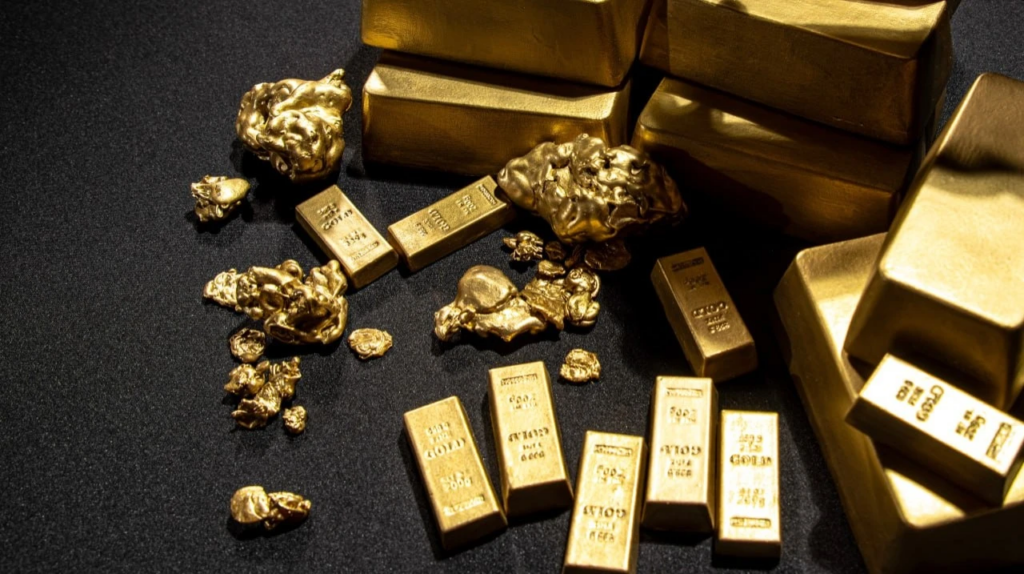
After an extraordinary rally that saw gold surge 57% in twelve months — fuelled by central bank buying, geopolitical chaos, and the “debasement trade” — the precious metal suffered its steepest fall in over a decade. The trigger: Donald Trump’s nomination of hawkish former Fed governor Kevin Warsh as the next Federal Reserve Chair.
By UK Political Finance Desk | Published: 2 February 2026 | Reading time: 9 min
Gold entered February 2026 in a state of violent correction. After touching a record high of $5,608 per troy ounce on Thursday, 29 January, the precious metal collapsed by more than 20% over the following two trading sessions, falling below $4,500 by Monday, 2 February. The crash — the steepest percentage decline since March 2020 and the largest in nominal dollar terms in the metal’s history — was triggered by a single piece of news: President Donald Trump’s nomination of Kevin Warsh, a former Federal Reserve governor widely regarded as hawkish, to succeed Jerome Powell as chair of the US central bank.
Looking for the best online casino sites in 2026? Play with the best and get great bonuses while playing without any major risks today:

BetPortal
- Lucky Friday: 50% Friday Reload Bonus
- Wild Wednesday: 250 Free Spins
- Riskfree Weekend: 10% Cashback

Amunbet
- Lucky Amun Monday: 50% up to £450
- First Deposit Highroller Bonus: 250% up to £4,500 + 250 FS
- Pharaoh’s Wins Weekend: Up to £450

Fortunica
- 5,000+ games from 40+ providers
- Fast payouts available via Visa and Mastercard, e-wallets (PayPal, Skrill, Neteller), bank transfers, and cryptocurrencies

VegasNova
- Promo Code - WELCOME200
- Sports Welcome Bonus - 150% up to €200–$200

Highspin
- Tuesday Reload Bonus 50% Up To £250
- Secial Bonus - HIGHSPIN LOTTERY
- Weekly Cashback - Every Monday Up To £500

West Ace
- Crypto Casino Bonus - 200% up to 3,000 USDT
- Crypto Sports Bonus - 100% up to 200 USDT



The selloff reverberated across the entire precious metals complex. Silver suffered an even more brutal decline, falling 31% on Friday alone — its worst single-day percentage drop since March 1980, when the Hunt Brothers’ infamous attempt to corner the silver market unwound. The gold-silver ratio, which had compressed from above 80:1 in early 2025 to approximately 46:1 at the peak, is now back in flux as both metals search for a floor.
Gold Price — Key Data Points (January–February 2026)
| Date | Price (USD/oz) | Event |
| 1 January 2026 | ~$4,330 | Start of year |
| 29 January 2026 | $5,608 (record) | All-time high; 6th consecutive monthly gain |
| 30 January 2026 | ~$4,900 | Warsh nomination announced; massive selloff begins |
| 31 January 2026 | ~$4,770 | Continued decline; silver crashes 31% |
| 2 February 2026 | ~$4,404 | Lowest since early January; 21% off peak |
What Caused the Crash?
The immediate catalyst was the Warsh nomination. Kevin Warsh, who served on the Federal Reserve Board from 2006 to 2011, is perceived by markets as significantly more hawkish than the candidates previously rumoured for the role. His appointment signals a potential shift toward tighter monetary policy, higher interest rates, and a stronger US dollar — all of which are traditionally negative for gold, which yields nothing and becomes relatively less attractive when rates rise.
But the nomination was merely the match thrown onto a pyre that had been building for months. Gold’s rally through 2025 and into January 2026 was extraordinary: a 57% gain in twelve months, the metal’s best annual performance since the early 1980s. That kind of run attracts speculative capital, and by late January, positioning in gold futures had become extremely crowded. The CME Group recorded 3,338,528 gold contracts traded on 26 January — a single-day record that shattered the previous high set in October 2025.
Factors Behind the Gold Crash
| Factor | Detail | Impact |
| Kevin Warsh nomination | Hawkish Fed Chair pick signals tighter monetary policy | Dollar strengthens, gold loses safe-haven bid |
| Profit-taking | After 57% rally in 12 months, speculative longs exit | Cascading sell orders |
| Chinese speculator liquidation | Retail and institutional Chinese buyers take profits | Amplified selling pressure |
| Record positioning | CME record 3.3M contracts traded on 26 Jan | Crowded trade unwinds violently |
| Thin liquidity | Market lacks depth at extreme price levels | Small orders cause outsized moves |
| Silver contagion | Silver’s 31% crash deepens precious metals fear | Cross-asset selling |
The Rally That Preceded the Crash
To understand the scale of the correction, it is necessary to understand the rally that produced it. Gold’s surge through 2025 was driven by a confluence of factors that many analysts described as a “perfect storm” for the precious metal. Central banks — led by China, India, Turkey, and Poland — bought gold at record levels throughout 2025, accelerating a de-dollarisation trend that had been building since the freezing of Russian central bank assets in 2022. The “debasement trade,” in which investors rotate out of fiat currencies and government bonds into physical assets amid concerns about surging sovereign debt, pushed institutional allocation to gold to its highest level in decades.
Geopolitical risk provided a constant tailwind. Trump’s executive orders imposing tariffs on goods from countries supplying oil to Cuba, escalating tensions with Iran over nuclear negotiations, the “Greenland situation,” and the capture of Venezuela’s president by US forces in January 2025 all contributed to what analysts described as a historically elevated level of uncertainty. Gold thrived in that environment. By the time it reached $5,608, the metal had gained 64% in 2025 alone — its second-best annual performance since 1970.
Gold’s 2025–2026 Rally — Key Milestones
| Milestone | Approximate Date | Price | YoY Change |
| Start of 2025 rally | January 2025 | ~$2,650 | — |
| $3,000 breached | March 2025 | $3,000 | +13% |
| $4,000 breached | September 2025 | $4,000 | +51% |
| Year-end 2025 | December 2025 | ~$4,330 | +64% (full year) |
| January 2026 peak | 29 January 2026 | $5,608 | +57% (12-month) |
| Post-crash low | 2 February 2026 | ~$4,404 | -21% from peak |
The Kevin Warsh Factor: What His Nomination Means
Kevin Warsh’s nomination as Federal Reserve Chair is arguably the most consequential personnel decision for global financial markets in 2026. Warsh, 55, is viewed as more hawkish than current Fed Chair Jerome Powell, whose term ends in May. Markets have interpreted the nomination as a signal that the Trump administration, despite its public rhetoric about wanting lower interest rates, has opted for a Fed leader who will prioritise dollar stability and inflation control over easy monetary conditions.
For gold, this is a fundamental headwind. Much of the metal’s 2025 rally was predicated on expectations of a sustained period of dollar weakness, loose monetary policy, and negative real interest rates. A Warsh-led Fed could reverse those conditions. Analysts at major banks have noted that while the structural case for gold — central bank buying, geopolitical risk, fiscal concerns — remains intact, the tactical environment has shifted decisively with this nomination.
Gold Price Forecasts for 2026 — Analyst Estimates
| Source | Year-End 2026 Target | Key Assumption |
| Long Forecast | $7,291 | Continued rally; geopolitical risk sustained |
| CoinCodex (algorithmic) | $9,004 | Bullish model; +101% from current levels |
| JPMorgan (silver note) | Correction to $4,500–$5,000 range | Warsh tightening; profit-taking cycle |
| Consensus (neutral) | $5,000–$6,000 | Recovery after correction; central bank demand intact |
What This Means for UK Investors
For British investors, the gold crash has been partially cushioned by ongoing sterling weakness against the US dollar. In pound terms, gold remains substantially higher than it was a year ago, even after the correction. However, the volatility itself is a reminder of the risks inherent in precious metals investing, particularly at extreme price levels.
The Bank of England’s own gold reserves — held at the Bank’s vault in Threadneedle Street — are valued at market prices and have seen enormous paper gains over the past year. UK pension funds, several of which increased their gold allocations in 2025, will be watching the next few weeks closely. If gold stabilises in the $4,400–$4,600 range and resumes its upward trend, the correction will be viewed as a healthy consolidation. If it breaks below $4,000, the narrative shifts to something more concerning.
Key Support and Resistance Levels — Gold
| Level | Price (USD/oz) | Significance |
| All-time high | $5,608 | 29 January 2026 record |
| Resistance 1 | $5,000–$5,100 | Pre-crash consolidation zone |
| Current price | ~$4,404 | 2 February 2026 |
| Support 1 | $4,350–$4,380 | Technical support zone |
| Support 2 | $4,000 | Psychological level; major floor |
| Support 3 | $3,500 | 200-day moving average area |
February 2026 will be a defining month for the gold market. The FOMC meeting, the political fallout from the Warsh nomination, China’s monetary policy direction, and the pace of speculative deleveraging will all play roles in determining whether the metal’s historic rally resumes or whether the correction has further to run. For now, the world’s oldest safe-haven asset is reminding investors of a lesson it teaches in every cycle: what goes up fast can come down even faster.
