
Alice Grant on ECHR and Immigration – The Conservative Case for Leaving the European Convention in 2026
The question Alice Grant posed on GB News was simple enough to fit in a TikTok clip: “Does the rule of law now protect criminals over citizens?” The 6,500 likes it received suggest the question resonated.
Grant’s argument – that Britain’s membership of the European Convention on Human Rights has become an obstacle to immigration enforcement, criminal deportation and parliamentary sovereignty – is not new. It has been made by politicians from Theresa May to Kemi Badenoch. But Grant articulates it with a clarity and legal grounding that sets her apart from purely populist critics of the Convention.
The ECHR debate has intensified in 2026 for three reasons. First, Badenoch has committed the Conservative Party to withdrawal, telling shadow cabinet members that those who do not support the policy will not be allowed to stand as MPs at the next election. Second, Home Secretary Shabana Mahmood’s asylum reforms have highlighted the practical limits that Strasbourg rulings impose on British deportation policy. Third, the Iran war and its associated security concerns have sharpened public appetite for measures that prioritise national security over international legal obligations.
Looking to place a wager on political outcomes? Here are the most trusted and regulated bookmakers for political betting:

BetPortal
- Lucky Friday: 50% Friday Reload Bonus
- Wild Wednesday: 250 Free Spins
- Riskfree Weekend: 10% Cashback

Amunbet
- Lucky Amun Monday: 50% up to £450
- First Deposit Highroller Bonus: 250% up to £4,500 + 250 FS
- Pharaoh’s Wins Weekend: Up to £450

Fortunica
- 5,000+ games from 40+ providers
- Fast payouts available via Visa and Mastercard, e-wallets (PayPal, Skrill, Neteller), bank transfers, and cryptocurrencies

VegasNova
- Promo Code - WELCOME200
- Sports Welcome Bonus - 150% up to €200–$200

Highspin
- Tuesday Reload Bonus 50% Up To £250
- Secial Bonus - HIGHSPIN LOTTERY
- Weekly Cashback - Every Monday Up To £500

West Ace
- Crypto Casino Bonus - 200% up to 3,000 USDT
- Crypto Sports Bonus - 100% up to 200 USDT






Grant’s Legal Framework
Grant approaches the ECHR question as a lawyer rather than a culture warrior. Her core argument has three pillars.
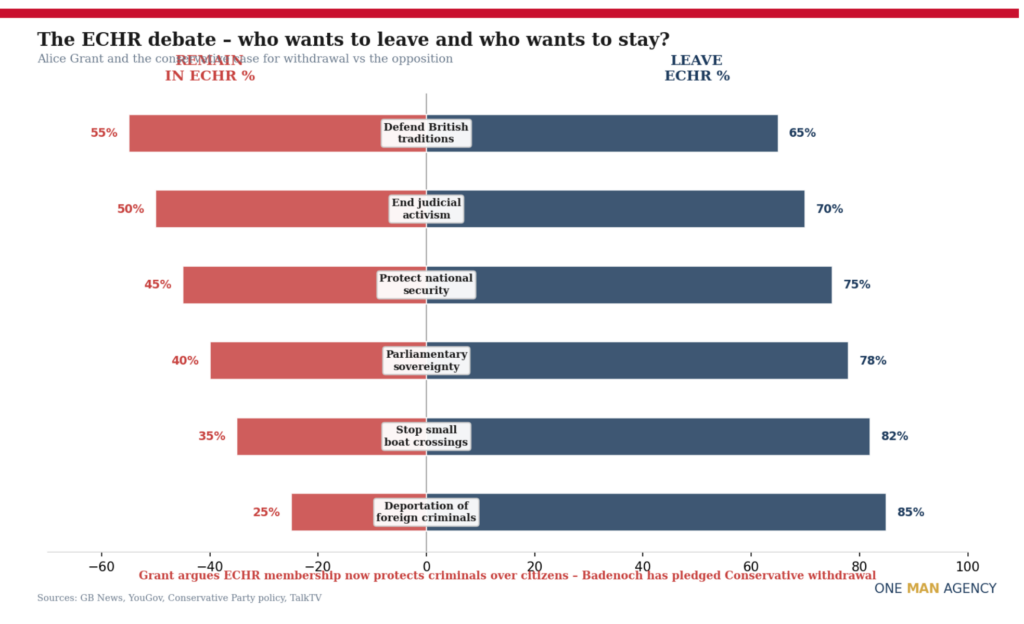
First, parliamentary sovereignty. The UK Parliament is, in constitutional theory, the supreme legal authority in Britain. ECHR rulings from the Strasbourg court effectively overrule parliamentary decisions – most visibly in cases where courts have blocked the deportation of foreign criminals on human rights grounds. Grant argues this represents a democratic deficit that undermines public confidence in the legal system.
Second, the intent gap. The Convention was drafted in 1950 in the aftermath of World War II to prevent a recurrence of totalitarian atrocities. Grant argues that its application to 21st-century immigration and asylum cases bears no relationship to the framers’ intentions. The right to family life (Article 8), for example, was designed to prevent states from separating families through political persecution – not to prevent the deportation of convicted criminals who have established family ties during their sentence.
Third, the practical impact. Grant cites cases where individuals convicted of serious offences – including violent crime and sexual offences – have successfully used ECHR provisions to resist deportation. These cases, she argues, erode public trust in the justice system and create a perception that the law protects offenders at the expense of victims.
The Counter-Arguments
Grant’s position is contested by human rights lawyers, civil liberties organisations and some Conservative moderates. Their objections centre on three points.
First, ECHR withdrawal would remove protections that benefit British citizens – including the right to a fair trial, freedom of expression and protection from torture. Leaving the Convention is not a surgical procedure that removes only inconvenient immigration provisions.
Second, Britain’s international reputation would suffer. The UK was instrumental in drafting the Convention and withdrawal would place it alongside Belarus as one of only two European countries outside the system. The diplomatic consequences – particularly in the context of the Iran war and Anglo-European relations – could be significant.
Third, parliamentary sovereignty already provides the mechanism for reform. The Human Rights Act 1998 incorporates ECHR rights into domestic law. Reforming or replacing the Act would allow the UK to rebalance rights and responsibilities without the symbolic and practical costs of full Convention withdrawal.
Grant acknowledges these arguments but maintains that incremental reform has been tried and failed. Successive governments have promised to address the deportation problem without solving it. She argues that the political and diplomatic costs of withdrawal are outweighed by the democratic cost of maintaining a system that the public perceives as unjust.
The Electoral Dimension
The ECHR debate is not merely academic. It is a live electoral issue that will feature prominently in the next general election. Badenoch’s commitment to withdrawal gives the Conservatives a clear differentiator from Labour and potentially from Reform UK, which has called for ECHR withdrawal but may not be trusted to deliver it in government.
Grant’s role as an articulate advocate for withdrawal on legal rather than populist grounds serves a specific electoral function – making the policy palatable to professional and middle-class voters who might recoil from more inflammatory framing. Her Oxford education, legal qualification and measured broadcasting style are assets in this context.
Whether the policy is ultimately wise or reckless depends on questions that extend well beyond the scope of a single commentator’s analysis. But Grant has established herself as a central voice in the debate – and the debate is only growing louder.
Frequently Asked Questions
Does Alice Grant want Britain to leave the ECHR? Yes. Grant argues that ECHR membership prevents the deportation of foreign criminals, undermines parliamentary sovereignty and no longer serves its original post-war purpose.
Has the Conservative Party committed to leaving the ECHR? Yes. Conservative leader Kemi Badenoch has pledged to withdraw Britain from the European Convention on Human Rights and told shadow cabinet members the policy is non-negotiable.
What would happen if Britain left the ECHR? Britain would no longer be subject to rulings from the European Court of Human Rights in Strasbourg. It could set its own human rights framework through domestic legislation. Critics argue this would damage Britain’s international standing and remove protections for British citizens.