UK Remote Gaming Duty Surges to 40%: Industry Braces for £1 Billion Tax Hit in 2026
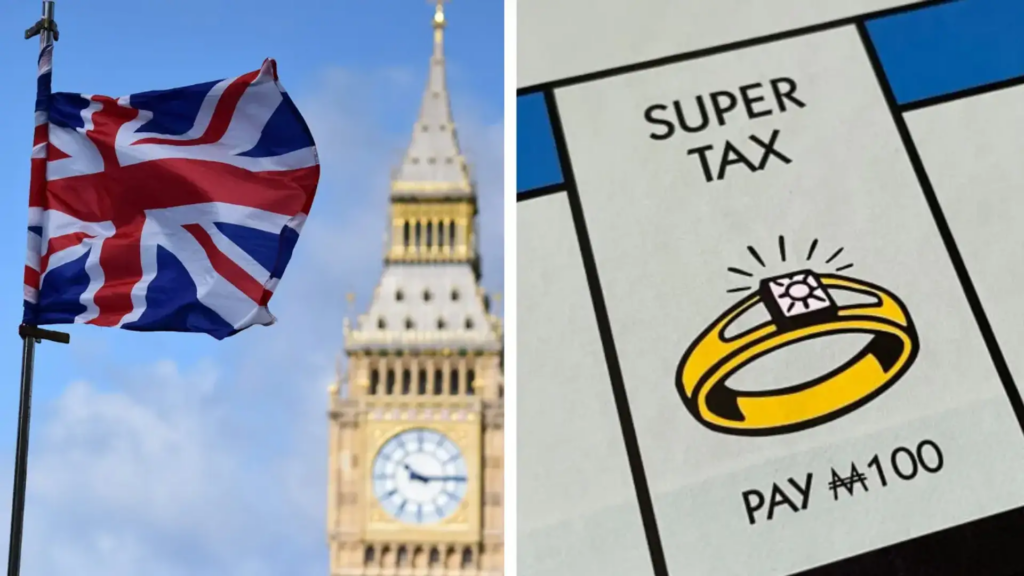
The United Kingdom gambling sector confronts its most dramatic fiscal restructuring in two decades as Chancellor Rachel Reeves’ November 2025 budget announcement triggers a comprehensive overhaul of gambling taxation. The Remote Gaming Duty (RGD) increase from 21% to 40%, effective April 1, 2026, represents the highest rate among major European gambling jurisdictions and threatens to fundamentally reshape the competitive dynamics of Britain’s £6.9 billion online gambling market.
Best Online Casinos 2026

BetPortal
- Lucky Friday: 50% Friday Reload Bonus
- Wild Wednesday: 250 Free Spins
- Riskfree Weekend: 10% Cashback

Amunbet
- Lucky Amun Monday: 50% up to £450
- First Deposit Highroller Bonus: 250% up to £4,500 + 250 FS
- Pharaoh’s Wins Weekend: Up to £450

Fortunica
- 5,000+ games from 40+ providers
- Fast payouts available via Visa and Mastercard, e-wallets (PayPal, Skrill, Neteller), bank transfers, and cryptocurrencies

VegasNova
- Promo Code - WELCOME200
- Sports Welcome Bonus - 150% up to €200–$200

Highspin
- Tuesday Reload Bonus 50% Up To £250
- Secial Bonus - HIGHSPIN LOTTERY
- Weekly Cashback - Every Monday Up To £500
Breaking Down the Tax Restructure
The UK government’s targeted approach to gambling taxation introduces three distinct changes, each carrying profound implications for different sectors of the betting and gaming industry. Rather than implementing a unified Remote Betting and Gaming Duty as initially consulted upon, the Treasury opted for a differentiated strategy that dramatically escalates duties on activities classified as high-margin and high-harm while maintaining separate treatment for various gambling categories.
| Tax Category | Previous Rate | 2026 Rate | Effective Date | Annual Revenue Impact |
| Remote Gaming Duty (RGD) | 21% | 40% | April 1, 2026 | +£685 million |
| General Betting Duty (Remote) | 15% | 25% | April 1, 2027 | +£340 million |
| Bingo Duty | 10% | Abolished (0%) | April 1, 2026 | -£18 million |
| Horse Racing Betting (effective rate) | 25% | 25% (unchanged) | No change | N/A |
| Land-Based Betting | 15% | 15% (unchanged) | No change | N/A |
The Remote Gaming Duty increase specifically targets online slots and casino games, which government analysis identifies as having lower operating costs relative to revenue generation and higher association with gambling-related harm. This 19-percentage-point increase represents the most aggressive single tax escalation in British gambling history, exceeding even the dramatic changes introduced during the transition to the point-of-consumption tax regime in 2014.
Economic Impact Projections
Treasury forecasts project the combined tax changes will generate over £1 billion in additional annual revenue for the Exchequer. However, the Office for Budget Responsibility (OBR) tempered these optimistic projections with cautionary analysis acknowledging potential behavioral changes that could reduce the actual yield.
| Revenue Projection Scenario | Gross Additional Revenue | Behavioral Adjustment | Net Additional Revenue |
| Treasury Best Case | £1.12 billion | -£85 million | £1.035 billion |
| OBR Central Estimate | £1.08 billion | £145 million | £935 million |
| Industry Pessimistic Case | £1.05 billion | £280 million | £770 million |
The OBR’s analysis specifically accounts for potential customer migration to unlicensed black market operators, shifts between different gambling products, and operational restructuring by licensed operators attempting to minimize tax exposure. Industry analysts suggest the Treasury’s projections may prove overly optimistic, particularly regarding consumer behavior in response to reduced promotional activity and potentially lower Return to Player (RTP) percentages as operators seek to offset increased tax burdens.
Operator Response Strategies
Major gambling operators have announced varied strategic responses to the impending tax increases, ranging from aggressive cost-cutting programs to fundamental business model reassessments. The divergent approaches reflect different competitive positions, geographic diversification strategies, and capital structure considerations.
Flutter Entertainment, the UK market’s largest operator, maintains relative confidence in its ability to navigate the tax increases due to its dominant market position and operational scale. CEO Peter Jackson stated: “Despite these changes, I am confident that through both our scale and leading position in the UK, as well as the proactive cost initiatives that we are taking, we are well placed to navigate through today’s changes.”
| Operator | UK Revenue Exposure | Strategic Response | Job Impact Projection |
| Flutter Entertainment | 38% of group | Cost optimization, maintain investment | Minimal (-2%) |
| Entain | 51% of group | Strategic review underway | Moderate (-8%) |
| Evoke (888/William Hill) | 78% of group | Comprehensive restructure | Significant (-15%) |
| Bet365 | 62% of group | Geographic diversification | Moderate (-6%) |
| Smaller operators (<£50m revenue) | 85%+ of business | Market exit consideration | Severe (-25%+) |
Evoke, operator of William Hill, 888, and Mr Green brands, characterized the budget as “highly damaging for the economy and consumers” and “ill-thought-through and counterproductive.” CEO Per Widerström emphasized concerns about job losses, reduced UK investment, and diminished player protection as licensed operators struggle with compressed margins. The company subsequently announced a strategic review of its UK operations, signaling potential restructuring or market contraction.
International Tax Competitiveness Comparison
The 40% Remote Gaming Duty rate positions the UK as having among the highest regulated gambling taxes globally, raising questions about long-term market attractiveness for international operators and potential competitive disadvantages relative to other European jurisdictions.
| Jurisdiction | Online Casino Tax Rate | Online Sports Betting Rate | Market Status |
| United Kingdom | 40% (from April 2026) | 25% (from April 2027) | Heavily regulated |
| Netherlands | 30.5% | 30.5% | Recently liberalized |
| Germany | 5.3% (plus €1/spin stake limit) | 5.3% | Heavily restricted |
| Malta | 5% | 5% | Operator-friendly hub |
| Italy | 25% | Variable by product | Mature market |
| Spain | 25% | Variable by region | Regional licensing |
| France | 2% (plus turnover taxes) | Variable by product | State monopoly partial |
| Sweden | 18% | 18% | Balance approach |
The Netherlands provides a particularly relevant comparison, as the Dutch government increased its gambling tax from 29% to 30.5% in late 2024, triggering immediate consequences. Industry data from the Netherlands showed a measurable increase in illegal gambling activity and a corresponding decline in tax receipts, validating concerns that excessive taxation can prove counterproductive to government revenue objectives.
Black Market Migration Risks
The most significant concern surrounding the tax increases centers on potential customer migration to unregulated, unlicensed gambling platforms operating outside British regulatory jurisdiction. Industry stakeholders and some Members of Parliament have raised alarms about inadvertently strengthening the illegal gambling market through over-taxation of legitimate operators.
Recent research by Deal Me Out and GAMRS demonstrates the scale of the existing black market problem. Key findings include:
- £10 million+ in documented deposits to illegal gambling platforms from UK consumers
- 89% of illegal sports streams containing advertising for unlicensed gambling operators
- 4.7 billion illegal sports stream views by British audiences in 2024
- 61% of problem gamblers using illegal sites reported funds stolen when attempting withdrawals
- £695 million annual spend by the 0.8% of UK gamblers using exclusively illegal platforms
| Black Market Growth Indicator | 2021 Baseline | 2025 Current | Growth Rate | 2026 Projection |
| Gross Gambling Yield (UK black market) | £280 million | £1.68 billion | +500% | £2.1-2.4 billion |
| Percentage of UK gamblers using illegal sites | 3.2% | 6.2% | +94% | 8.5-10% |
| Average spend per illegal market customer | £1,240 | £2,180 | +76% | £2,600-2,900 |
| Illegal operator brand recognition | 8% | 15% | +88% | 19-22% |
Conservative MP Louie French warned Parliament about “unintended consequences” from excessive tax rises, urging the government to exercise caution when calibrating tax rates. Labour MP Gareth Snell referenced the OBR report, noting: “A report from the Office for Budget Responsibility states there will be a drive towards the black market as a result of these taxation changes.”
Employment and Economic Impact
The Betting and Gaming Council estimates the regulated UK gambling industry currently supports 109,000 jobs across the country, contributes £4 billion in annual tax revenue, and plays a vital role in funding sport, charities, and safer gambling initiatives. Industry representatives warn that the combined impact of increased taxation and tighter regulation threatens this economic contribution.
| Economic Impact Category | Current (2025) | Projected (2027) | Change |
| Direct Employment | 109,000 | 94,000-98,000 | -10-14% |
| Indirect Employment | 87,000 | 75,000-79,000 | -9-14% |
| Total Tax Contribution | £4.0 billion | £4.6-4.8 billion | +15-20% |
| Sport Sponsorship Investment | £118 million | £85-95 million | -19-28% |
| Charity Contributions | £45 million | £32-38 million | -16-29% |
| Safer Gambling Investment | £127 million | £108-115 million | -9-15% |
Shadow exchequer secretary to the treasury James Wild cautioned: “When taxes rise too far, behaviour can change and the yield can go down. Rather than reducing demand, activity will move to unregulated markets where consumer protections are weaker, fraud risks are higher and tax revenue is not collected.”
Statutory Levy Implications
The tax increases carry profound implications for the statutory gambling levy introduced in April 2025, which replaced the voluntary industry contribution system. The levy, calculated as a percentage of gross gambling revenue (0.1% to 1.1% depending on licensable activities), funds research, education, and treatment programs addressing gambling-related harm.
Dan Waugh, Partner at Regulus Partners, articulated the concerning dynamic: “If spending in the licensed market is reduced as a result of these tax changes, funding for treatment services in this country will fall. If there is significant displacement from the licensed market into the black market in online casino, the statutory levy that was put in place in April to fund treatment services and harm prevention will collapse.”
This creates a troubling paradox: regulations designed to protect consumers from gambling harm may inadvertently reduce funding for the very support services that help problem gamblers, while simultaneously pushing vulnerable individuals toward unregulated operators offering no protections whatsoever.
Consumer Impact Analysis
The tax burden will ultimately manifest in consumer-facing changes across multiple dimensions of the gambling experience. While operators officially bear the tax liability, economic theory and industry practice suggest much of the burden will transfer to customers through various mechanisms.
| Consumer-Facing Change | Probability | Expected Magnitude | Timeline |
| Reduced promotional offers | Very High (>90%) | 30-45% reduction | Immediate (Q2 2026) |
| Lower RTP percentages | High (75-85%) | 1-3 percentage point reduction | Medium-term (Q3-Q4 2026) |
| Increased minimum stake requirements | Moderate (50-65%) | £0.20 → £0.50 minimum | Medium-term (Q3 2026) |
| Reduced game variety | Moderate (45-60%) | 10-20% catalog reduction | Long-term (2027) |
| Higher withdrawal processing times | Low-Moderate (35-50%) | +24-48 hours | Medium-term (Q4 2026) |
| Reduced customer service availability | Moderate (55-70%) | Weekend/evening cutbacks | Medium-term (Q3-Q4 2026) |
Consumers seeking unrestricted bonuses, higher stake limits, and feature-rich slot games may find themselves attracted to illegal operators who face no such constraints. Research indicates that 60% of UK gamblers surveyed believe further tax increases “would make customers turn to unregulated betting sites” if operators pass costs to consumers.
Regional Regulatory Context
The UK’s aggressive tax escalation occurs within a broader European regulatory environment increasingly focused on gambling harm reduction and revenue maximization. Several jurisdictions have recently implemented or proposed similar measures:
- Maryland, USA: Increased sports betting tax from 15% to 25% in 2025
- New Jersey, USA: Implemented progressive tax increases reaching 30% for highest-earning operators
- Illinois, USA: Introduced per-wager fee plus 10.25% Chicago city tax
- Colorado, USA: Sunset promotional deductions, effectively increasing tax burden
- Louisiana, USA: Raised sports betting taxes to fund education initiatives
These parallel developments suggest a global trend toward higher gambling taxation as governments seek revenue sources while simultaneously responding to public health concerns about gambling proliferation. However, the UK’s 40% rate significantly exceeds most international benchmarks, raising questions about optimal tax policy design.
Industry Consolidation Pressures
Analysts project the combined effect of increased taxation, stricter regulation, and black market competition will accelerate industry consolidation. Smaller operators lacking economies of scale and geographic diversification face particularly acute pressure, with 8-12% of current licensees expected to exit the UK market or pursue merger opportunities by end-2027.
| Operator Category | Pre-Tax Market Share | Projected 2027 Share | Change |
| Top 5 Operators | 67% | 75-78% | +8-11 pp |
| Mid-Tier (6-20) | 24% | 18-20% | -4-6 pp |
| Small Operators (21+) | 9% | 4-5% | -4-5 pp |
This consolidation trend benefits dominant operators like Flutter Entertainment and bet365, who possess the resources to absorb tax increases while maintaining competitive promotional offerings. Conversely, smaller operators face existential challenges balancing regulatory compliance costs, tax obligations, and customer acquisition expenses.
Government Justification
The Treasury defends the tax increases as necessary to address the social costs of gambling and to ensure the industry contributes its fair share to public finances. Government analysis suggests online gambling operators enjoy significantly higher profit margins than other entertainment sectors, justifying higher tax rates based on ability-to-pay principles.
Chancellor Rachel Reeves emphasized the need to balance economic growth with social responsibility: “This government will not shy away from making difficult decisions to ensure industries that profit from consumer spending contribute fairly to the public purse, particularly when those activities carry potential for harm.”
Looking Ahead: Market Adaptation
The UK gambling market enters a period of profound transformation as operators adapt to the new fiscal reality. Success will depend on operational efficiency, customer retention strategies, and ability to differentiate through superior product offerings and customer experience rather than aggressive bonus competition.
Forward-looking operators recognize the changes create opportunities to compete on sustainable business practices, technological innovation, and genuinely safer gambling features rather than unsustainable promotional spending. The market may emerge healthier and more consumer-focused, albeit smaller and more concentrated than its pre-2026 configuration.
The ultimate verdict on the tax increases will depend on three key metrics:
- Total tax revenue: Does actual collection meet Treasury projections?
- Black market growth: Do illegal operators significantly increase market share?
- Harm reduction: Does the market contraction meaningfully reduce gambling-related harm?
These outcomes will materialize over the next 18-24 months, providing crucial evidence for policymakers across Europe and globally as they calibrate their own approaches to gambling taxation and regulation in an increasingly digital, borderless gambling environment where excessive taxation risks becoming counterproductive to both revenue and harm reduction objectives.