Russia Launches Massive Overnight Strikes on Ukraine: Escalation Marks Dangerous New Phase
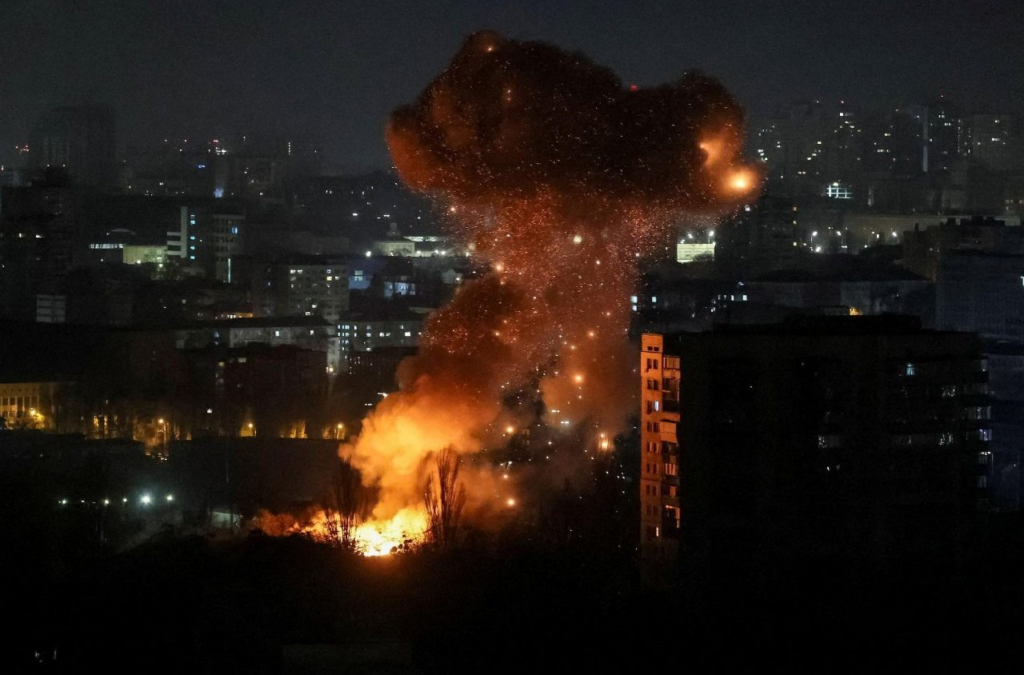
Russia conducted an extensive overnight missile and drone assault on Ukrainian cities on January 11-12, 2026, representing one of the largest coordinated attacks since the full-scale invasion began in February 2022. The barrage, which Ukrainian officials report included over 120 missiles and drones targeting critical infrastructure across multiple regions, killed at least 14 civilians and wounded more than 80, while causing substantial damage to power generation facilities and heating systems amid winter cold.
The timing and scale of the assault have raised alarms among Western analysts that Russia may be entering a more aggressive phase of the conflict, possibly emboldened by uncertainty about continued US support under the second Trump administration and calculations that a window of opportunity may be closing before anticipated Ukrainian NATO membership and security guarantee formalization.
Attack Composition and Targeting
Ukrainian air defense systems, supplemented by advanced Western equipment including Patriot and IRIS-T missile batteries, intercepted approximately 74 of the incoming threats. However, the sheer volume of weapons launched overwhelmed defenses in several regions, allowing numerous missiles and drones to reach their intended targets or cause damage through interception debris.
| Weapon System | Number Launched | Intercepted | Success Rate | Primary Targets |
| Kh-47 Kinzhal hypersonic missiles | 8 | 2 | 25% | Patriot sites, command centers |
| Kalibr cruise missiles | 35 | 24 | 69% | Power stations, fuel depots |
| S-400 surface-to-air missiles (ground mode) | 12 | 9 | 75% | Ukrainian air defense |
| Kh-101/Kh-555 air-launched cruise missiles | 28 | 21 | 75% | Infrastructure, military facilities |
| Kh-59 tactical missiles | 15 | 11 | 73% | Frontline positions, ammunition |
| Shahed-136/131 drones | 48 | 35 | 73% | Wide area saturation, infrastructure |
| Orlan-10 reconnaissance drones | 12 | 7 | 58% | Target identification, damage assessment |
| Total Attack Package | 158 | 109 | 69% | Multi-layered, comprehensive |
The attack demonstrated Russia’s continued ability to conduct complex, coordinated strikes despite nearly four years of war and Western sanctions that were supposed to degrade its precision weapons capabilities. The use of eight Kh-47 Kinzhal hypersonic missiles—Russia’s most advanced air-launched ballistic missiles, which travel at Mach 10 and are extremely difficult to intercept—indicates Moscow’s willingness to expend limited stocks of premiere weapons to achieve psychological and military effects.
Military analysts note that Russia has reconstituted its missile production capacity more effectively than many Western observers anticipated. Sanctions evasion through third countries, adaptation of civilian electronics for military applications, and increased domestic production have enabled Russia to maintain a steady if reduced tempo of missile strikes throughout 2025. US intelligence estimates suggest Russia produces approximately 100-130 cruise missiles monthly compared to pre-war capacity of 80-100, indicating that wartime mobilization of production has actually increased certain weapons output despite sanctions.
Civilian Impact and Infrastructure Damage
The humanitarian consequences of the latest barrage were severe, with strikes hitting residential areas in Kyiv, Kharkiv, Odesa, Dnipro, and multiple smaller cities. In the capital Kyiv, missiles struck an apartment building in the Desniansky district, killing seven civilians including two children. Rescue operations continued throughout the day as emergency services searched for survivors beneath rubble.
| City | Casualties (Dead/Wounded) | Infrastructure Damage | Restoration Timeline |
| Kyiv | 7 / 23 | Apartment building, substations | 48-72 hours |
| Kharkiv | 3 / 18 | Power plant, water facility | 5-7 days |
| Odesa | 2 / 12 | Port infrastructure, fuel depot | 3-4 days |
| Dnipro | 1 / 9 | Industrial complex | 2-3 days |
| Zaporizhzhia | 1 / 7 | Heating plant | 7-10 days |
| Lviv | 0 / 8 | Rail infrastructure | 2 days |
| Multiple other locations | 0 / 11 | Various | Varies |
| Total | 14 / 88 | Widespread | Days to weeks |
Ukrainian President Volodymyr Zelenskyy condemned the attacks as “deliberate targeting of civilians and civilian infrastructure that constitutes war crimes and crimes against humanity.” He renewed appeals for additional air defense systems from Western partners, noting that “every Patriot battery, every IRIS-T system, every NASAMS saves lives. The mathematics is simple: more air defense means fewer casualties.”
The attack also severely impacted Ukraine’s energy infrastructure, already degraded by years of Russian strikes. Power was cut to approximately 1.8 million households across six regions, with grid operator Ukrenergo implementing emergency stabilization measures to prevent cascading failures. Repair crews worked under difficult conditions to restore services, but officials warned that some areas might experience prolonged outages, particularly problematic during winter when temperatures regularly fall below freezing.
Strategic and Military Analysis
The scale and intensity of the January 11-12 strikes suggest several possible strategic calculations by Russian military planners:
Pressure campaign ahead of potential negotiations: With Trump administration officials including Secretary of State Marco Rubio expressing desire for negotiations to end the conflict, Russia may be attempting to demonstrate military capacity and establish favorable bargaining positions.
Degradation of Ukrainian war-fighting capability: Systematic targeting of power generation, transportation networks, and industrial facilities aims to reduce Ukraine’s ability to sustain military operations and weapons production.
Morale warfare: Attacks on civilian areas are designed to break Ukrainian societal cohesion and will to continue the conflict, though historically such campaigns often strengthen rather than weaken target populations’ resolve.
Signal to the West: The attacks may be intended to demonstrate that Russia retains offensive capability despite Western military aid to Ukraine and to create pressure for negotiations on terms favorable to Moscow.
Opportunity exploitation: With questions about US commitment under Trump and European defense capabilities, Russia may perceive a closing window before Ukraine receives additional security guarantees or NATO membership.
International Response and Western Aid
Western responses to the latest Russian barrage have been swift but largely symbolic. NATO Secretary General Mark Rutte condemned the attacks as “flagrant violations of international law” and reiterated the alliance’s “unwavering support” for Ukraine. However, new military aid commitments were not announced, reflecting ongoing debates within NATO about the scale, composition, and duration of support.
| Country | Response Type | Announced Measures | Timeline |
| United States | Conditional support | $400M aid package (pending Congressional approval) | Uncertain |
| United Kingdom | Strong verbal support | Additional air defense systems | 2-3 months |
| Germany | Cautious support | Maintenance of existing commitments | Ongoing |
| France | Diplomatic emphasis | Renewed calls for negotiations | Immediate |
| Poland | Robust support | Hosting expanded NATO presence | Ongoing |
| Baltic States | Unequivocal support | Increased regional defense cooperation | Immediate |
The Trump administration’s response has been more ambiguous than those of European partners. While condemning the attacks, President Trump has continued to emphasize his desire to “end this ridiculous war” through negotiations, without clearly articulating what terms might be acceptable. Secretary of State Rubio stated that the United States would “absolutely support Ukraine’s right to defend itself” while simultaneously noting that “ultimately this conflict must end through diplomatic means.”
This message has created uncertainty in Kyiv about the reliability of continued US support. Ukrainian officials privately express concern that the Trump administration may pressure Ukraine to accept territorial concessions or other compromises that would legitimize Russian aggression. Public statements from Trump administration officials emphasizing the cost of aid to Ukraine and questioning the strategic importance of the conflict have heightened these anxieties.
Air Defense Requirements and Capability Gaps
Ukrainian officials have been clear about what they need to defend against Russian strikes: more advanced long-range air defense systems, particularly additional Patriot batteries, THAAD systems for hypersonic missile defense, expanded electronic warfare capabilities, and deeper interceptor missile stockpiles. Current inventories are insufficient to provide comprehensive protection across Ukraine’s extensive territory.
| System Type | Currently Deployed (Est.) | Optimal Requirement | Coverage Gap | Procurement Status |
| Patriot batteries | 8 | 20-25 | 60-68% shortage | Slow expansion |
| IRIS-T systems | 4 | 12-15 | 67-73% shortage | Gradual delivery |
| NASAMS batteries | 2 | 8-10 | 75-80% shortage | Limited supply |
| S-300 systems (legacy) | ~30 | Replacement needed | Aging, limited interceptors | Missile shortages |
| THAAD (for hypersonics) | 0 | 2-3 | 100% shortage | Not approved |
| Interceptor missiles (monthly consumption) | ~200 | ~400 | 50% shortage | Production constraints |
The fundamental challenge is that Ukraine’s territory is too large to defend comprehensively with available systems. Even with all announced Western air defense deliveries fulfilled, significant gaps will remain, forcing Ukrainian commanders to make difficult choices about which cities and facilities receive protection and which remain vulnerable.
Moreover, interceptor missile production and supplies represent a critical bottleneck. Each Patriot missile costs approximately $4-6 million, and monthly consumption during intensive Russian campaigns exceeds production rates. Ukraine has reportedly received approximately 1,200-1,500 interceptor missiles across all Western systems since the invasion began, but has fired more than 2,000 in defensive operations. Sustaining current defense capabilities while expanding coverage requires addressing this fundamental munitions shortfall.
Hypersonic Missile Challenge
The use of eight Kh-47 Kinzhal hypersonic missiles in the January 11-12 attack underscores the particular challenge these weapons pose. Traveling at speeds exceeding Mach 10 and capable of maneuvering during flight, Kinzhals are extraordinarily difficult to intercept. While Ukraine has claimed several Kinzhal shootdowns using Patriot systems—a remarkable achievement if confirmed—the success rate remains low and each engagement requires multiple interceptor missiles to have reasonable probability of success.
| Hypersonic Weapon | Speed | Range | Warhead | Interception Difficulty | Ukrainian Success Rate |
| Kh-47 Kinzhal | Mach 10+ | 2,000 km | 500 kg | Extreme | ~20-25% |
| Zircon (naval) | Mach 8-9 | 1,000 km | 300-400 kg | Extreme | No encounters reported |
| Avangard (strategic) | Mach 20+ | Intercontinental | Nuclear/conventional | Nearly impossible | Not applicable |
The United States possesses THAAD (Terminal High Altitude Area Defense) systems specifically designed to intercept ballistic and hypersonic missiles. However, Washington has been reluctant to deploy THAAD to Ukraine due to concerns about technology transfer risks should systems be captured or compromised, escalation dynamics, and limited inventory that must cover other global commitments including protection of US forces in the Middle East and Asia.
This creates a frustrating dynamic where Ukraine faces weapons it cannot effectively defend against using available systems, while the United States possesses capabilities that could help but is unwilling to provide them. Ukrainian officials argue this leaves their cities vulnerable to weapons specifically designed to defeat conventional air defenses, essentially conceding Russians an uncontested capability to strike targets of their choosing.
Russian Offensive Capacity and Sustainability
Despite nearly four years of intensive conflict, Russia has demonstrated surprising resilience in sustaining military operations at significant scale. Western sanctions, while imposing costs, have not prevented Russia from adapting its defense industrial base and maintaining weapons production. Several factors explain this persistence:
Sanctions evasion: Russia has developed sophisticated networks for procuring dual-use technologies, electronic components, and manufacturing equipment through third countries including China, Turkey, Kazakhstan, and United Arab Emirates. Western enforcement efforts have struggled to close loopholes in complex global supply chains.
Wartime mobilization: Russia has substantially increased defense production through round-the-clock operations, conversion of civilian manufacturing capacity, and mobilization of labor force. Missile production, in particular, has exceeded pre-war levels for certain systems.
Stockpile exploitation: Russia entered the conflict with enormous Soviet-era weapons stockpiles, many of which have been refurbished and deployed. While quality varies, quantity provides capability.
Chinese and Iranian support: While both countries officially deny providing weapons, evidence suggests significant Chinese provision of dual-use technologies and Iranian supply of drones and other equipment that enable Russian operations.
Domestic mobilization tolerance: Despite significant casualties (estimated 315,000-350,000 killed and wounded), Russian society has proven more willing to accept costs than many Western observers predicted. Authoritarianism, propaganda, and economic adaptations have maintained public acquiescence if not enthusiastic support.
Diplomatic Prospects and Negotiation Dynamics
The intensified Russian military campaign occurs against a backdrop of renewed diplomatic initiatives, particularly from the Trump administration, to negotiate an end to the conflict. However, enormous gaps separate the negotiating positions of Russia and Ukraine, making substantive progress extremely difficult.
| Issue | Russian Position | Ukrainian Position | Compromise Prospects |
| Territory | Annexation of Crimea, Donetsk, Luhansk, Zaporizhzhia, Kherson recognized | Full territorial restoration to 1991 borders | Very difficult – fundamental sovereignty question |
| NATO membership | Ukraine prohibited from joining NATO | NATO membership or equivalent security guarantees | Very difficult – core security interests for both |
| Sanctions | Complete lifting of Western sanctions | Sanctions remain until full withdrawal | Moderate – could be staged with progress |
| Reparations | No war compensation | Russia pays for reconstruction | Difficult – Russia refuses responsibility |
| War crimes accountability | Deny crimes occurred | Prosecute Russian officials | Very difficult – Russia opposes ICC |
| Buffer zones | Demilitarized Ukrainian territory | No demilitarization of sovereign Ukraine | Moderate – creative arrangements possible |
Trump administration officials have suggested that negotiations might involve Ukraine accepting “temporary” Russian control of occupied territories in exchange for security guarantees and reconstruction assistance. However, Ukrainian officials have firmly rejected any framework that would reward Russian aggression or compromise sovereignty. President Zelenskyy has stated that “Ukraine will not trade territory for peace” and that any settlement must include Russian withdrawal, security guarantees, justice for war crimes, and reparations.
European powers, particularly those in NATO’s eastern flank, share Ukrainian concerns that premature or coerced negotiations would establish dangerous precedents whereby military aggression against neighbors is legitimized if the aggressor can sustain operations long enough to exhaust international attention. Poland, Baltic States, and Nordic countries have advocated for maintaining pressure on Russia until its military capacity is sufficiently degraded to make future aggression untenable.
Long-Term Outlook and Stability Considerations
The latest Russian strikes and broader conflict dynamics suggest several concerning trajectories that could shape European security for the coming decade:
Protracted conflict: Absent a diplomatic breakthrough, the war could continue at varying intensities for years, creating a chronic conflict zone in the heart of Europe with ongoing humanitarian costs, economic damage, and instability spillovers.
Escalation risks: Both sides possess capabilities not yet fully employed, including Ukrainian long-range strikes deep into Russian territory and potential Russian use of tactical nuclear weapons or more devastating conventional strikes. Escalation dynamics remain unpredictable and dangerous.
Frozen conflict: A cease-fire without resolution could leave Ukraine permanently divided, neither fully at peace nor actively at war, similar to Korean Peninsula dynamics. This would require sustained Western security support indefinitely.
Negotiated settlement: A comprehensive agreement addressing territorial, security, and accountability issues could provide stable foundation for future European order, though achieving terms acceptable to all parties appears extremely difficult.
Russian military exhaustion: Continued attrition of Russian military capabilities, combined with sanctions effects and domestic pressures, could eventually force Moscow to accept settlement terms it currently rejects, though this may require years.
The massive January 11-12 strikes serve as stark reminder that after nearly four years, the war in Ukraine remains hot, deadly, and unresolved. The attacks killed civilians, damaged critical infrastructure, and demonstrated both Russian capability and willingness to continue prosecuting the conflict at substantial scale. As diplomatic initiatives stumble forward and military operations intensify, the prospects for near-term resolution appear dim while the risks of further escalation or protracted conflict remain distressingly real.
Ukraine’s ultimate fate—whether it emerges as a democratic European state with security guarantees, a frozen conflict zone, or a nation forced into unwanted concessions—will shape European security architecture and international order for decades to come. The January strikes underscore that this question remains very much unresolved.