ISRO’s PSLV C62 Launch: India Expands Earth Observation Capabilities
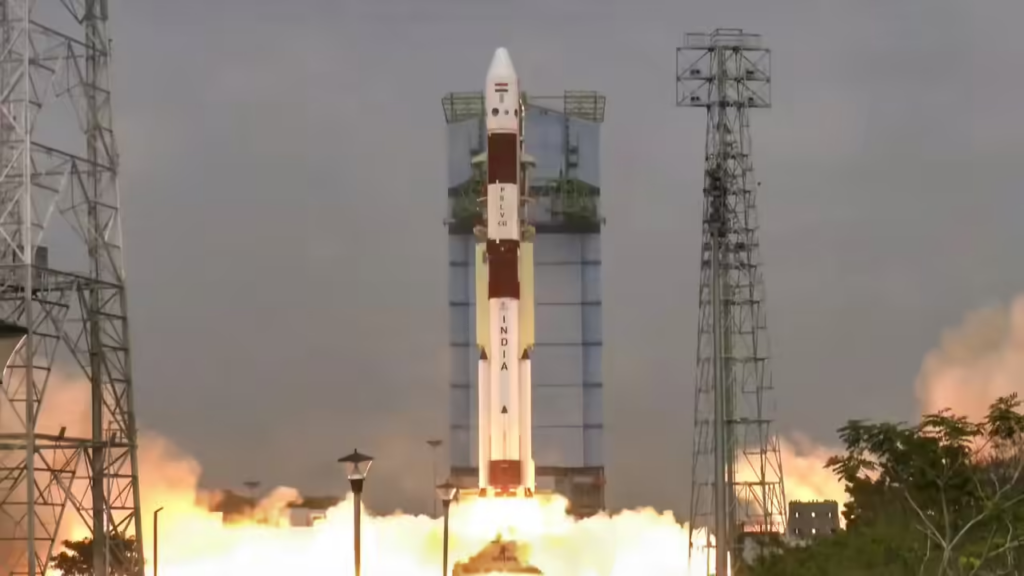
The Indian Space Research Organisation (ISRO) successfully launched its PSLV C62 mission on January 12, 2026, carrying the advanced EOS-N1 Earth observation satellite along with multiple secondary payloads from international partners. The launch from Satish Dhawan Space Centre in Sriharikota represents a continuation of India’s steady expansion of space capabilities and its growing role as a reliable, cost-effective launch service provider for global customers.
The PSLV (Polar Satellite Launch Vehicle) has been the workhorse of India’s space program since 1993, compiling an impressive success record of 58 successful launches out of 62 attempts—a 94% success rate that rivals any operational launch system worldwide. The PSLV C62 mission marks the continued evolution of this reliable platform and showcases India’s growing sophistication in Earth observation technology with applications ranging from climate monitoring to agricultural planning to national security.
Mission Overview and Technical Specifications
The PSLV C62 launched at 02:36 AM IST (21:06 GMT January 11) from the First Launch Pad at Sriharikota, carrying a total payload mass of approximately 2,400 kg into sun-synchronous orbit at an altitude of 550 km. The four-stage launch vehicle performed flawlessly through each phase, with satellite separation occurring 18 minutes after liftoff.
| Mission Parameter | Specification | Notes |
| Launch Vehicle | PSLV-CA (Core Alone) variant | No strap-on boosters |
| Total Payload Mass | 2,412 kg | Primary + secondary payloads |
| Primary Payload | EOS-N1 (1,850 kg) | Earth observation satellite |
| Secondary Payloads | 8 satellites (562 kg total) | International customer satellites |
| Target Orbit | Sun-synchronous, 550 km altitude | 97.5° inclination |
| Launch Window | 02:36 AM IST | Optimal lighting conditions |
| Mission Duration | 18 minutes to separation | Normal PSLV timeline |
| Launch Cost (Est.) | $45 million total | Very competitive pricing |
The EOS-N1 satellite represents a significant advancement in India’s Earth observation capabilities. Equipped with a high-resolution multispectral camera capable of capturing images at 1.5-meter resolution in panchromatic mode and 6-meter resolution in multispectral mode, the satellite will provide detailed data for applications including urban planning, agricultural monitoring, disaster management, environmental assessment, and national security surveillance.
Additionally, the satellite carries a hyperspectral imaging payload operating across 150+ spectral bands, enabling detailed analysis of surface composition, vegetation health, water quality, and mineral resources. This hyperspectral capability places EOS-N1 among the most sophisticated civilian Earth observation satellites currently in operation globally.
Strategic Context and National Development
India’s space program serves multiple strategic objectives beyond scientific advancement: building indigenous technology capabilities, providing critical data for national development, establishing India as a spacefaring nation, and offering commercial launch services that generate revenue and diplomatic relationships.
The EOS-N1 satellite will join India’s constellation of Earth observation satellites that collectively provide comprehensive coverage of the subcontinent and surrounding regions. Data from these satellites supports numerous government programs:
| Application Area | How Satellite Data Supports | Estimated Annual Benefit |
| Agriculture | Crop health monitoring, yield prediction, irrigation planning | $8-12 billion (improved productivity) |
| Water Resources | Reservoir monitoring, groundwater assessment, flood forecasting | $3-5 billion (better resource management) |
| Disaster Management | Early warning systems, damage assessment, response coordination | $2-4 billion (reduced losses) |
| Urban Planning | Infrastructure development, transportation planning, land use | $5-8 billion (efficient development) |
| Environmental Protection | Deforestation tracking, pollution monitoring, ecosystem health | $1-2 billion (regulatory enforcement) |
| National Security | Border surveillance, strategic infrastructure monitoring | Strategic value (not quantifiable) |
The Indian government has estimated that space program investments of approximately $1.5 billion annually generate economic benefits of $25-40 billion through applications across these sectors. While such estimates are inherently uncertain and depend on methodology, they reflect genuine value created by satellite data in improving decision-making across government and private sector activities.
Commercial Launch Services and International Customers
In addition to its own EOS-N1 satellite, the PSLV C62 mission carried eight smaller satellites from international customers, demonstrating India’s growing role as a commercial launch service provider. These secondary payloads came from Singapore, Netherlands, Spain, and the United States, reflecting the global trust in ISRO’s launch reliability and cost-effectiveness.
| Secondary Payload | Country | Mass | Purpose | Customer |
| TeLEOS-2A | Singapore | 141 kg | Earth observation | ST Engineering |
| Orbital Eye-2 | Netherlands | 88 kg | Maritime surveillance | OrbitRap |
| GAUSS-3 | Spain | 76 kg | Technology demonstration | Government |
| HEO Inspect-5 | United States | 64 kg | In-orbit servicing | HEO Robotics |
| Lemur-4C Cluster | United States | 4x 32 kg | AIS/ADS-B monitoring | Spire Global |
| NanoConnect-3 | USA/Singapore | 19 kg | IoT connectivity | NanoAvionics |
ISRO’s commercial arm, NewSpace India Limited (NSIL), has emerged as a significant player in the global small-satellite launch market, competing with SpaceX’s Falcon 9 (for larger payloads), Rocket Lab’s Electron, and various other emerging launchers. The PSLV’s proven reliability, reasonable pricing (typically $15,000-20,000 per kilogram to low Earth orbit), and accommodating manifest approach (accepting multiple customers per launch) make it particularly attractive for international customers seeking reliable access to space.
Since 1999, ISRO has launched more than 420 foreign satellites from 36 different countries, generating substantial revenue and diplomatic goodwill. In 2017, ISRO set a record by launching 104 satellites on a single PSLV mission—a feat that demonstrated both technical capability and the growing global demand for satellite launches that ISRO helps satisfy.
India’s Space Program Evolution and Ambitions
The PSLV C62 mission represents a continuation of India’s steady, methodical space program development that has unfolded over six decades. Founded in 1969, ISRO has pursued an incremental approach focused on building indigenous capabilities, mastering fundamental technologies, and applying space assets to national development priorities before pursuing more ambitious goals.
This philosophy contrasts somewhat with other space programs that prioritized flagship missions like Moon landings or Mars exploration early in their development. India’s approach has been pragmatic: develop reliable, affordable launch vehicles first, establish robust satellite manufacturing capability second, build applications that serve development priorities third, and only then pursue high-profile exploration missions. This methodical progression has enabled India to build a comprehensive, sustainable space program on a relatively modest budget.
| Era | Focus | Key Achievements | Budget (Annual Avg) |
| 1960s-1980s | Foundation | Basic rocket technology, first satellites | $50-200 million |
| 1990s-2000s | Operational Capability | PSLV development, communications satellites | $500-900 million |
| 2010s | Expansion & Exploration | Mars Orbiter Mission, GSLV-Mk III, commercial services | $1.2-1.6 billion |
| 2020s | Comprehensive Capability | Lunar landing, human spaceflight prep, expanded services | $1.8-2.4 billion |
The 2020s have seen ISRO pursue increasingly ambitious goals while maintaining its core focus on practical applications. In 2023, India became the fourth country to successfully land a spacecraft on the Moon (Chandrayaan-3), and the first to land near the lunar south pole—a technically and scientifically significant achievement. In 2024, ISRO launched its first Aditya-L1 solar observatory to study the Sun from the Earth-Sun L1 Lagrange point.
Looking ahead, ISRO’s roadmap includes several major initiatives:
Gaganyaan Human Spaceflight Program: India aims to launch its first crewed orbital mission by late 2026 or early 2027, making it the fourth country (after Russia, USA, and China) to independently send humans to space. The program has completed several critical tests including crew module recovery, abort system validation, and launch vehicle qualification.
Chandrayaan-4 Sample Return: Following Chandrayaan-3’s successful landing, India plans a lunar sample return mission that would collect rocks and soil from the Moon’s south polar region and return them to Earth for analysis—a technically formidable challenge that only China has accomplished in the 21st century.
Shukrayaan-1 Venus Orbiter: An orbiter mission to Venus, Earth’s sister planet, would study its atmosphere and surface using radar and spectrometers. If successful, India would join the small group of nations (USSR/Russia, USA, ESA, Japan) that have operated spacecraft at Venus.
Indian Space Station: ISRO has announced plans to develop a small space station (20 metric tons) to be operational around 2035, providing an independent platform for microgravity research and technology development.
Reusable Launch Vehicle: India is developing the RLV-TD (Reusable Launch Vehicle – Technology Demonstrator), a reusable spaceplane that could reduce launch costs similar to SpaceX’s Falcon 9 reusability approach, though with a different technical implementation.
Competitive Position in Global Space Industry
The global space industry is undergoing transformation, with rapid growth in satellite deployments, emergence of new launch providers, and increasing commercialization. India’s position in this evolving market reflects both strengths and constraints:
Strengths:
- Proven reliability: 94% PSLV success rate rivals any operational system
- Cost advantage: Launch costs 30-50% below Western alternatives for comparable payloads
- Technical competence: Demonstrated capability in satellites, launch vehicles, and deep space missions
- Political stability: Democratic governance provides predictability for long-term programs
- Engineering workforce: Large pool of talented engineers and scientists
Challenges:
- Limited launch capacity: ISRO conducted only 6 launches in 2025, vs 100+ by global industry
- Bureaucratic processes: Government-run program lacks agility of commercial competitors
- Budget constraints: $2 billion annually is small compared to NASA ($28 billion) or China ($8+ billion)
- Technology gaps: Some advanced capabilities (reusability, heavy lift) still in development
- Regulatory framework: Commercial space regulation still evolving, constraining private sector
India’s space strategy going forward will likely involve greater private sector participation to increase launch frequency and develop new capabilities while ISRO focuses on advanced technology development and exploration missions. The government has taken steps to open space sector to private investment, including allowing 100% foreign direct investment in satellite manufacturing and launch services under automatic approval route.
Comparison with Regional and Global Space Powers
India’s space program exists within a competitive Asian space environment, with China, Japan, and South Korea all operating significant programs, and emerging spacefaring nations including Singapore, South Korea, and Australia developing their own capabilities.
| Country | Annual Budget | Launch Vehicles | Recent Achievements | Strategic Focus |
| China | $8-10 billion | Long March family, commercial vehicles | Lunar samples, space station, Mars rover | Comprehensive capability, strategic autonomy |
| India | $1.8-2.4 billion | PSLV, GSLV, developing others | Lunar landing, Mars mission, commercial | Development applications, cost-effective |
| Japan | $3.2 billion | H-IIA/H3, Epsilon | Asteroid samples, lunar missions | Scientific excellence, precision |
| South Korea | $700 million | Nuri (KSLV-II) | First indigenous orbital launch (2022) | Building foundation |
| Australia | $400 million | No indigenous launcher yet | Earth observation constellation | Niche capabilities |
China clearly leads Asia in space capabilities, with budget, launch frequency, and technological sophistication exceeding all regional competitors combined. However, India’s program punches above its weight given budget constraints, and its achievements in Mars exploration (first Asian nation to orbit Mars on first attempt) and lunar landing (first to reach south pole) demonstrate world-class technical capability.
The India-China space competition reflects broader strategic rivalry between Asia’s two largest powers. While direct comparisons are sometimes oversimplified—the programs have different priorities and operate under different political systems—both nations clearly view space capability as important dimension of national power, technological sophistication, and international prestige.
Public Engagement and National Pride
ISRO missions like PSLV C62 generate significant public engagement and national pride within India. The successful Chandrayaan-3 lunar landing in 2023 was celebrated across the country with widespread media coverage, public events, and messages of congratulation from the prime minister and president. Space achievements are seen as demonstrating India’s technological capabilities and its arrival as a major power.
This public support has political implications, as governments recognize the popularity of the space program and generally maintain funding even during budget constraints affecting other sectors. The combination of practical applications serving development goals and high-profile achievements capturing public imagination creates a politically sustainable funding environment for the program.
ISRO has also made efforts to engage young Indians in space science and technology through outreach programs, educational initiatives, and social media presence. The organization’s Twitter account has over 12 million followers, and major missions are live-streamed with millions of viewers. This engagement helps build the pipeline of future engineers and scientists who will sustain the program’s continued advancement.
Environmental and Scientific Data Applications
The EOS-N1 satellite launched on PSLV C62 will make particularly important contributions to understanding and addressing environmental challenges facing India and the broader region. Climate change impacts including changing monsoon patterns, glacier retreat, coastal erosion, and extreme weather events require comprehensive monitoring that only satellites can provide at appropriate scales.
The hyperspectral imaging capability aboard EOS-N1 enables sophisticated analysis of vegetation health and stress, allowing early detection of crop disease, drought impacts, or pest infestations. This early warning capability helps farmers and agricultural authorities implement timely interventions that can save harvests and protect livelihoods. Given that agriculture employs approximately 45% of India’s workforce and contributes 18% of GDP, improvements in agricultural productivity and resilience generate enormous economic and social benefits.
Water resource management represents another critical application area. India faces severe water stress, with many regions experiencing significant groundwater depletion, while others face flooding during intense monsoon periods. Satellite data enables monitoring of reservoir levels, snowpack in Himalayan watersheds that feed major rivers, soil moisture for irrigation planning, and changes in groundwater resources. This information supports more efficient water allocation, infrastructure planning, and drought/flood management.
The satellite’s data will also support India’s climate commitments under the Paris Agreement, including monitoring of forest cover, renewable energy infrastructure deployment, and various mitigation and adaptation measures. As climate change impacts intensify, the detailed, comprehensive monitoring capability that EOS-N1 provides becomes increasingly valuable for evidence-based policy making and implementation tracking.
As PSLV C62 successfully placed its payloads into orbit, it represented more than just another successful space mission. It demonstrated India’s continued progress in developing space capabilities that serve both practical development needs and broader strategic ambitions. The launch exemplifies how a methodical, long-term approach to technology development can enable a middle-income country to achieve world-class capabilities in sophisticated domains like space technology—offering a model that other developing nations study as they consider their own technology development strategies.