Iran Protests Crackdown: Supreme Leader Signals Hard Line on Dissent
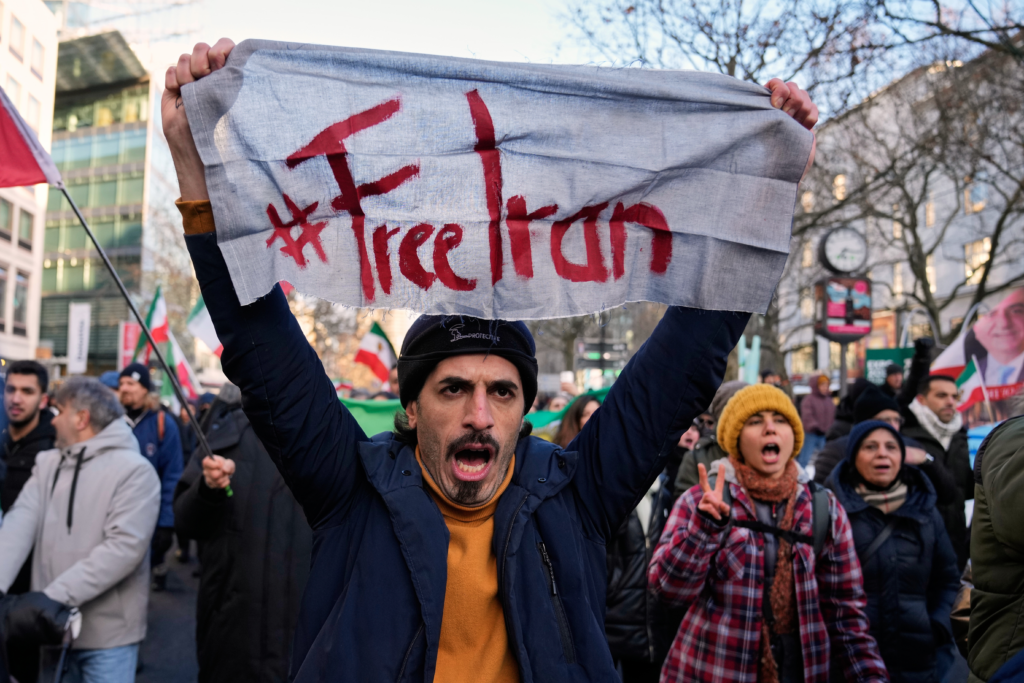
Iran’s Supreme Leader Ayatollah Ali Khamenei signaled Friday that security forces would crack down on protesters after demonstrations erupted in Tehran and other cities in response to economic hardship, political repression, and restrictions on personal freedoms. The protests, which saw hundreds of Iranians screaming from windows and marching through streets in direct defiance of government warnings, represent the latest manifestation of long-simmering discontent in the Islamic Republic—and test whether the regime will respond with the brutal force that characterized its reaction to previous protest movements.
Khamenei’s warning came in his first public comments since demonstrations began earlier in the week, when he told a gathering of security officials and paramilitary commanders that “those who disturb public security and order” would face “firm responses” from authorities. This language, consistent with rhetoric preceding previous crackdowns, has human rights organizations and international observers deeply concerned about potential violent suppression of dissent.
Current Protest Wave: Triggers and Dynamics
The latest protests lack a single triggering incident comparable to Mahsa Amini’s death in 2022 that sparked massive demonstrations. Instead, they reflect cumulative frustrations over Iran’s deteriorating economic situation, severe restrictions on personal freedoms, political repression, and perceptions that the regime serves an entrenched elite while ordinary Iranians suffer.
| Protest Grievance | Primary Demographics | Intensity Level | Geographic Spread |
| Economic hardship | Working class, youth | Very High | Urban centers nationwide |
| Inflation / cost of living | General population | Very High | All regions |
| Political repression | Political activists, families | High | Major cities |
| Social restrictions | Women, youth | High | Urban areas |
| Corruption | Middle class | Moderate-High | Nationwide |
| Foreign policy costs | General population | Moderate | Mixed |
Iran’s economy has deteriorated significantly since Trump’s first term re-imposed sanctions after US withdrawal from the Iran nuclear deal (JCPOA) in 2018. The rial has lost approximately 85% of its value against the dollar since 2018, while official inflation hovers around 40% annually (independent estimates suggest even higher rates). Basic goods including food, medicine, and fuel have become increasingly unaffordable for ordinary Iranians, while unemployment—particularly youth unemployment—remains stubbornly high above 25%.
These economic conditions create generalized discontent that can rapidly mobilize into protest when triggering events occur or when opposition groups coordinate demonstrations. The current protests appear more organic than orchestrated, emerging from spontaneous social media organization rather than direction by formal opposition leadership—a pattern that makes them difficult for authorities to control but also limits their ability to articulate unified demands or sustain momentum.
Government Response: Rhetoric and Repression
The Islamic Republic has developed extensive security apparatus specifically designed to suppress domestic dissent. Multiple overlapping security forces—Revolutionary Guards, Basij paramilitary militia, police, intelligence services—monitor, infiltrate, and when directed, violently disrupt protest movements. The regime’s response to previous major protest waves provides concerning template for how authorities may address current demonstrations:
2009 Green Movement:
- Trigger: Disputed presidential election
- Participants: Millions in sustained protests over months
- Regime response: Violent crackdown, mass arrests (~4,000), deaths (~72 confirmed)
- Outcome: Movement suppressed, some leaders still under house arrest
2017-2018 Economic Protests:
- Trigger: Economic hardship, price increases
- Participants: Hundreds of thousands across 80+ cities
- Regime response: Forceful suppression, ~25 deaths, 7,000+ arrests
- Outcome: Protests dispersed, economic grievances unresolved
2019 Fuel Protests:
- Trigger: Fuel price increases
- Participants: Tens of thousands nationwide
- Regime response: Extreme violence, internet shutdown, 1,500+ deaths (Amnesty International estimate)
- Outcome: Brutal suppression, international condemnation
2022-2023 Mahsa Amini Protests:
- Trigger: Death of woman in morality police custody
- Participants: Millions in sustained protests for months
- Regime response: Violent crackdown, 500+ deaths, 20,000+ arrests, executions
- Outcome: Protests eventually suppressed but women’s resistance continues
This history demonstrates the regime’s willingness to use extreme violence to maintain control when it perceives threats to its legitimacy or authority. The 2019 fuel protests in particular showed unprecedented brutality, with security forces firing directly into crowds and preventing ambulances from reaching wounded protesters.
International Dimension and Foreign Pressure
President Trump’s public comments supporting Iranian protesters added an international dimension to domestic Iranian dynamics. Trump stated via Truth Social that “the brave Iranian people deserve freedom” and that the United States “stands with those peacefully protesting against tyranny.” While such statements please Iranian opposition activists and play well with certain domestic constituencies, they also provide the regime with propaganda opportunity to portray protests as foreign-orchestrated attempts at regime change rather than genuine domestic discontent.
| International Actor | Position on Protests | Approach to Iran | Influence Level |
| United States | Public support for protesters | Maximum pressure, sanctions | Low direct influence |
| European Union | Concern about human rights | Sanctions, diplomatic pressure | Moderate influence |
| United Nations | Calls for restraint | Human rights monitoring | Limited practical effect |
| China | Non-interference stance | Economic ties with regime | Growing economic influence |
| Russia | Support for regime | Security cooperation | Moderate influence |
| Regional Arab States | Mixed / watching | Strategic competition | Indirect influence |
The Trump administration’s approach to Iran remains highly confrontational, with the “maximum pressure” campaign of comprehensive sanctions continuing despite Iran’s compliance challenges and economic distress they create for ordinary Iranians. Trump’s team has indicated they seek a new nuclear agreement that addresses not only Iran’s nuclear program but also its ballistic missiles and regional activities—terms Iran has consistently rejected as interference in its sovereignty.
This creates a complex dynamic where economic pressure contributes to conditions generating protests, but international support for protesters allows the regime to characterize domestic dissent as foreign-orchestrated. Iranian authorities routinely claim protesters are “agents” of the United States, Israel, Saudi Arabia, or other adversaries, deflecting attention from legitimate grievances and justifying repression as defense of national security.
Social Media and Information Control
Modern Iranian protests occur in an environment of sophisticated information warfare where social media enables rapid organization and documentation of protests, while authorities deploy extensive surveillance, censorship, and disinformation to control narratives and suppress dissent.
| Platform | Access Status | Regime Control Measures | Protester Adaptations |
| Nominally accessible, frequent throttling | Speed restrictions, targeted blocks | VPNs, mirror accounts | |
| Twitter/X | Officially banned since 2009 | Deep packet inspection, DNS filtering | VPNs, Tor, satellite internet |
| Telegram | Heavily restricted | Intermittent blocks, surveillance | Encrypted alternatives, proxies |
| Restricted during crises | Intermittent blocks | VPN usage | |
| TikTok | Mostly accessible | Monitoring, content removal | Self-censorship, coded language |
| Local platforms | Accessible | Full monitoring, censorship | Assumed surveillance |
The Iranian government has developed extensive technical capabilities for internet censorship and surveillance, including deep packet inspection that can identify and block VPN traffic, national internet gateway controls allowing selective service disruption, and partnership with technology companies to monitor user behavior. During protest waves, authorities often implement partial or complete internet shutdowns to prevent organization and documentation—a tactic that proved devastatingly effective during the 2019 fuel protests.
However, technically sophisticated protesters and activists have developed counter-strategies including satellite internet connections that bypass ground infrastructure, decentralized VPN networks, encrypted messaging apps, and coordination through offline social networks. This creates ongoing cat-and-mouse game where each side adapts to the other’s tactics.
International tech companies face ethical dilemmas around providing services in Iran. While some services are banned by US sanctions, others navigate complex legal and moral terrain: providing communications tools that help ordinary Iranians and protesters comes with risk that security services use the same infrastructure for surveillance. Apple, Google, and others have policies prohibiting apps facilitating violence or illegal activities while trying to support free expression—a balance that proves extremely difficult in repressive environments.
Women’s Role and Continuing Resistance
Women have been at the forefront of Iranian protests in recent years, particularly during the 2022-2023 demonstrations following Mahsa Amini’s death. The hijab requirement and broader restrictions on women’s rights, employment, and public participation have made women’s issues central to resistance against the regime.
Since the suppression of the Mahsa Amini protests, many Iranian women have continued daily acts of resistance including refusing to wear hijab in public, despite legal requirements and harassment by morality police. This persistent, low-level defiance represents a fundamental challenge to the regime’s authority over personal behavior and religious enforcement.
Government response has been inconsistent, with periods of strict enforcement followed by apparent relaxation, creating uncertainty about red lines and acceptable behavior. Some authorities have called for more lenient enforcement, recognizing that rigid imposition alienates educated, urban Iranians. However, hardliners insist on strict enforcement, viewing any concession as weakness that will encourage further challenges to Islamic governance.
This internal regime debate reflects deeper questions about the Islamic Republic’s nature and future: Can it adapt to social changes including more liberal attitudes toward personal freedom, or must it maintain rigid ideological positions even if doing so alienates large segments of society, particularly young people and women? The answer to this question will significantly shape Iran’s trajectory.
Youth Disillusionment and Demographic Challenge
Iran’s youth population—those under 35 represent roughly 60% of the 88 million population—is increasingly disconnected from the regime’s founding ideology and revolutionary values. Young Iranians have grown up experiencing economic hardship, social restrictions, political repression, and isolation from global culture and economy due to sanctions. Many feel they have limited opportunities and limited voice in determining their country’s direction.
This generational divide creates fundamental challenge for the regime’s long-term stability. The Islamic Republic’s legitimacy rests partially on revolutionary credentials and religious authority that mean little to young people born after the revolution. If the regime cannot offer economic opportunity, social freedom, or genuine political participation, it must rely increasingly on coercion to maintain control—a strategy that works in the short term but risks building pressure that could eventually overwhelm even extensive security apparatus.
Some Iranian youth have responded to restrictions through emigration, with substantial brain drain as educated young Iranians seek opportunities abroad. Others engage in internal migration to more liberal urban areas. Some participate in protest movements. Many simply withdraw from politics, focusing on private life and trying to navigate restrictions while maintaining personal autonomy.
Scenarios and Outlook
The current protest wave’s trajectory remains uncertain, with several possible scenarios:
Scenario 1: Gradual Suppression (High probability) Security forces implement sustained but not extreme repression, arresting key organizers, blocking social media coordination, using intimidation and limited violence to discourage participation. Protests gradually diminish over 2-3 weeks without achieving concessions.
Scenario 2: Violent Crackdown (Moderate probability) Regime deploys extreme force similar to 2019 fuel protests, causing substantial casualties, completely shutting down internet, conducting mass arrests. Protests violently suppressed within days but with significant human cost and international condemnation.
Scenario 3: Sustained Movement (Low-moderate probability) Protests maintain momentum despite repression, expanding geographically and across social classes. Regime faces extended challenge requiring sustained security presence and creating economic/political costs. Eventually either suppressed (see scenarios 1-2) or forces some concessions.
Scenario 4: Regime Compromise (Very low probability) Government offers genuine reforms—economic measures, reduced social restrictions, or political opening—to address grievances and reduce protest pressure. Historically, the regime has resisted such compromises.
Scenario 5: Revolutionary Change (Very low probability) Protests overwhelm security forces, trigger splits within regime, or catalyze military defection, leading to government collapse or fundamental change. While this represents protesters’ goal, Iran’s extensive security apparatus makes such outcomes highly unlikely in near term.
The most probable near-term outcome involves some combination of scenarios 1 and 2—the regime will suppress the current protest wave through security force deployment, arrests, intimidation, and possibly significant violence. However, underlying conditions driving protests (economic hardship, political repression, social restrictions) will remain unaddressed, ensuring that dissent continues simmering beneath surface, ready to erupt again when conditions align.
As Supreme Leader Khamenei’s warning makes clear, the regime’s response to challenges will prioritize control and stability over reform or reconciliation. Whether this approach proves sustainable over the long term, particularly as demographic shifts bring ever-larger shares of the population into age cohorts with no memory of the revolution and limited attachment to its ideology, remains one of the fundamental questions shaping Middle East regional dynamics for the coming decade.